

What is Pendulum impact tester?
A Pendulum Impact Tester is a professional testing instrument used to evaluate the impact resistance, toughness, and mechanical strength of materials when subjected to sudden impact forces. It is widely applied in industries such as plastics, metals, automotive components, packaging materials, rubber products, construction materials, and safety equipment. The main purpose of this equipment is to determine how well a material can absorb impact energy before failure occurs. Materials used in daily products and industrial applications are often exposed to unexpected impact forces during transportation, operation, or accidents. A material with poor impact resistance may crack, break, or lose its functional performance under sudden stress. The Pendulum Impact Tester provides a controlled testing method to measure the energy required to damage a specimen, helping manufacturers select suitable materials and improve product reliability.
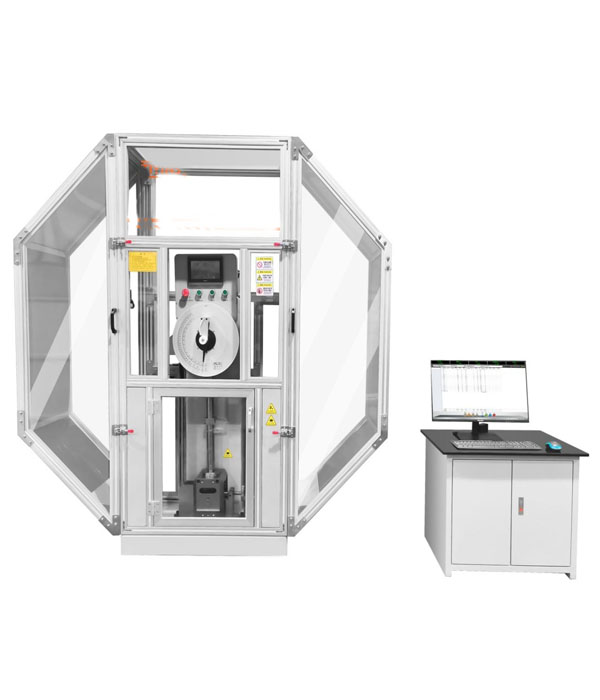
Main Structural Components and Advanced Design Features of a Pendulum Impact Tester
A Pendulum Impact Tester is generally composed of a pendulum arm, impact hammer, specimen holder, supporting frame, energy measurement system, and control unit. Each component is designed to ensure accurate impact testing and reliable data collection. The pendulum arm is the core component of the equipment. It carries the impact hammer and moves from a fixed starting position toward the specimen at a controlled speed. Different pendulum weights and impact energies can be selected depending on the type and thickness of the material being tested. This flexibility allows the equipment to be used for various applications.
The specimen holder is designed to securely fix the sample during testing. Proper positioning is essential because incorrect installation may affect impact results. Many modern testers include adjustable fixtures that can accommodate different specimen sizes and shapes. Advanced Pendulum Impact Testers are equipped with digital displays, automatic calculation systems, and software interfaces for easier operation and data management. These features allow operators to record impact energy, analyze test results, and generate detailed reports. Some models also include safety shields and automatic braking systems to improve operator protection during testing.
Wide Industrial Applications of Pendulum Impact Testers in Material Performance Evaluation
Pendulum Impact Testers are widely used in industries where material toughness and safety performance are critical. In the plastics industry, the equipment is commonly used to evaluate plastic sheets, pipes, films, and molded components. Since plastics may become brittle under certain temperatures or environmental conditions, impact testing helps manufacturers improve material formulations and product durability. In the automotive industry, impact resistance is an important factor for evaluating vehicle components. Parts such as dashboards, bumpers, interior panels, and protective covers need to withstand sudden impacts during operation. Pendulum impact testing provides valuable information about material behavior and supports the development of safer automotive products.
The metal industry also uses Pendulum Impact Testers to analyze the toughness of metallic materials. Components used in machinery, transportation equipment, and industrial structures may experience sudden loads during service. Testing helps engineers understand whether materials can resist cracking or failure under impact conditions. In the packaging industry, impact testing is essential for evaluating containers, protective materials, and packaging structures. Products often experience drops, collisions, and handling stress during transportation. By measuring impact resistance, manufacturers can design packaging solutions that provide better protection. The equipment is also used in research laboratories and educational institutions to study material properties and develop new engineering solutions.
Important Testing Parameters Used to Determine Material Impact Performance
Several key parameters are measured during Pendulum Impact Testing to evaluate material performance. The most important parameter is impact energy, which represents the amount of energy absorbed by the specimen before failure. A higher impact energy value usually indicates better toughness and resistance to sudden forces. Impact strength is another important factor, especially when comparing different materials or samples with different dimensions. It provides information about how effectively a material can resist impact relative to its size.
The type of failure that occurs during testing is also carefully analyzed. Materials may show different failure behaviors, such as cracking, bending, fragmentation, or complete fracture. Understanding these failure patterns helps engineers improve material design and prevent unexpected damage during real applications. Temperature conditions can also influence impact performance. Many materials behave differently at low or high temperatures, and testing under specific environmental conditions provides more accurate predictions of real-world performance. By controlling testing parameters, manufacturers can obtain reliable data for material selection and quality improvement.
The Importance of Standard Compliance in Pendulum Impact Testing Procedures
Pendulum Impact Testing is commonly performed according to international standards to ensure accurate and comparable results. Different industries may follow specific testing methods depending on the material type and application requirements. Standards provide guidelines for specimen preparation, impact energy selection, testing procedures, and result evaluation.
Following standardized testing procedures helps manufacturers maintain consistent quality and meet customer expectations. It also allows research organizations and companies from different regions to compare material performance using the same evaluation methods.
For industries involving safety-critical products, standard compliance is especially important. Reliable impact testing can help identify materials that may fail under unexpected conditions and prevent potential safety issues. By using a properly calibrated Pendulum Impact Tester, laboratories can ensure that test results accurately reflect material performance.
Advantages of Using a Pendulum Impact Tester for Product Development and Quality Control
One of the main advantages of a Pendulum Impact Tester is its ability to provide fast and reliable evaluation of material toughness. Compared with long-term durability tests, impact testing quickly reveals whether a material can withstand sudden mechanical forces. Another benefit is its versatility. The equipment can be used for a wide range of materials, including plastics, metals, composites, and rubber products. This makes it suitable for different industries and research applications.
The tester also improves product development efficiency. Engineers can compare different materials, adjust product designs, and identify weaknesses before large-scale production. This reduces development costs and helps manufacturers create safer and more durable products. Modern digital Pendulum Impact Testers further improve testing efficiency through automated operation and data analysis. By reducing human error and providing accurate measurements, these systems support better quality control and more reliable engineering decisions.
Future Development Trends of Pendulum Impact Testers in Advanced Material Research
With the continuous development of new materials, Pendulum Impact Testers are expected to become more advanced and intelligent. Future equipment will focus on higher measurement accuracy, improved automation, and stronger data analysis capabilities. Digital technologies will allow researchers to obtain more detailed information about impact behavior and material failure mechanisms. The increasing use of lightweight composites, advanced polymers, and high-performance materials will also create new testing requirements. These materials often have complex mechanical properties, requiring more precise evaluation methods to understand their impact resistance.