

What is ROSS zigzag tester?
The ROSS Zigzag Tester is a specialized laboratory instrument used to evaluate the flexing resistance and fatigue behavior of rubber, elastomers, and flexible polymer materials under repeated bending conditions. It is designed to simulate the mechanical stress that materials experience during continuous folding, bending, or dynamic movement in real-world applications. The test principle is based on repeatedly bending a specimen in a zigzag motion over a defined angle and frequency until cracks, fractures, or other signs of failure appear. This helps determine the material’s ability to withstand long-term mechanical deformation without losing structural integrity. The ROSS zigzag method is widely used in quality control and product development because it provides a standardized way to compare the durability of different rubber compounds and flexible materials. By applying controlled cyclic stress, the tester helps manufacturers predict service life and optimize material formulations for improved flexibility and fatigue resistance.
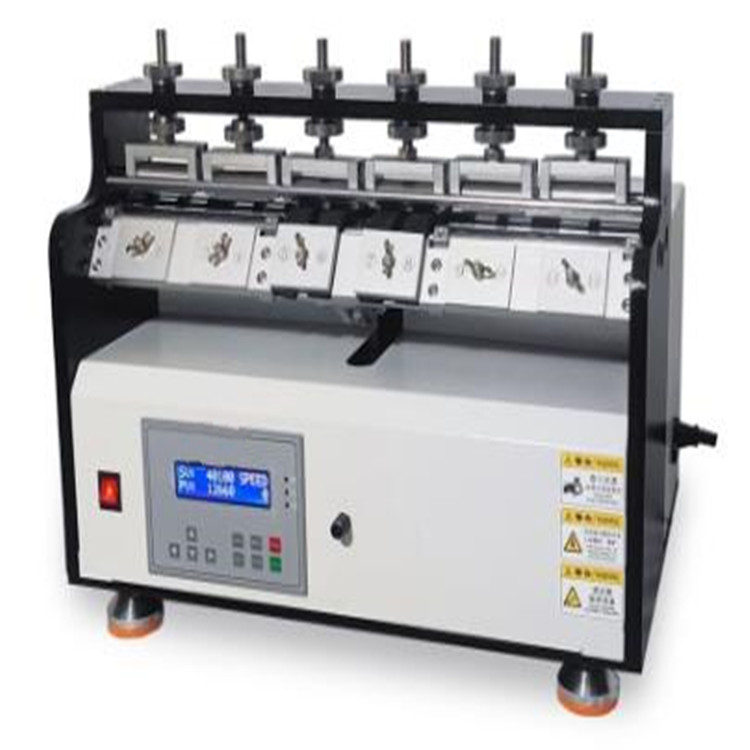
Mechanical Structure and Zigzag Bending System for Controlled Fatigue Testing Performance
The ROSS Zigzag Tester consists of a robust mechanical frame, a set of clamping fixtures, and a reciprocating bending mechanism that creates the characteristic zigzag motion. The sample is typically mounted between two grips and subjected to repeated flexing at a specific angle, which can be adjusted depending on testing requirements. The machine operates using a motor-driven system that ensures consistent speed and frequency of bending cycles, allowing accurate and repeatable test conditions. The zigzag motion is designed to create alternating tensile and compressive stresses on the specimen surface, which accelerates fatigue formation and simulates real-world usage conditions such as shoe sole flexing, rubber seal deformation, or conveyor belt movement. Some advanced models are equipped with automatic cycle counters and digital control panels that allow precise setting of test parameters. The mechanical design ensures stability and durability during long-term operation, making it suitable for continuous industrial testing environments.
Simulation of Real-World Mechanical Fatigue Conditions in Rubber and Flexible Material Applications
The ROSS Zigzag Tester is specifically developed to reproduce the mechanical fatigue conditions that rubber and polymer products encounter during daily use. In practical applications, materials are often subjected to repeated bending, stretching, and compression, which can eventually lead to crack formation and performance degradation. The zigzag flexing action closely mimics these stresses by continuously deforming the specimen in opposite directions, creating a realistic simulation of dynamic mechanical loading. This allows researchers to observe how cracks initiate and propagate over time, as well as how material composition affects fatigue resistance. The tester is particularly effective in identifying weak points in material formulations, such as insufficient plasticizer content or poor cross-linking in rubber compounds. By accelerating the fatigue process, it provides valuable insights into long-term durability within a relatively short testing period, helping manufacturers improve product reliability and performance.
Wide Industrial Applications in Footwear, Automotive, Seals, and Industrial Rubber Products Testing
The ROSS Zigzag Tester is widely used across industries where flexible materials are exposed to continuous mechanical stress. In the footwear industry, it is commonly used to test shoe soles, midsoles, and rubber components to ensure they can withstand repeated walking and bending without cracking. In the automotive industry, it is applied to evaluate rubber seals, gaskets, hoses, and vibration-damping components that must maintain flexibility under constant movement and temperature changes. Industrial rubber product manufacturers use it to test conveyor belts, protective covers, and flexible tubing for long-term fatigue resistance. It is also used in the production of consumer goods such as flexible packaging materials and soft plastic components. By providing reliable fatigue performance data, the tester helps manufacturers ensure product quality, reduce failure rates, and improve material selection during product development. Its versatility makes it a standard tool in many quality assurance laboratories.
Standardized Testing Procedures and Data Evaluation for Reliable Material Fatigue Assessment
The ROSS Zigzag Tester operates according to standardized testing procedures that ensure consistency and comparability of results across different laboratories and materials. Test parameters such as bending angle, cycle speed, and sample dimensions are carefully defined to match industry standards. During testing, the number of cycles required for visible damage or failure is recorded, providing a quantitative measure of material fatigue resistance. Some advanced systems include digital monitoring and automatic stop functions that detect specimen failure and record final cycle counts. The collected data is used to compare different material formulations and assess performance improvements in product development. Many testing methods are aligned with international standards such as ASTM and ISO, ensuring global recognition of results. Through precise control, repeatable motion, and objective failure measurement, the ROSS Zigzag Tester provides a reliable and scientific approach to evaluating the flex durability of rubber and polymer materials.