

Comprehensive Overview of Surgical Mask Flame Retardant Tester
The Surgical Mask Flame Retardant Tester is a specialized laboratory instrument designed to evaluate the flammability characteristics of surgical masks and medical face coverings when exposed to a controlled ignition source. Its primary function is to determine how quickly a mask material ignites, burns, or self-extinguishes when subjected to flame exposure under standardized conditions. This testing process is essential for ensuring that surgical masks used in clinical environments meet basic fire safety requirements and do not contribute to fire-related hazards during use. In medical settings such as operating rooms, masks may be exposed to potential ignition sources including electrosurgical equipment, lasers, or high-intensity lighting systems. Although the probability of direct flame exposure is relatively low, ensuring flame resistance remains an important aspect of overall medical safety design. The tester is widely used by medical device manufacturers, quality inspection agencies, and certification laboratories to evaluate compliance with safety regulations and product standards.
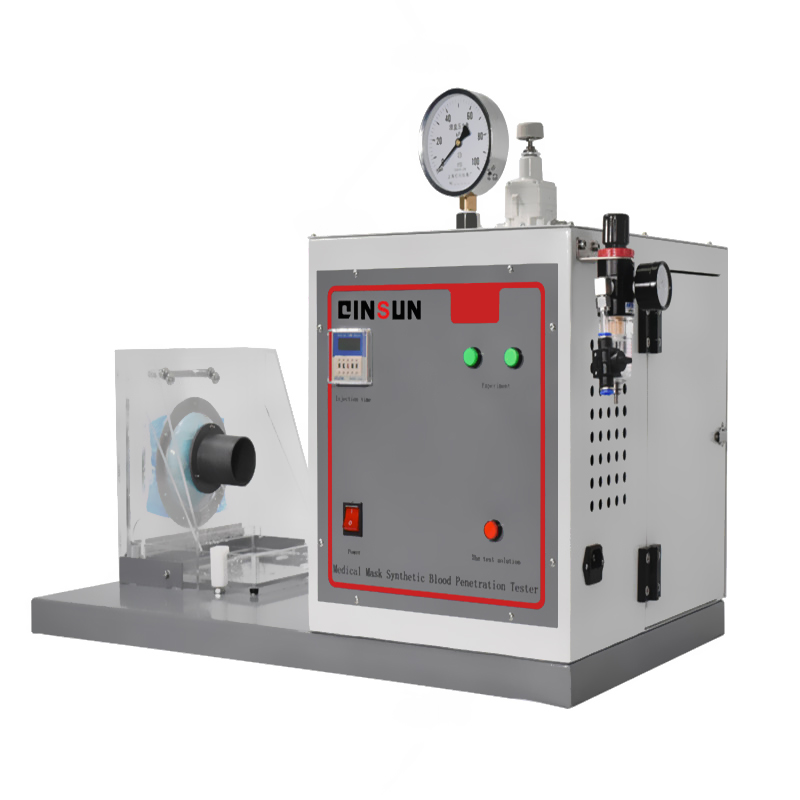
Working Principle Based on Controlled Flame Exposure and Material Combustion Behavior Analysis
The working principle of the Surgical Mask Flame Retardant Tester is based on exposing a mask sample to a controlled flame under specific time, distance, and angle conditions, then observing its combustion behavior. The mask specimen is mounted on a standardized fixture that holds it in a fixed vertical or inclined position, depending on the test method being followed.
A calibrated burner generates a consistent flame that is applied to the surface of the mask for a defined duration. After flame application, the behavior of the material is observed, including ignition time, flame spread rate, and whether the material continues to burn or self-extinguishes after removal of the ignition source. The key evaluation factors include after-flame time and after-glow time, which are critical indicators of flame retardant performance. This controlled simulation ensures repeatability and allows manufacturers to compare different mask materials under identical testing conditions, providing reliable data for product safety evaluation and material selection.
Relevant International Standards and Compliance Requirements for Medical Mask Flammability Testing
The Surgical Mask Flame Retardant Tester is designed to comply with internationally recognized standards that define test methods and safety requirements for medical protective materials. Common standards include EN 13795. ISO 15025. and various regional medical device safety regulations that specify flame resistance requirements for surgical textiles and face coverings.
These standards establish detailed testing parameters such as flame height, exposure time, specimen positioning, and environmental conditions. They also define acceptance criteria based on flame spread behavior, ignition resistance, and self-extinguishing capability. In many regulatory systems, surgical masks must demonstrate limited flammability to be approved for clinical use, especially in environments where heat-generating medical equipment is used. Compliance with these standards is mandatory in many global markets, including Europe, North America, and parts of Asia. Therefore, manufacturers rely on standardized flame retardant testing equipment to ensure that their products meet regulatory expectations and can be safely used in healthcare environments.
Structural Design and Key Components of the Flame Retardant Testing System
The structure of the Surgical Mask Flame Retardant Tester consists of several precision-engineered components designed to ensure stable and repeatable testing conditions. These typically include a flame generation system, a specimen holder, a gas supply unit, a timing control system, and a ventilation or safety enclosure.
The flame generation system is usually equipped with a calibrated burner that produces a consistent and adjustable flame. The specimen holder is designed to securely fix the mask in a standardized position, ensuring uniform exposure conditions during each test. The gas supply system regulates the fuel mixture to maintain stable combustion characteristics. Modern testing systems often include digital control interfaces that allow operators to set flame exposure time, ignition distance, and test cycles with high precision. Safety enclosures and automatic shutdown mechanisms are also commonly integrated to protect operators and maintain laboratory safety standards. These structural features ensure that the equipment delivers accurate, repeatable, and safe testing performance.
Standardized Testing Procedure and Operational Workflow in Laboratory Environments
The testing procedure of the Surgical Mask Flame Retardant Tester follows a structured and standardized workflow to ensure consistency and accuracy. Before testing begins, the mask specimen is conditioned under specified temperature and humidity conditions to ensure uniform material properties. The sample is then mounted onto the fixture in a fixed orientation according to the testing standard being applied. Once the system is ready, the burner is ignited and adjusted to the required flame height and intensity. The flame is applied to the mask surface for a defined period, after which it is removed. The operator then observes and records the combustion behavior, including whether the material ignites, how quickly flames spread, and whether self-extinguishing occurs.
Key measurement parameters include after-flame time, after-glow time, and any dripping behavior of molten material. Multiple samples are typically tested to ensure statistical reliability. The final results are documented and compared against standard acceptance criteria to determine whether the product meets flame retardant requirements.
Industrial Applications in Medical Device Manufacturing and Safety Compliance Assurance
The Surgical Mask Flame Retardant Tester is widely used across the medical device industry for product development, quality control, and regulatory certification. In research and development, it helps engineers evaluate different fabric materials, including nonwoven polypropylene, composite fiber layers, and protective coatings, to improve flame resistance while maintaining breathability and comfort.
In manufacturing environments, the tester is used for batch testing to ensure consistent product quality across production lines. Any variation in material composition or processing conditions can affect flammability performance, making routine testing essential for maintaining safety standards. Third-party laboratories and certification bodies also rely on this equipment to verify compliance before issuing approval for medical mask distribution. Although flame resistance is not the primary function of surgical masks, it remains a critical safety requirement in environments where medical devices and equipment may generate heat or sparks. Therefore, flame retardant testing plays an important role in comprehensive safety evaluation systems.
Technological Development Trends and Future Innovation in Flame Testing Equipment
The development of Surgical Mask Flame Retardant Testers is moving toward higher automation, precision control, and improved safety features. Modern systems increasingly incorporate digital flame control, automated timing systems, and data recording functions that reduce human error and improve repeatability. Future innovations are expected to include intelligent monitoring systems that use sensors and imaging technology to analyze flame spread behavior in real time. Artificial intelligence may also be integrated to evaluate combustion patterns and predict material performance based on historical data. These advancements will enhance testing efficiency and improve material development processes.
Environmental considerations are also influencing equipment design, with efforts to improve fuel efficiency, reduce emissions, and enhance laboratory safety. Multi-functional testing platforms that combine flame resistance testing with other performance evaluations are also becoming more common in advanced laboratories.
Conclusion Emphasizing the Importance of Flame Retardant Testing in Surgical Mask Safety Assurance
The Surgical Mask Flame Retardant Tester is an essential instrument in ensuring the safety and reliability of medical masks used in healthcare environments. By simulating controlled flame exposure conditions, it provides accurate evaluation of material flammability and combustion behavior. Its compliance with international standards, precise engineering design, and wide application in medical manufacturing make it a key component of modern safety testing systems. As global healthcare requirements continue to evolve, flame retardant testing will remain an important part of ensuring that surgical masks meet comprehensive safety expectations and provide reliable protection in critical environments.