

What is Leather Shoe Hook Core Longitudinal Bending Stiffness Tester?
A Leather Shoe Hook Core Longitudinal Bending Stiffness Tester is a specialized laboratory instrument used to measure the bending stiffness and flexibility of hook core components used in leather footwear construction. These hook cores are typically embedded or integrated into shoe structures to provide reinforcement, shape retention, and structural support, especially in areas such as the heel counter, arch support, or fastening regions. The tester evaluates how resistant these components are to longitudinal bending forces when subjected to controlled mechanical loading. By simulating bending stress along the length of the hook core, the instrument helps determine whether the material has sufficient rigidity to maintain shoe structure while still allowing necessary flexibility for comfort. This balance between stiffness and flexibility is critical in footwear design, as it directly affects durability, fit, and wearer comfort during walking and prolonged use.
How the Testing Mechanism Simulates Real-World Bending Forces Experienced in Footwear Usage Conditions
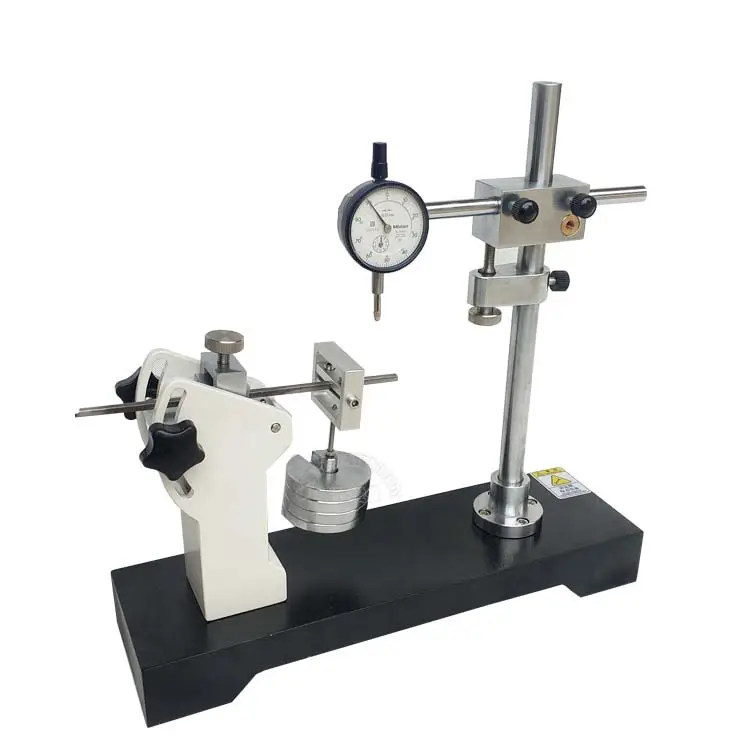
The operation of a Leather Shoe Hook Core Longitudinal Bending Stiffness Tester is based on applying controlled mechanical force to a sample in a standardized configuration. The hook core specimen is fixed at specific points while a loading probe or bending arm applies force along its longitudinal axis. This setup replicates the type of bending stress that occurs when a shoe is worn, particularly during walking, running, or repeated flexing of the foot. As the wearer moves, the shoe structure experiences continuous deformation, and internal reinforcement components are subjected to repeated bending cycles. The tester measures the resistance offered by the material against this deformation, recording parameters such as bending moment, deflection angle, and stiffness coefficient. By replicating these real-world conditions in a controlled environment, the instrument allows manufacturers to predict how the hook core will perform during actual usage and whether it will maintain structural integrity over time.
Key Structural Components and Mechanical Design Features of the Testing Instrument for Accurate Measurement
The Leather Shoe Hook Core Longitudinal Bending Stiffness Tester is composed of several precision-engineered components that work together to ensure accurate and repeatable results. The main frame provides a stable platform to hold the sample securely during testing. The clamping system is designed to fix the hook core firmly without causing deformation or slippage, ensuring consistent test conditions. The loading mechanism, often driven by a motorized or servo-controlled system, applies force at a controlled rate and direction. A precision sensor system measures the applied force and corresponding displacement, allowing accurate calculation of bending stiffness. In some advanced models, digital control interfaces enable users to set test parameters such as loading speed, bending angle, and force limits. Data acquisition systems record real-time results and generate curves that illustrate the relationship between force and deformation. The structural design emphasizes stability, precision, and repeatability, which are essential for reliable material evaluation.
Importance in Footwear Design, Material Selection, and Quality Control Processes in the Shoe Industry
This testing instrument plays a crucial role in the footwear manufacturing industry, particularly in the design and development of leather shoes. Hook core components are essential for maintaining the structural shape of shoes, especially in high-quality leather footwear where durability and comfort must coexist. If the hook core is too stiff, it can cause discomfort and restrict natural foot movement; if it is too flexible, it may fail to provide adequate support, leading to deformation of the shoe over time. By using the Leather Shoe Hook Core Longitudinal Bending Stiffness Tester, manufacturers can evaluate different materials and structural designs to achieve an optimal balance. During quality control, the tester ensures that production batches meet predefined mechanical standards, reducing variability and preventing defects in final products. It also supports material selection by comparing different reinforcement materials such as metal strips, composite fibers, or reinforced polymers used in hook core construction.
Standard Testing Methods and Industry Guidelines Governing Footwear Bending Stiffness Evaluation
Testing procedures for leather shoe hook core bending stiffness are typically guided by international footwear and material testing standards, which ensure consistency and comparability of results across different laboratories and manufacturers. Standards may define sample preparation methods, clamping distances, loading speeds, and acceptable measurement tolerances. The testing process generally involves conditioning samples under controlled temperature and humidity before testing to simulate real usage environments. The instrument then applies a defined bending force while recording deformation response. Results are often expressed as bending stiffness values or force-deflection curves, which can be used to compare different materials objectively. Compliance with standardized testing methods is essential for global footwear brands that operate in multiple markets, as it ensures that product performance claims are scientifically validated and consistent with regulatory expectations.
Applications in Research and Development of Advanced Footwear Materials and Structural Optimization
Beyond routine quality control, the Leather Shoe Hook Core Longitudinal Bending Stiffness Tester is widely used in research and development environments where new materials and structural designs are being explored. Footwear engineers use the instrument to study how different material compositions affect bending resistance and long-term durability. For example, researchers may test composite reinforcements, bio-based materials, or lightweight alloys to evaluate their suitability for modern shoe designs. The data obtained helps optimize product structures by identifying the ideal stiffness range for different types of footwear, such as formal shoes, sports shoes, or safety boots. It also supports innovation in ergonomic design by correlating mechanical performance with human comfort requirements. In this way, the tester contributes not only to quality assurance but also to technological advancement in the footwear industry.
Technological Improvements Enhancing Accuracy, Digital Analysis, and Automated Testing Efficiency
Modern versions of the Leather Shoe Hook Core Longitudinal Bending Stiffness Tester have benefited from significant technological advancements. Digital control systems allow precise programming of test parameters, ensuring consistent and repeatable testing conditions. High-resolution sensors improve measurement accuracy by detecting even minor variations in force and displacement. Automated data analysis software generates detailed reports, including graphical representations of bending behavior and stiffness curves. Some advanced systems also support batch testing, enabling multiple samples to be evaluated sequentially without manual intervention, which improves efficiency in production environments. Integration with laboratory information systems allows data to be stored, analyzed, and shared across departments, supporting collaborative research and quality management. These improvements have made modern testers more efficient, reliable, and suitable for high-throughput industrial applications.
The Role of Bending Stiffness Testing in Ensuring Footwear Comfort, Durability, and Market Performance
The Leather Shoe Hook Core Longitudinal Bending Stiffness Tester plays an essential role in ensuring that footwear products meet the required standards of comfort, durability, and performance. By accurately measuring the mechanical behavior of structural components, it helps manufacturers design shoes that maintain shape while adapting to natural foot movement. This directly impacts user experience, as properly balanced stiffness contributes to comfort during walking and reduces fatigue over time. It also enhances product durability by ensuring that internal reinforcements can withstand repeated stress without failure. In competitive footwear markets, consistent product quality is a key factor in brand reputation and customer satisfaction. As consumer expectations continue to rise, the importance of precise mechanical testing becomes even more significant, making this instrument a vital part of modern footwear engineering and quality assurance systems.