

What is Shoes Thermal Insulation Tester?
The Shoes Thermal Insulation Tester is a specialized laboratory instrument used to evaluate the thermal resistance and heat retention performance of footwear materials and finished shoes. Its primary purpose is to simulate real-world cold environmental conditions and measure how effectively a shoe can prevent heat loss from the human foot. In cold climates, thermal insulation becomes a critical performance factor, directly influencing comfort, safety, and usability. Poor insulation can lead to discomfort, reduced mobility, and even health risks such as frostbite during prolonged exposure to low temperatures. The tester provides quantitative data that helps manufacturers assess whether footwear products meet required thermal protection standards. It is widely used in research and development, quality control, and certification processes across the footwear industry. By replicating the heat exchange between a heated foot model and a controlled cold environment, the instrument delivers reliable insights into how different materials, structures, and design configurations affect insulation performance.
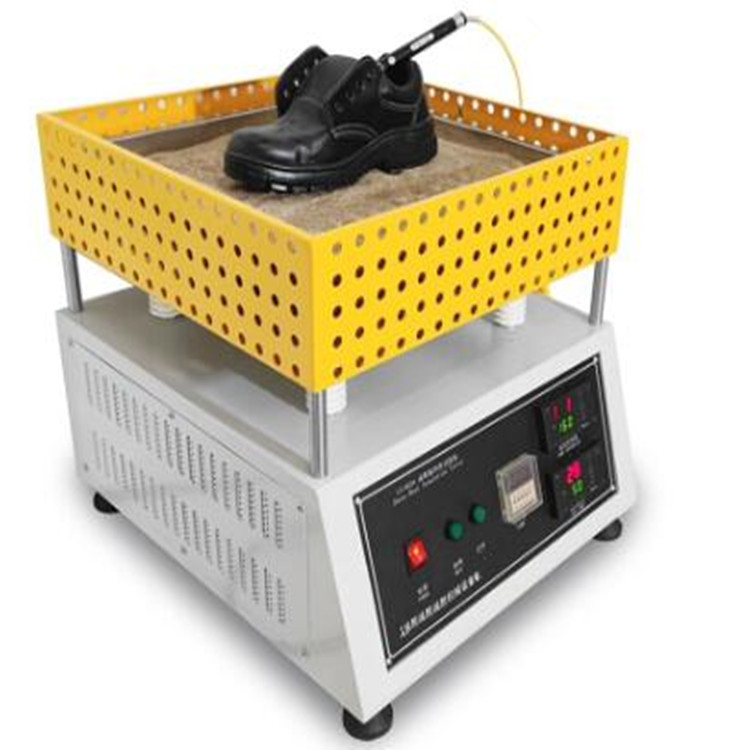
Structural Composition, Temperature Control System, and Heat Transfer Measurement Mechanism of the Equipment
The Shoes Thermal Insulation Tester typically consists of three main systems: a temperature-controlled chamber, a heated foot form or thermal model, and a data acquisition unit. The temperature-controlled chamber is designed to create a stable low-temperature environment, often using refrigeration systems capable of reaching sub-zero conditions. This chamber ensures that external environmental conditions remain consistent throughout the testing process. Inside the chamber, a heated foot model simulates the human foot by maintaining a constant internal temperature through embedded heating elements and sensors. This model is placed inside the shoe sample to replicate real wearing conditions. The system measures the rate of heat loss from the heated model to the surrounding environment through the shoe material. Temperature sensors positioned at different points record thermal variations over time, allowing precise calculation of insulation performance. The data acquisition unit collects and processes these readings, converting them into measurable thermal resistance values. This integrated structure ensures accurate simulation of heat transfer dynamics under controlled conditions.
Testing Methodology, Sample Preparation, and Standardized Procedures for Reliable Thermal Performance Evaluation
The testing process begins with careful preparation of shoe samples, which are selected to represent the product being evaluated. The shoes are conditioned under standard environmental conditions to ensure consistency before testing. Once prepared, the footwear is placed onto a heated foot model that mimics the shape and thermal properties of a human foot. The model is set to a specific temperature, usually close to normal skin temperature, and inserted into the shoe. The assembly is then placed inside the temperature-controlled chamber, where low-temperature conditions are maintained throughout the test. The system monitors the temperature drop over a defined period, recording how quickly heat is lost from the foot model. The rate of temperature decline is directly related to the thermal insulation capability of the shoe. After the test cycle is completed, data is analyzed to determine thermal resistance values. These results are compared against industry standards or product specifications. The entire procedure is designed to eliminate external variables and ensure repeatability, making it suitable for both laboratory research and industrial quality control.
Material Influence, Structural Design Factors, and Their Impact on Thermal Insulation Performance of Footwear
The thermal insulation performance of shoes is influenced by multiple factors, including material composition, structural design, and manufacturing techniques. Insulating materials such as wool, thermal foams, and specialized synthetic fibers play a major role in reducing heat loss. These materials trap air within their structure, creating barriers that slow down heat transfer. The thickness and density of these materials also affect performance, with thicker layers generally providing better insulation but potentially reducing flexibility and comfort. The outer shell of the shoe contributes to wind resistance and moisture protection, both of which are critical in cold environments. Moisture penetration can significantly reduce insulation efficiency by increasing thermal conductivity. Structural design elements such as sole construction, lining integration, and sealing techniques also influence overall performance. Poorly sealed seams or thin soles can become weak points where heat escapes more easily. The Shoes Thermal Insulation Tester helps identify these weaknesses by providing detailed thermal performance data for each component, allowing designers to optimize materials and construction methods for improved cold-weather protection.
Applications in Outdoor Footwear, Safety Shoes, Military Equipment, and Cold Climate Product Development
The Shoes Thermal Insulation Tester is widely used in industries where thermal protection is essential for user safety and comfort. In outdoor and sports footwear, it is used to evaluate hiking boots, winter shoes, and mountaineering footwear designed for extreme weather conditions. These products must maintain warmth while also ensuring breathability and comfort during prolonged use. In occupational safety footwear, insulation testing is critical for workers operating in cold storage facilities, construction sites in winter climates, and other low-temperature environments. Proper insulation helps maintain productivity and prevents cold-related injuries. Military and tactical footwear also undergo extensive thermal testing to ensure performance in harsh field conditions where soldiers may be exposed to extreme cold for extended periods. Additionally, the tester is used in product development for emerging footwear technologies such as heated insoles, smart thermal materials, and advanced insulation composites. By providing accurate performance data, the instrument supports innovation and ensures that new designs meet practical functional requirements.
Heat Transfer Science, Environmental Factors, and Interpretation of Thermal Insulation Test Results
The evaluation of thermal insulation in footwear is fundamentally based on heat transfer principles, including conduction, convection, and radiation. In the Shoes Thermal Insulation Tester, heat conduction through materials is the primary focus, as it represents the direct transfer of thermal energy from the heated foot model to the cold environment. Materials with low thermal conductivity provide better insulation by slowing down this transfer. Air trapped within insulating layers also plays a key role in reducing heat flow. Environmental factors such as ambient temperature, humidity, and air movement inside the chamber can influence test results, which is why strict control conditions are necessary. The interpretation of results is based on the rate of temperature change over time, with slower heat loss indicating better insulation performance. Data is often converted into thermal resistance values, allowing comparison between different shoe models or materials. This scientific approach ensures that results are not only descriptive but also quantifiable, enabling engineers to make informed decisions in product development and quality improvement.
Technological Innovation, Automation Trends, and Future Development of Thermal Insulation Testing Systems
Modern Shoes Thermal Insulation Testers are increasingly incorporating automation, digital monitoring, and advanced data analysis capabilities. Automated systems allow precise control of temperature conditions and testing cycles, reducing human intervention and improving repeatability. Digital sensors with high sensitivity provide real-time monitoring of temperature changes, enabling more accurate thermal analysis. Some advanced systems also include programmable testing profiles that simulate different environmental scenarios, such as rapid temperature drops or fluctuating cold conditions. Data logging and software integration allow long-term performance tracking and statistical analysis of results. Future developments in this field are expected to focus on improved simulation accuracy, energy-efficient chamber design, and integration with artificial intelligence for predictive material analysis. AI-based systems may eventually help predict thermal performance based on material composition and structural design before physical testing is conducted. As consumer demand for high-performance cold-weather footwear continues to grow, thermal insulation testing technology will remain a key component in ensuring product reliability, safety, and innovation in the footwear industry.