

What is Shoes Bending Tester?
The Shoe Peeling Strength Tester is a specialized laboratory instrument designed to evaluate the bonding strength between different components of footwear, particularly the adhesion between the upper and sole. As modern footwear production increasingly relies on adhesives and advanced bonding technologies, ensuring strong and durable connections between materials has become essential for product quality and customer satisfaction. Poor bonding can lead to sole separation, premature product failure, and significant reputational damage for manufacturers. The Shoe Peeling Strength Tester provides a scientific and repeatable method for measuring adhesive performance, helping manufacturers verify that their products meet quality standards and withstand the stresses encountered during daily use.
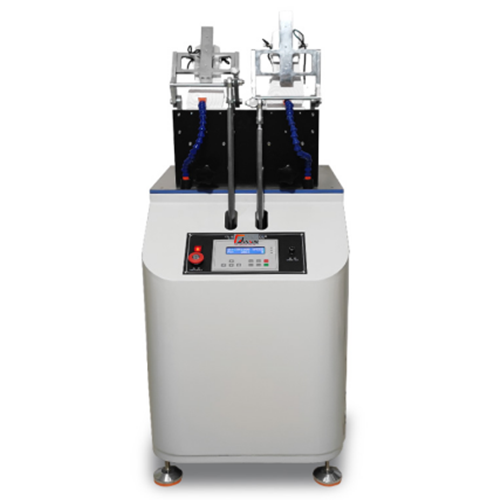
How the Shoe Peeling Strength Tester Measures Adhesion Performance Accurately
The primary function of the Shoe Peeling Strength Tester is to determine the force required to separate bonded footwear components under controlled testing conditions. During testing, a prepared specimen consisting of bonded shoe materials is securely clamped into the machine. The tester then applies a tensile force at a constant speed while continuously recording the load required to peel the bonded layers apart. The resulting data provides a quantitative measurement of adhesion strength, typically expressed in units such as Newtons per millimeter or kilograms-force per centimeter. By generating accurate and repeatable results, the instrument enables manufacturers to assess adhesive quality, optimize production parameters, and identify potential bonding issues before products reach the market.
The Essential Role of Bonding Strength in Footwear Durability and Performance
Bonding strength is one of the most critical factors influencing the overall durability and performance of footwear. Shoes are subjected to repeated bending, twisting, stretching, impact loading, moisture exposure, and temperature fluctuations throughout their service life. If the adhesive bond between the sole and upper is insufficient, separation may occur even under normal usage conditions. Such failures not only affect product functionality but can also compromise user safety and comfort. The Shoe Peeling Strength Tester allows manufacturers to verify that bonded joints possess adequate strength to withstand long-term mechanical stresses. Through routine testing, manufacturers can ensure that their products maintain structural integrity and deliver reliable performance throughout their expected lifespan.
Applications Across Various Types of Footwear and Material Combinations
The Shoe Peeling Strength Tester is widely used across different sectors of the footwear industry. Athletic shoe manufacturers use the instrument to evaluate bonding performance in running shoes, basketball shoes, and training footwear that experience high levels of mechanical stress. Casual footwear producers employ it to ensure long-term durability in everyday products. Safety footwear manufacturers rely on peeling strength tests to verify the structural integrity of protective boots used in demanding industrial environments. The tester is also suitable for evaluating various material combinations, including leather, synthetic leather, textiles, rubber, thermoplastic polyurethane, ethylene-vinyl acetate, and other materials commonly used in footwear construction. Its versatility makes it an essential quality control tool throughout the industry.
Key Design Features That Ensure Reliable and Repeatable Test Results
Modern Shoe Peeling Strength Testers are equipped with advanced mechanical and electronic systems designed to deliver highly accurate results. Precision load cells continuously monitor applied forces throughout the test, ensuring reliable measurement of peeling strength. High-resolution displacement sensors track specimen movement and test progress. Microprocessor-based control systems maintain consistent testing speeds and operating conditions, minimizing variability between tests. User-friendly touch-screen interfaces simplify operation and data management, while automatic data recording functions improve efficiency and traceability. Robust structural designs ensure stable performance even during high-load testing, allowing laboratories to conduct repeated evaluations with confidence in the consistency of their results.
Supporting Product Development and Material Selection Processes
In addition to routine quality control applications, the Shoe Peeling Strength Tester plays an important role in product development and material research. Footwear designers and engineers use the instrument to compare different adhesive formulations, bonding processes, and material combinations during the development of new products. By evaluating peeling strength under standardized conditions, researchers can identify the most suitable materials and manufacturing techniques for specific footwear applications. The data obtained from testing supports informed decision-making throughout the design process, helping manufacturers develop products that achieve an optimal balance between durability, comfort, cost efficiency, and production feasibility.
Evaluating Adhesive Performance Under Diverse Environmental Conditions
Footwear products are often exposed to a wide range of environmental conditions that can influence bonding performance. High temperatures, low temperatures, humidity, water exposure, and chemical contact may all affect adhesive properties over time. Shoe Peeling Strength Testers are frequently used in conjunction with environmental conditioning procedures to assess bond durability under simulated real-world conditions. Specimens may be subjected to aging chambers, water immersion tests, thermal cycling, or humidity exposure before peeling strength evaluation. These comprehensive testing programs provide valuable insights into long-term product performance and help manufacturers ensure that footwear remains reliable across different climates and usage environments.
Enhancing Quality Control and Production Consistency in Footwear Factories
Quality control is essential for maintaining consistent product performance in large-scale footwear manufacturing. Even minor variations in adhesive application, curing conditions, surface preparation, or material quality can affect bonding strength. The Shoe Peeling Strength Tester enables manufacturers to monitor production quality systematically by conducting regular testing on production samples. By establishing acceptance criteria and tracking test results over time, factories can identify process deviations early and implement corrective actions before significant quality issues arise. This proactive approach helps reduce product defects, minimize warranty claims, and maintain customer confidence in the brand.
Compliance with International Footwear Testing Standards and Regulations
Many footwear manufacturers supply products to international markets where compliance with recognized quality standards is required. Shoe Peeling Strength Testers support testing procedures specified by various national and international organizations involved in footwear evaluation. Standardized testing methods ensure consistency in measurement and facilitate comparisons between products, suppliers, and manufacturing facilities. Compliance with these standards demonstrates a manufacturer’s commitment to quality and helps ensure that products meet customer expectations and regulatory requirements. The ability to generate objective, verifiable test data is particularly valuable for export-oriented manufacturers operating in competitive global markets.
Technological Advancements Improving Modern Peeling Strength Testing Systems
Recent technological developments have significantly enhanced the capabilities of Shoe Peeling Strength Testers. Digital control systems provide improved accuracy, automation, and data management functions compared to traditional mechanical instruments. Integrated software platforms allow laboratories to store test records, generate reports, analyze trends, and maintain traceability for quality management purposes. Some advanced systems offer automatic specimen recognition, programmable testing methods, and network connectivity for centralized data management. These innovations improve testing efficiency while reducing the potential for operator error. As laboratory automation continues to advance, peeling strength testing systems are becoming increasingly sophisticated and capable of supporting modern manufacturing requirements.
The Growing Importance of Footwear Reliability in Competitive Global Markets
Consumer expectations regarding footwear quality continue to increase as global competition intensifies. Customers expect shoes to maintain their appearance, comfort, and structural integrity throughout extended periods of use. Product failures caused by inadequate bonding can quickly damage brand reputation and reduce customer loyalty. As a result, footwear manufacturers are investing more heavily in testing technologies that ensure consistent product quality. The Shoe Peeling Strength Tester has become an essential component of comprehensive quality assurance programs, helping manufacturers identify weaknesses, improve production processes, and deliver products that meet demanding market expectations.
Future Development Trends in Footwear Bonding Evaluation Technology
The future of Shoe Peeling Strength Testing is expected to be shaped by ongoing advancements in materials science, automation, and digital manufacturing. New footwear materials and environmentally friendly adhesive technologies will require increasingly sophisticated evaluation methods. Testing systems are likely to incorporate enhanced sensors, artificial intelligence-assisted data analysis, and greater integration with smart factory environments. Automated specimen handling and real-time process monitoring may further improve efficiency and consistency. As sustainability becomes a greater priority within the footwear industry, testing technologies will also play an important role in validating the performance of recycled materials and eco-friendly bonding solutions. These developments will ensure that peeling strength testing remains a vital part of footwear innovation and quality assurance.
Conclusion: A Fundamental Tool for Ensuring Footwear Bonding Quality and Long-Term Performance
The Shoe Peeling Strength Tester is an indispensable instrument for evaluating the adhesion strength and durability of bonded footwear components. By providing accurate, repeatable, and objective measurements, it supports product development, quality control, process optimization, and regulatory compliance throughout the footwear industry. Its ability to assess bonding performance under various conditions helps manufacturers produce reliable, durable, and high-quality footwear that meets the expectations of consumers worldwide. As footwear materials and manufacturing technologies continue to evolve, the Shoe Peeling Strength Tester will remain a critical tool for ensuring product excellence and maintaining competitive advantage in the global marketplace.