

Understanding the Purpose and Testing Principle of a Fabric Liquid Penetration Time Tester
A Fabric Liquid Penetration Time Tester is a specialized textile testing instrument used to determine how quickly a liquid passes through or is absorbed by a fabric surface under controlled conditions. The test evaluates the interaction between liquids and textile materials by measuring the time required for a specified amount of liquid to penetrate the fabric structure. This performance characteristic is important in industries where moisture management, liquid resistance, comfort, and protective performance are critical. Fabrics used in clothing, hygiene products, medical textiles, sportswear, technical textiles, and protective equipment all require controlled liquid behavior depending on their intended application. By quantifying penetration time, manufacturers can assess how effectively a material resists, delays, or facilitates liquid transfer.
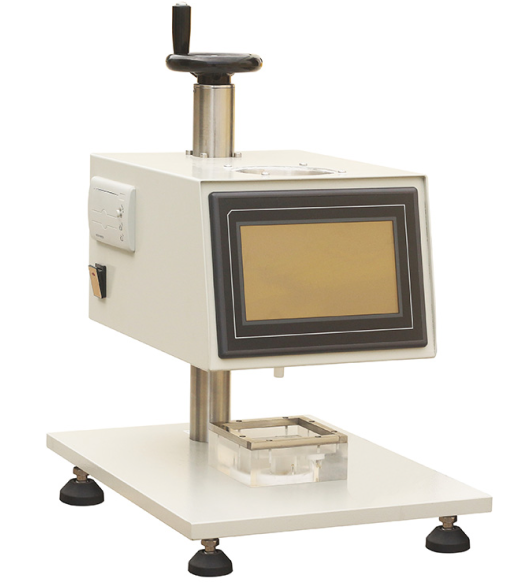
How the Fabric Liquid Penetration Time Tester Simulates Real Usage Conditions During Testing
The Fabric Liquid Penetration Time Tester operates by applying a controlled volume of liquid onto the surface of a conditioned fabric specimen and recording the time required for the liquid to penetrate through the textile structure or disappear from the surface according to the selected testing method. The liquid may be delivered through a standardized nozzle, pipette, or dispensing system to maintain consistency across tests. Sensors, timers, optical detection systems, or operator observations determine the exact penetration point. Since liquid behavior is influenced by environmental conditions, testing is typically performed under controlled temperature and humidity conditions. This process allows laboratories to reproduce realistic exposure scenarios and compare fabric performance under repeatable and measurable conditions.
The Main Components and Structural Features That Ensure Accurate Penetration Measurement
A Fabric Liquid Penetration Time Tester consists of several integrated components designed to achieve precision and repeatability. The sample holder secures the fabric specimen in a flat and stable position to eliminate movement during testing. The liquid dispensing mechanism controls the volume and application rate of the test liquid to ensure consistent delivery. Timing and detection systems monitor the penetration process and record results with high accuracy. Modern instruments often include digital control interfaces, automatic timing functions, touch-screen operation, and data storage capabilities for improved efficiency. Some advanced systems incorporate optical sensors and automated analysis software that reduce operator influence and increase result consistency. Together, these components allow laboratories to obtain reliable measurements across different fabric types.
Why Liquid Penetration Performance Has Become Increasingly Important in Modern Textile Applications
Liquid penetration characteristics directly influence both functional performance and user experience across many textile products. In sportswear and active apparel, controlled liquid transport helps manage sweat and improve wearer comfort. Medical textiles require carefully balanced absorption and barrier properties to support hygiene and patient protection. Hygiene products such as diapers, sanitary products, and absorbent pads depend heavily on rapid liquid transfer and distribution performance. Protective clothing used in industrial environments often requires delayed liquid penetration to prevent exposure to hazardous substances. Upholstery fabrics and home textiles are increasingly evaluated for stain resistance and moisture control. As consumers demand higher functionality and comfort, liquid penetration testing has become a critical element of textile development and quality assurance.
Common Testing Standards and Evaluation Methods Used for Fabric Liquid Penetration Analysis
Fabric Liquid Penetration Time Testing is commonly conducted according to standardized procedures that specify specimen preparation, conditioning requirements, liquid composition, application methods, and evaluation criteria. Samples are generally conditioned in controlled environments before testing to reduce variability caused by moisture content. During testing, a predefined quantity of liquid is introduced onto the fabric surface, and the elapsed time until penetration occurs is measured. Results may be expressed as penetration time in seconds or used alongside additional parameters such as absorption rate, spreading behavior, and wetting performance. Multiple specimens are usually tested to obtain representative results and improve statistical reliability. Standardized methods make it possible to compare performance across materials, suppliers, and production batches.
Applications of Fabric Liquid Penetration Time Testing Across Textile and Nonwoven Industries
Fabric Liquid Penetration Time Testers are widely used in textile manufacturing, research laboratories, and quality control departments. Apparel manufacturers apply testing to develop garments with improved moisture management and wearer comfort. Producers of functional sports textiles use penetration data to optimize sweat transport and drying performance. Medical and healthcare industries rely on these tests to evaluate surgical fabrics, gowns, drapes, and absorbent materials. Nonwoven manufacturers use penetration testing extensively in hygiene products and filtration applications. Automotive interior suppliers evaluate upholstery materials for stain resistance and moisture control. Research institutions also employ these instruments to study the relationship between fiber composition, fabric structure, and liquid transport mechanisms.
Factors That Influence Liquid Penetration Time in Different Fabric Structures
Fabric liquid penetration performance is affected by multiple physical and environmental variables. Fiber type significantly impacts absorption behavior because different materials exhibit varying surface energies and moisture affinities. Fabric construction, including weave, knit pattern, density, and thickness, influences capillary action and liquid movement. Surface finishing treatments such as water repellents, hydrophilic coatings, and chemical modifications can dramatically alter penetration characteristics. Environmental humidity and temperature affect both the liquid properties and fabric condition during testing. The volume, viscosity, and surface tension of the applied liquid also contribute to penetration behavior. Understanding these factors helps manufacturers interpret test results and optimize material performance for specific applications.
Advantages of Using a Fabric Liquid Penetration Time Tester During Product Development and Quality Control
The use of a Fabric Liquid Penetration Time Tester provides valuable benefits throughout textile development and production. Early-stage testing enables manufacturers to identify material performance issues before large-scale manufacturing begins. Objective penetration measurements support product optimization and facilitate informed decisions regarding fiber selection and finishing treatments. Consistent testing procedures improve quality stability and reduce product variability between production batches. Reliable liquid penetration data also supports compliance with customer specifications and industry performance requirements. For manufacturers seeking to develop premium functional textiles, integrating penetration testing into routine quality control contributes to improved product competitiveness and customer satisfaction.
Emerging Trends in Liquid Management Testing and Smart Textile Performance Evaluation
As textile technology continues to evolve, liquid penetration testing is becoming more advanced and data-driven. Modern testing systems increasingly incorporate automation, image analysis, and digital data management to improve efficiency and repeatability. The growing demand for smart textiles and multifunctional materials has expanded interest in dynamic liquid transport behavior under changing environmental conditions. Future testing platforms may combine penetration analysis with real-time moisture mapping, thermal monitoring, and predictive performance modeling. Integration with intelligent manufacturing systems is expected to further strengthen quality control and accelerate product development across textile industries.