

What is Liquid Sliding Penetration Comprehensive Performance Tester?
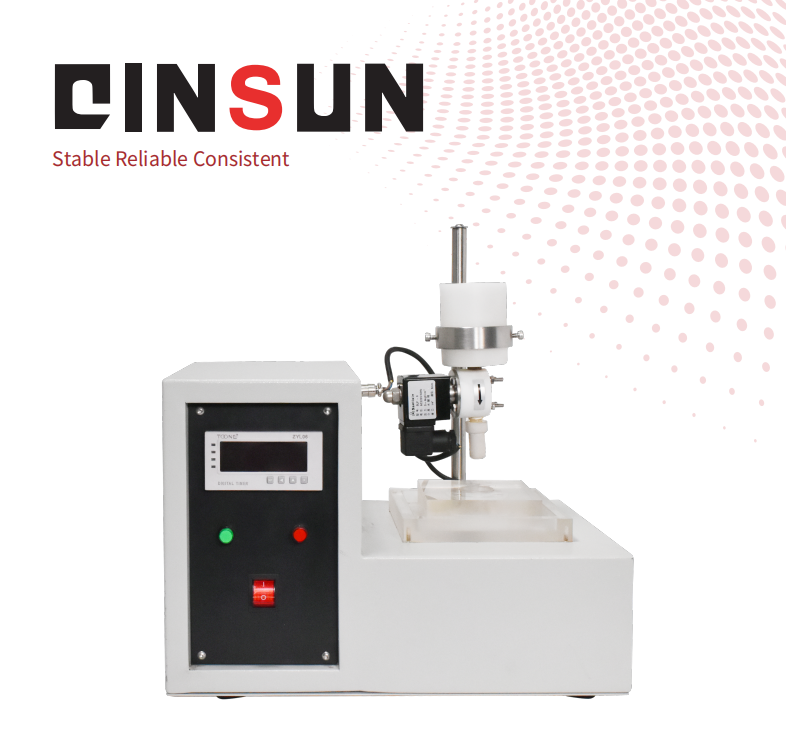
A Liquid Sliding Penetration Comprehensive Performance Tester is a specialized laboratory instrument designed to evaluate how liquids interact with the surface of solid materials, particularly their ability to slide, spread, or penetrate under controlled conditions. It is widely used in textile engineering, medical protective materials, coating development, nonwoven fabrics, and advanced functional materials research. This equipment plays an important role in assessing surface wetting behavior, liquid repellency, absorption resistance, and penetration dynamics. By simulating real-life liquid exposure scenarios, it helps manufacturers understand how materials perform when they come into contact with water, oil, chemical solutions, or other fluids.
Purpose and Significance of Liquid Penetration Testing
The primary purpose of a liquid sliding penetration tester is to measure the resistance of a material to liquid penetration and evaluate how easily liquids can slide across its surface. These properties are critical in many applications where protection, hygiene, or durability is required. In industries such as medical protective clothing, filtration materials, and outdoor textiles, liquid resistance directly affects product performance and user safety. For example, surgical gowns must prevent blood or bodily fluids from penetrating the fabric, while outdoor garments need to repel rain and moisture effectively.
The tester provides objective data that helps manufacturers classify materials according to their protective performance. It also supports research and development by allowing engineers to compare different coatings, fiber structures, and surface treatments to optimize liquid resistance.
Working Principle of the Equipment
The Liquid Sliding Penetration Comprehensive Performance Tester operates by applying a controlled amount of liquid onto the surface of a test sample at a specified angle, pressure, or flow rate. The behavior of the liquid is then observed and measured as it interacts with the material. During the test, sensors and optical detection systems monitor whether the liquid is absorbed, repelled, or allowed to slide across the surface. The equipment records key performance indicators such as penetration time, sliding distance, absorption rate, and surface wetting behavior.
In some advanced systems, high-speed imaging and automated analysis software are used to capture the movement of liquid droplets in real time. This provides a more detailed understanding of how the liquid behaves on different material surfaces. The test environment is carefully controlled to ensure repeatability. Factors such as temperature, humidity, and sample positioning are maintained consistently so that results remain accurate and comparable across different tests.
Structural Design and Key Components
A typical liquid sliding penetration tester consists of several integrated components that work together to ensure precise measurement and reliable results. The liquid delivery system is responsible for dispensing a controlled amount of test fluid onto the sample surface. It allows precise adjustment of volume, flow rate, and application angle to simulate different real-world conditions.
The sample holding platform securely positions the material during testing. It can often be adjusted in angle or orientation to evaluate how slope and gravity influence liquid movement.
The detection system includes optical sensors or imaging devices that track the behavior of the liquid. This system records whether the liquid spreads, beads up, slides, or penetrates the material. The control system manages all test parameters and data collection. Modern versions typically include touchscreen interfaces and software that automatically generate test reports and performance curves.
Applications in Different Industries
The Liquid Sliding Penetration Comprehensive Performance Tester is widely used across multiple industries that require precise evaluation of liquid-material interactions. In the textile industry, it is used to test waterproof and water-repellent fabrics. Outdoor clothing, sportswear, and protective garments must maintain performance under rain or wet conditions, making penetration resistance a key quality factor. In the medical and healthcare industry, the equipment is essential for testing surgical gowns, masks, and protective drapes. These materials must prevent contamination by bodily fluids and maintain barrier integrity during use.
Importance in Material Performance Evaluation
Understanding liquid penetration and sliding behavior is essential for determining the functional performance of many advanced materials. Poor resistance to liquid penetration can lead to product failure, reduced durability, or safety risks. The tester provides quantitative data that helps manufacturers improve material design and production processes. By analyzing how liquids interact with different surfaces, engineers can develop more effective coatings, fiber structures, and treatment methods.
It also plays a key role in quality control. Manufacturers use it to ensure that every production batch meets specified performance standards. This helps maintain consistency and reliability in final products. In addition, the equipment supports innovation by enabling researchers to study new materials and surface technologies. This contributes to the development of next-generation waterproof, breathable, and protective materials.
Testing Methods and Evaluation Parameters
Liquid sliding penetration testing typically involves several measurement methods depending on the application and material type. One common method focuses on penetration time, which measures how long it takes for a liquid to pass through or be absorbed by a material. This is particularly important for protective textiles and barrier materials.
Another method evaluates sliding behavior, observing how far a liquid droplet travels across a surface before stopping or being absorbed. This helps determine surface hydrophobicity and friction characteristics. Some tests also measure absorption rate, which indicates how quickly a material absorbs liquid under controlled conditions. This is useful for porous materials and absorbent products.
Standardized testing procedures are often based on international guidelines such as ISO or AATCC standards, ensuring consistency and comparability of results across different laboratories.
Advantages of the Testing System
One of the main advantages of a liquid sliding penetration comprehensive performance tester is its ability to simulate real-world liquid exposure conditions in a controlled laboratory environment. This allows for accurate and repeatable testing without relying on unpredictable field conditions.
The system provides high precision measurement, enabling detailed analysis of material performance. This helps manufacturers identify subtle differences between materials that may not be visible through simple observation.
It also improves development efficiency by allowing rapid testing of multiple material samples. Engineers can quickly compare different formulations and optimize performance without long experimental cycles.
Another advantage is its versatility. The equipment can be used to test a wide range of materials, including textiles, coatings, films, and composite structures, making it suitable for multiple industries.
Future Development Trends
As material science continues to advance, liquid sliding penetration testing technology is also evolving. Future systems are expected to incorporate more intelligent features, including automated image recognition, AI-based analysis, and real-time data processing.
There is also a growing trend toward multi-functional testing systems that combine liquid penetration testing with other performance evaluations such as breathability, abrasion resistance, and environmental durability. This provides a more comprehensive understanding of material behavior.
Improved sensor technology and higher-resolution imaging systems will further enhance measurement accuracy. Additionally, digital integration and remote operation capabilities will make testing more efficient and accessible.
Conclusion
A Liquid Sliding Penetration Comprehensive Performance Tester is an essential instrument for evaluating how materials interact with liquids. It provides accurate, reliable, and repeatable measurements of penetration, sliding, and absorption behavior under controlled conditions.