

What is Drying Rate Tester Heated Plate Method?
A Drying Rate Tester Heated Plate Method is a laboratory testing technique used to evaluate how quickly and efficiently a textile material dries after absorbing moisture. It simulates the heat transfer and evaporation process that occurs when wet fabric is worn on the human body or exposed to a warm environment. This method is widely applied in textile research, sportswear development, medical fabrics, and functional clothing design.
Purpose of the Heated Plate Method
The main purpose of the Drying Rate Tester Heated Plate Method is to evaluate how effectively a fabric can transfer moisture and release it into the surrounding environment. When a person sweats, clothing that dries quickly helps maintain thermal balance and reduces discomfort caused by dampness. The test also helps manufacturers compare different textile materials in terms of evaporation efficiency. Some fabrics absorb moisture but release it slowly, while others are designed to wick moisture away and dry rapidly. By using a heated plate, researchers can quantify these differences in a scientific way.
Another important purpose is to simulate real human body conditions. The heated plate represents skin temperature, allowing the fabric to experience heat-driven evaporation similar to actual wear. This makes the test results more relevant for real-world applications.
Working Principle of the Heated Plate Method
The working principle of this method is based on heat transfer, moisture evaporation, and mass loss measurement. In the test, a fabric sample is placed directly on a heated metal plate that maintains a constant temperature, often close to human skin temperature or slightly higher depending on the testing standard. A measured amount of water is applied to the fabric to simulate sweat or external moisture. Once the test begins, heat from the plate transfers through the fabric, causing the water to evaporate gradually. The system continuously records the weight loss or moisture reduction over time.
By analyzing the rate at which moisture disappears, the tester calculates the drying rate of the material. Faster weight loss indicates better drying performance, while slower evaporation suggests limited moisture management ability. The process is carefully controlled to ensure repeatability. Airflow, temperature, humidity, and fabric placement are standardized so that results can be compared across different materials and laboratories.
Structure of a Drying Rate Tester
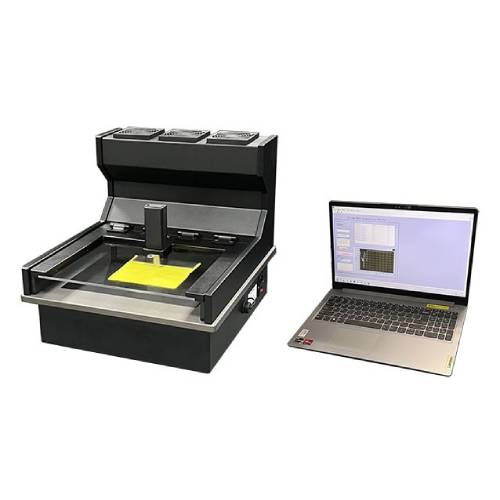
A typical Drying Rate Tester using the heated plate method consists of a temperature-controlled heating plate, precision balance system, environmental chamber, control software, and data acquisition system. The heated plate is the core component of the system. It provides stable and uniform heat distribution across the fabric sample. The temperature is precisely controlled to simulate human skin or environmental heat conditions.
A high-accuracy balance measures the weight of the fabric continuously during the test. This allows real-time monitoring of moisture evaporation. Some advanced systems integrate the balance directly into the platform to reduce measurement error. The environmental chamber helps control external conditions such as airflow and humidity. Since these factors can significantly affect drying behavior, maintaining stable conditions is essential for accurate results. The software system records and analyzes data, generating drying curves, evaporation rates, and performance comparisons between different fabrics.
Test Procedure and Operation
Before testing begins, the fabric sample is cut into a standardized size and conditioned under controlled temperature and humidity. This ensures that initial moisture content and fabric properties are consistent. The sample is then placed flat on the heated plate. A specific amount of distilled water is applied evenly to simulate moisture absorption. Care is taken to ensure that the water distribution is uniform across the sample surface.
Once the test starts, the heated plate maintains a constant temperature while the system records changes in sample weight over time. As moisture evaporates, the fabric becomes lighter, and this data is continuously captured by the balance system. The test continues until the fabric reaches a stable dry state or until a predefined time limit is reached. After completion, the system generates a drying curve that shows how moisture content changes over time. The final drying rate is calculated based on evaporation speed, allowing comparison between different textile materials.
Applications in Sportswear and Functional Clothing
One of the most important applications of the Drying Rate Tester Heated Plate Method is in sportswear development. Athletes produce large amounts of sweat during physical activity, and clothing must manage moisture effectively to maintain comfort and performance. Fabrics that dry quickly help regulate body temperature and reduce the risk of overheating. Sportswear manufacturers use drying rate data to select materials that provide fast moisture evaporation and efficient sweat management.
Outdoor clothing also benefits from this testing method. Hiking, climbing, and camping apparel must perform well in changing weather conditions. Fast-drying fabrics help users stay comfortable even in humid or wet environments. The test is also used to develop base layers and compression garments that sit close to the skin. These garments must transfer moisture away from the body quickly to prevent discomfort and chilling effects.
Use in Medical and Hygiene Textiles
In medical applications, drying performance is important for patient comfort and hygiene. Hospital bedding, surgical garments, and wound dressings often come into contact with moisture and must remain dry and clean. The heated plate method helps evaluate how quickly medical textiles can remove moisture from the skin surface. This is particularly important for patients with limited mobility who may be exposed to prolonged damp conditions.
Fast-drying materials can reduce the risk of skin irritation, infections, and discomfort. Medical textile manufacturers use this testing method to improve product safety and effectiveness. The test is also applied to hygiene products such as wipes, absorbent pads, and disposable garments where moisture control is essential.
Role in Textile Research and Material Development
Research institutions use the Drying Rate Tester Heated Plate Method to study new fiber technologies and fabric structures. Modern textiles often combine synthetic fibers, natural fibers, and functional coatings to improve performance.
Scientists analyze how different fiber compositions affect moisture evaporation. For example, polyester fabrics may dry faster than cotton, but cotton may provide better comfort in certain conditions. The test helps quantify these differences objectively.
Advanced materials such as nanofiber fabrics, moisture-wicking finishes, and smart textiles are also evaluated using this method. Researchers use drying curves to understand how structural changes influence performance.
The results support innovation in textile engineering and help accelerate the development of high-performance materials.
Importance in Quality Control
Manufacturers use the Drying Rate Tester Heated Plate Method as part of quality control during production. Consistent drying performance ensures that fabrics meet customer expectations and industry standards. Even small changes in fiber composition, weaving structure, or finishing treatment can affect drying behavior. Regular testing helps identify variations early in the production process.
Quality control data also supports compliance with international textile standards. Many buyers and brands require verified moisture management performance before approving materials for commercial use. By maintaining consistent drying performance, manufacturers can improve product reliability and brand reputation.
Advantages of the Heated Plate Method
One major advantage of this testing method is its ability to simulate real human skin conditions. Because the fabric is tested under controlled heat similar to body temperature, results closely reflect actual wearing conditions. Another advantage is precision. The combination of controlled heating and high-accuracy weight measurement allows detailed analysis of evaporation behavior over time.
The method is also highly repeatable. Standardized procedures ensure that different laboratories can produce comparable results, making it suitable for global textile evaluation. Additionally, the test provides clear and visual results through drying curves, which help engineers and designers understand fabric behavior more easily.
Future Development Trends
As textile technology advances, drying rate testing is becoming more sophisticated. Modern systems are integrating smart sensors, automated environmental control, and AI-based data analysis to improve accuracy and efficiency. Future equipment may simulate more complex human conditions, including sweating patterns, body movement, and varying environmental climates. This will make testing even closer to real-world scenarios.
There is also increasing interest in sustainable textiles. Drying performance can influence energy consumption in laundry and garment care, so researchers are exploring materials that dry faster and require less environmental impact. Smart textiles with adaptive moisture control functions are another growing area. These materials may respond dynamically to humidity and temperature changes, requiring more advanced testing methods.
Conclusion
The Drying Rate Tester Heated Plate Method is an essential technique for evaluating how textiles manage moisture and drying performance under controlled conditions. By simulating human skin temperature and measuring evaporation behavior, it provides valuable insights into fabric comfort, functionality, and efficiency.