

How to test for pilling?
The Circular Locus Pilling Tester is a precision instrument specifically designed for the textile testing field. Its primary function is to simulate the frictional forces experienced by fabrics during daily wear or use, thereby scientifically and accurately evaluating their resistance to fuzzing and pilling on the fabric surface.The equipment applies controlled friction and a defined duration to fabric specimens through a specific circular motion trajectory, in order to assess their pilling resistance grade. This provides key data support for quality control and performance optimization in textile products.This article will provide a systematic introduction from key perspectives such as working principle, operational procedures, and typical application scenarios. It aims to offer comprehensive technical reference and practical guidance for textile industry practitioners, quality inspection personnel, and product R&D engineers, helping them to gain a deeper understanding of and effectively utilize this important testing instrument.
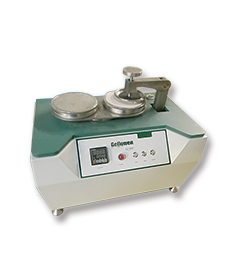
Functions and Applications of the Circular Locus Pilling Tester
The Circular Locus Pilling Tester is a specialized instrument used to evaluate the surface fuzzing and pilling performance of textiles after friction. It is widely applied in textile quality control and research and development.
Main Functions
Determination of fuzzing and pilling degree:
It simulates the friction behavior of fabrics during daily use to assess their resistance to fuzzing and pilling.
Two testing modes:
Fabric can be tested either with simultaneous friction against a nylon brush and abrasive material, or with abrasive material only (brush-free condition).
Programmable test cycles:
The instrument supports 1 to 9.999 friction cycles, meeting the requirements of different testing standards and sample types.
Standardized test conditions:
Key parameters such as load, speed, and motion trajectory are strictly controlled to ensure repeatability and comparability of test results.
Core Applications
Product quality evaluation:
Suitable for assessing the pilling performance of various textiles, including wool, synthetic fibers, blended fabrics, knitted fabrics, and woven fabrics.
Process optimization reference:
Helps manufacturers optimize spinning, weaving, or finishing processes to improve product durability and appearance retention.
Compliance with standards:
Testing can be conducted in accordance with standards such as GB/T and FZ/T.
Research and analysis:
When combined with tools such as scanning electron microscopy (SEM), it can be used to study the mechanism of pilling and analyze the effects of fiber structure and composition on performance.
Industries Applicable to the Circular Locus Pilling Tester
The Circular Locus Pilling Tester is mainly applicable to the following industries:
Textile industry:
Used to evaluate the friction-induced fuzzing and pilling performance of various fabrics, including woven and knitted textiles. It serves as an important tool for quality control.
Apparel industry:
Particularly suitable for finished garments made of wool, synthetic fibers, and blended materials (such as business casual knitwear and military apparel), helping ensure product durability and appearance stability.
Textile testing and certification institutions:
Used for third-party testing and compliance verification in accordance with national standards such as GB/T and FZ/T.
Fabric R&D and manufacturing:
Helps optimize spinning, weaving, and finishing processes to improve the anti-pilling performance of textiles.
Quality supervision and standardization authorities:
Applied in the implementation of national and industry standards to ensure overall product quality in the market.
Technical Features of the Circular Locus Pilling Tester
The Circular Locus Pilling Tester is a dedicated instrument used to evaluate the fuzzing and pilling resistance of fabrics under friction. It is widely applied in textile quality control. Its main technical features are as follows:
Core Technical Features
Testing principle:
Under a specified pressure, the fabric specimen moves relative to a friction medium (such as a nylon brush or abrasive material) along a circular trajectory with a diameter of 40 mm, simulating the friction process experienced during actual wear.
High-precision motion control:
The circular trajectory has a diameter accuracy of 40 mm ± 0.1 mm, and the rotation speed is controlled at 60 ± 1 r/min, ensuring excellent test repeatability.
Adjustable loading pressure:
Multiple pressure settings are supported, typically including 490 cN, 590 cN, and 780 cN, allowing adaptation to different textile types such as wool, synthetic fibers, and blended fabrics.
Flexible friction component configuration:
The system can be equipped with a nylon brush (with adjustable bristle height), typically used together with abrasives of 2–12 mm thickness (such as 2201 wool fabric), or used with abrasive material alone.
The nylon brush requires high surface flatness, with a parallelism error not exceeding 0.5 mm.
Structure and materials:
Key components such as weights and fixtures are made of high-quality stainless steel, offering corrosion resistance and long service life.
The track and steel balls are manufactured from high-hardness, high-precision materials. Combined with a low-noise design, this enhances operational stability.
Intelligent control:
The number of test cycles can be set from 1 to 9.999 with automatic stop functionality.
Some models are equipped with electronic counters and touchscreen interfaces.
Wide sample applicability:
Suitable for woven fabrics, knitted fabrics, pure fibers, blended textiles, synthetic fibers, and natural fibers (such as wool), among others.
Test Principle of the Circular Locus Pilling Tester
The test principle of the Circular Locus Pilling Tester is as follows:
The instrument evaluates the fabric’s resistance to fuzzing and pilling by simulating the friction conditions experienced during actual use.
Friction Mechanism
Under a specified pressure, the fabric specimen is subjected to relative motion against a defined friction medium, such as a nylon brush and/or abrasive fabric.
Motion Trajectory
The specimen moves along a circular path with a diameter of 40 mm, generating controlled circumferential friction.
Test Conditions
The rotational speed is typically 60 r/min, and the number of friction cycles can be set as required, generally ranging from 1 to 9.999 cycles.
Evaluation Method
After testing, the degree of fuzzing and pilling is assessed by visual grading or image analysis, comparing the specimen with standard reference photographs and assigning a rating (commonly on a 1–5 scale).
This test method complies with several international and Chinese standards, including:
GB/T (Textiles — Determination of fabric fuzzing and pilling performance — Part 1: Circular locus method)
FZ/T (Circular locus pilling tester method for fabric fuzzing and pilling evaluation)
This method is widely used for quality control and research and development of various textiles, including wool, synthetic fibers, blended fabrics, knitted fabrics, and woven fabrics.
Operating Procedure of the Circular Locus Pilling Tester
The operating procedure of the Circular Locus Pilling Tester is mainly based on national standards such as GB/T and industry standards such as JJG. It is used for evaluating the fuzzing and pilling resistance of fabrics, yarns, and similar materials. The standard procedure is as follows:
Test Preparation
Cut five circular specimens with a diameter of 113 ± 0.5 mm from the fabric to be tested, and mark the reverse side of each specimen. Prepare one reference sample for rating comparison.
Condition the specimens in a standard atmosphere (temperature 20 ± 2°C, relative humidity 65 ± 5%) for at least 16 hours.
Check that the instrument is level. Ensure the nylon brush is clean and free of loosened or protruding fibers; if necessary, trim the brush surface with scissors.
Prepare foam backing pads, test specimens, and abrasive materials (such as wool abrasive or standard fabric abrasives).
Specimen Installation
Install in sequence: foam pad → specimen (face side outward) → abrasive material onto the test fixture and platform.
Ensure the specimen is firmly clamped to prevent displacement or detachment during testing.
Parameter Setting
Set test parameters according to fabric type. Common settings include:
Rotation speed: 60 ± 1 r/min
Track diameter: 40 ± 1 mm
Load: typically 490 cN (instrument self-weight), with optional configurations of 590 cN or 780 cN depending on the model
Number of cycles: adjustable from 1 to 9.999 cycles, commonly 500. 1000. or 2000 cycles
If the fabric type is not specified in the standard, a similar material may be referenced or determined through consultation, and the selection should be stated in the test report.
Test Execution
Press the “RUN” button to start the instrument, which will automatically operate for the preset number of cycles.
The instrument stops automatically upon completion of the test.
Rating and Recording
Perform visual rating in a dark evaluation cabinet.
Place the tested and untested samples side by side on the specimen board (tested sample on the left, untreated sample on the right).
At least two evaluators independently grade the fuzzing/pilling level using a visual description method.
If a score falls between two grades, it is recorded as a half grade (e.g., 3.5). The final result is the average of all ratings, rounded to the nearest 0.5 grade (e.g., “3–4”).
If any single result deviates from the average by more than 0.5 grade, each specimen result must be reported separately.
Precautions
Keep the instrument clean during operation and regularly maintain the nylon brush and abrasive materials.
Ensure specimens are mounted flat and without tension to avoid affecting results.
Maintain a stable, interference-free evaluation environment to ensure result reliability.
Importance of the Circular Locus Pilling Tester
The Circular Locus Pilling Tester plays a vital role in textile quality control and research and development. Its importance is reflected in the following key aspects:
1. Core Testing Method Recognized by Industry Standards
This tester is designed in accordance with national standards such as GB/T and industry standards such as FZ/T, making it one of the officially recognized methods for evaluating fabric fuzzing and pilling performance.
In domestic knitted fabric standards, the circular locus method (Method E) is listed alongside the pilling box method as a primary evaluation approach and is widely used for product quality determination.
2. Simulation of Real Wear Conditions with Practical Significance
By using a 40 mm circular friction trajectory, the instrument simulates the repeated rubbing that fabrics experience during daily wear against clothing or other surfaces.
Testing conditions—such as 490 cN load, 60 r/min speed, and friction with a nylon brush or abrasive material—are highly standardized, ensuring repeatability and comparability of results.
3. Supports Product Development and Quality Control
It helps manufacturers optimize fabric structure, fiber composition, and finishing processes, thereby improving durability and appearance retention.
It also provides brands with objective quality data to meet customer requirements for garment appearance performance and reduce returns or complaints caused by pilling issues.
4. High-Precision Technical Parameters Ensure Reliability
The instrument is designed with strict technical specifications, such as:
Friction trajectory diameter error ≤ 0.1 mm (40 mm circle)
Load accuracy ±1% (490 cN)
Speed control 60 ± 1 r/min
Parallelism error ≤ 0.3 mm
These parameters ensure high accuracy, stability, and repeatability of test results.
5. Wide Applicability Across Textile Types
It can be used for a wide range of materials, including woven fabrics, knitted fabrics, synthetic fibers, wool, blended textiles, and pure spun yarns, making it highly versatile.
In summary, the Circular Locus Pilling Tester is not only an essential instrument for meeting industry standards and regulatory requirements, but also a key device that helps textile companies significantly improve product quality and strengthen market competitiveness.We sincerely welcome customers, partners, and industry professionals to leave inquiries or share their specific requirements. We also look forward to your direct contact so that we can provide more comprehensive technical documentation, application solutions, and customized service support tailored to your needs.