

What is the Color Fastness Tester for Ironing Sublimation?
The Ironing Sublimation Color Fastness Tester is a specialized testing instrument used to evaluate the color fastness and sublimation resistance of textiles under hot pressing (ironing) conditions. It simulates real-life scenarios such as garment ironing or other high-temperature treatments to assess whether dyes undergo discoloration, migration, or staining when exposed to heat.This article provides a systematic introduction from key perspectives, including the equipment’s working principle, detailed operating procedures, and typical application scenarios, aiming to offer comprehensive technical reference and practical guidance for industry practitioners, quality inspection personnel, and product development engineers.
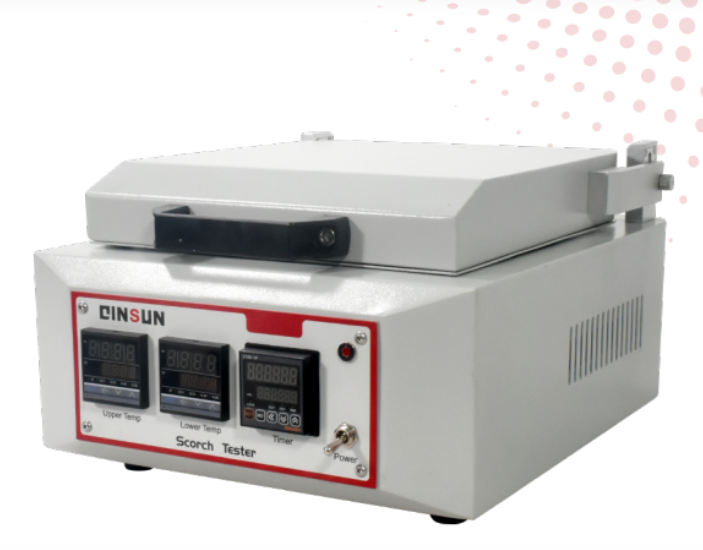
Functions and Applications of the Ironing Sublimation Color Fastness Tester
The core function of the ironing sublimation color fastness tester is to simulate high-temperature environments that textiles may encounter during daily use, and to evaluate whether dyes undergo discoloration, staining, or sublimation migration under such conditions.
Main Functions
1. Ironing Color Fastness Test
Simulates the ironing process to assess color change of textiles and the degree of staining on adjacent fabrics under heat and pressure.
2. Sublimation Color Fastness Test
Evaluates whether disperse dyes and other colorants sublimate from fibers at high temperatures and transfer to other materials.
3. Multi-Mode Testing
Dry Pressing: Both the specimen and adjacent fabric are in a dry state.
Wet Pressing: The specimen is dry while the adjacent fabric is wetted.
Wet Condition: Both the specimen and adjacent fabric are wetted.
4. Dimensional Stability Evaluation
Some models can simultaneously assess fabric shrinkage or deformation after thermal treatment.
5. Special Performance Testing
Includes tests such as chlorine damage strength evaluation for resin-finished fabrics and yellowing assessment of bleached fabrics.
Typical Applications
1. Quality Control
Used in the production of apparel, home textiles, and industrial textiles to ensure compliance with color fastness requirements.
2. Standards Compliance Verification
Meets major international and national standards, including ISO, GB/T, AATCC, JIS, BS, and DIN.
3. R&D Support
Assists in the development of dyes and finishing processes with improved high-temperature resistance performance.
Working Principle of the Color Fastness Tester for Ironing Sublimation
The Color Fastness Tester for Ironing Sublimation is mainly used to evaluate the sublimation fastness of dyes or pigments in textiles during the ironing process, under the combined effect of heat and pressure. It determines whether dyes migrate, stain adjacent fabrics, or fade when exposed to high temperatures.
Working Principle
The core principle of the instrument is to simulate real ironing conditions by precisely controlling three key parameters: temperature, pressure, and time, in order to assess the color fastness performance of the specimen under hot pressing. The detailed process is as follows:
1. Sample Preparation
The textile specimen is placed in contact with a standard adjacent fabric (such as white cotton or polyester cloth), and layered according to relevant testing standards.
2. Parameter Setting
Based on applicable test standards, the ironing temperature (typically 150°C–210°C), pressure (e.g., 3–5 N/cm²), and exposure time (e.g., 10–30 seconds) are set.
3. Hot Pressing Treatment
The assembled specimen is placed between the heating plates of the tester. Heat and pressure are applied simultaneously for a specified duration, simulating the sublimation conditions during ironing.
4. Cooling and Evaluation
After the test, the samples are removed and cooled. Evaluation is then carried out using a gray scale for color change and staining, or by instrumental methods such as a spectrophotometer. Two key aspects are assessed:
Color change of the specimen (Color Change)
Staining grade of the adjacent fabric (Staining Grade)
Applicable Industries of the Color Fastness Tester for Ironing Sublimation
The Ironing Sublimation Color Fastness Tester is primarily used to evaluate the color stability of textiles under high-temperature and pressure conditions, especially for ironing (hot pressing) and sublimation fastness performance. Its main application industries are as follows:
Textile and Apparel Industry
Used to test various dyed or printed fabrics for color change and staining during ironing or dry heat processing, ensuring color fastness performance in daily use of finished garments.
Printing and Dyeing / Finishing Industry
Evaluates the sublimation or wet-heat stability of disperse dyes, reactive dyes, and other dye types under high temperature conditions, providing guidance for optimization of dyeing and finishing processes.
Home Textile Industry
Applicable to products such as curtains, bedding, and towels that require frequent ironing or high-temperature treatment, helping ensure durability and long-term color stability.
Industrial Textile Sector
Used for special functional textiles such as filter materials and protective clothing, which require high thermal stability and reliable performance under heat exposure.
Quality Inspection and Research Institutions
Universities, testing centers, and certification laboratories use the instrument in accordance with standards such as GB/T, AATCC, and ISO for quality control, compliance testing, and research and development.
Overall, the instrument is widely applied throughout the entire lifecycle of textiles, from raw material dyeing to finished product inspection, where color fastness verification is required.
Technical Features of the Color Fastness Tester for Ironing Sublimation
The technical features of the ironing sublimation color fastness tester are as follows:
Flexible Heating Modes
Supports dual-side heating (for sublimation testing) and single-side heating (for ironing testing), meeting the requirements of different testing standards.
Precise Temperature Control
The heating temperature range is typically from room temperature to 220°C or 250°C, with a control accuracy of ±1°C to ±2°C, ensuring stable and reliable test conditions.
Standardized Pressure Application
The surface pressure of the heating plate is generally maintained at 4 kPa ± 1 kPa. Some models achieve pressure through gravity loading (e.g., an upper heating block of 60.5 N).
Standard Sample Dimensions
Common specimen sizes are 100 × 40 mm or 120 × 40 mm, while heating plate dimensions are typically 125 × 125 mm or 100 × 40 mm.
Multi-Mode Testing Capability
Supports dry pressing, damp pressing, and wet pressing conditions for color fastness and sublimation testing, enabling simulation of real-world usage scenarios.
High Level of Automation
Equipped with a microcomputer control system or a 7-inch color touchscreen. It allows precise setting of time (0–9999 s) and temperature, and includes automatic alarm functions.
Reliable Structural Materials
Heating plates are commonly made of aluminum alloy or brass to ensure uniform heat conduction and strong corrosion resistance.
Comprehensive Safety Protection
Some models are equipped with over-temperature protection, safety door switches, low water level alarms, and other safety mechanisms to ensure safe operation.
Operating Procedure of the Ironing Sublimation Color Fastness Tester
The operation of the ironing sublimation color fastness tester must strictly follow relevant standard testing procedures to ensure accurate results and safe operation. The detailed workflow is as follows:
1. Preparation
First, confirm the instrument model and corresponding test standards. Different models may have slight variations in operation, but the core steps are generally consistent. Common standards include ISO, AATCC, and GB/T.
Next, inspect the instrument condition:
Ensure the heating plate surface is clean and free from dye or fiber residues
Verify that the temperature control system is functioning properly (typically ranging from room temperature to 250°C)
Check that the timer and alarm functions are working correctly
Then prepare the test specimens and standard adjacent fabrics:
Specimen size is generally 30 cm × 30 cm, or cut according to specific standard requirements
Use standard white adjacent fabric (such as cotton or polyester), and sew or layer it evenly with the specimen as required by the standard
2. Test Parameter Setting
Set the temperature and time according to the test type (dry pressing, damp pressing, or wet pressing):
Dry pressing: both specimen and adjacent fabric are dry
Damp pressing: specimen is dry, adjacent fabric is wetted and wrung to the specified moisture content
Wet pressing: both specimen and adjacent fabric are wetted
Typical test conditions:
Temperature: 110°C, 150°C, or 200°C (depending on fiber type and test requirements)
Time: usually 15 seconds according to standards
Pressure: applied by the self-weight of the heating plate, typically 4 kPa ± 1 kPa
For example, on the Thermaplate 620 model:
Press “P” to enter parameter setting mode
Use “∨” and “∧” keys to adjust temperature, then press “U” to confirm
Set time using the same method
Wait until the heating plate reaches the set temperature (do not touch the plate when the heating indicator is on)
3. Testing Procedure
Place the prepared specimen and adjacent fabric assembly flat between the upper and lower heating plates
Close the upper plate (or activate the automatic pressing mechanism) to apply pressure for 15 seconds
After the set time, the instrument will automatically or manually release the upper plate
Carefully remove the sample immediately and avoid post-test handling that may affect color evaluation
4. Result Evaluation
Evaluate using a standard gray scale under specified lighting conditions:
Color change rating: assess the degree of color change of the specimen after ironing
Staining rating: evaluate the degree of dye transfer to the adjacent fabric
Evaluation should be carried out under standard illumination conditions (e.g., D65 light source in a light box) to ensure consistency and objectivity.
5. Shutdown and Maintenance
Turn off the power after testing
Allow the instrument to cool completely
Clean the heating plate surface with a soft damp cloth and mild detergent (do not use hard or abrasive tools)
Regularly inspect the heating plate for deformation or carbon residue buildup to ensure long-term stability and measurement accuracy
Importance of the Color Fastness Tester for Ironing Sublimation
The importance of the ironing sublimation color fastness tester lies in its ability to objectively evaluate the color stability of textiles under high-temperature ironing or dry heat conditions. It is directly related to product quality, consumer satisfaction, and brand reputation. Its key roles are as follows:
Simulating Real-World Usage Conditions
This instrument can simulate environments such as garment ironing (dry pressing, damp pressing, wet pressing) or high-temperature storage. It is used to determine whether dyes undergo sublimation, migration, or fading, ensuring that finished products are not prone to staining or discoloration during daily use.
Compliance with International Standards
The testing process is carried out in accordance with authoritative standards such as ISO, AATCC, and GB/T, ensuring that test results are internationally recognized and compliant.
Improving Product Reliability
By quantitatively evaluating color change and staining grades (using gray scale assessment), manufacturers can select fabrics and dyes with better heat resistance, reducing return rates and after-sales disputes.
Ensuring Production Consistency
Pre-production testing helps identify potential color fastness issues in advance, preventing entire batches from being rejected due to insufficient performance and thereby reducing quality-related costs.
Supporting R&D and Innovation
It provides critical thermal performance data for new dyeing and finishing processes as well as functional textiles (such as wrinkle-resistant or flame-retardant finishes), supporting material optimization and product development.
Overall, the Color Fastness Tester for Ironing Sublimation is a highly important piece of equipment in the textile, dyeing, and quality inspection industries, with significant application value. We sincerely welcome inquiries regarding product technical specifications, operating procedures, applicable standards, or any other related questions. We also warmly invite you to leave a message or contact us directly so that we can provide more detailed, customized technical information, solutions, and professional support based on your specific needs.