

How to operate the Textile Fabric Steam Shrinkage Tester?
The Textile Fabric Steam Shrinkage Tester is a specialized testing device designed to accurately evaluate the dimensional stability of textiles under steam treatment conditions. Its primary function is to determine the dimensional changes that occur in various types of fabrics after exposure to saturated steam or boiling steam, typically expressed as shrinkage (also known as shrinkage rate).By simulating steam environments encountered during actual use or processing, the instrument provides critical data support for textile quality control and performance research. This article will present a systematic introduction from key perspectives such as equipment functions and applications, operating procedures, and typical application scenarios, aiming to offer comprehensive technical reference and practical guidance for industry professionals, quality inspection personnel, and product development engineers, and to help them gain a deeper understanding of and effectively utilize this important testing instrument.
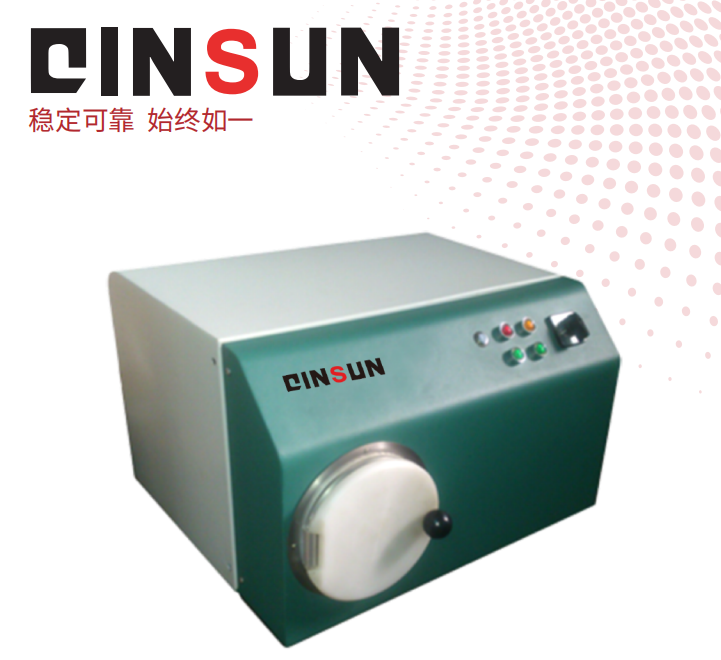
Functions and Applications of the Textile Fabric Steam Shrinkage Tester
The core function of the Textile Fabric Steam Shrinkage Tester is to simulate the shrinkage behavior of fabrics during finishing processes (such as ironing and steaming) or actual use.
Main Functions
Measurement of Dimensional Change Under Steam:
Through standardized steam treatment, the system accurately determines the percentage of shrinkage or elongation in both warp and weft directions.
Evaluation of Thermal Stability:
Assesses the structural stability of fabrics under moist heat conditions, particularly suitable for sensitive materials such as wool, silk, and knitted fabrics.
Process Optimization Support:
Provides data support for finishing processes such as heat setting and pre-shrinking, helping to reduce deformation risks during actual use.
Compliance with International Standards:
Testing methods typically follow standards such as ISO and GB/T, ensuring that results are comparable and authoritative.
Typical Applications
Quality Control:
Widely used in the production of garments, home textiles, and industrial textiles to ensure compliance with dimensional stability requirements.
R&D Support:
Helps fabric developers optimize fiber blending ratios, fabric structures, and finishing processes.
Trade Compliance:
Test reports issued by third-party laboratories with CMA/CNAS accreditation can meet domestic and international market access requirements.
Evaluation of Children’s Clothing and Special Fabrics:
Since dimensional changes directly affect wearing safety and fit, such products require stricter testing and evaluation.
Applicable Industries of the Textile Fabric Steam Shrinkage Tester
Textile steam shrinkage testing is primarily used to evaluate the dimensional stability of fabrics under thermal steam conditions and is widely applied across the following industries:
Garment Manufacturing:
Ensures that finished garments maintain their shape and size during ironing, dry cleaning, and daily use, especially for sensitive fabrics such as wool and silk.
Home Textiles:
Applies to products such as curtains, bedding, and towels, where shrinkage after washing or steam treatment must be controlled to ensure proper performance and appearance.
Industrial Textiles:
Includes materials such as industrial filter fabrics and conveyor belt base fabrics, where strict dimensional stability is required to ensure functional reliability.
Nonwoven and Medical Textiles:
Used for products such as surgical gowns and face masks, which must undergo steam testing to verify structural stability under sterilization or high-temperature conditions.
Quality Inspection and Research Institutions:
Third-party testing laboratories (such as Zhongxi Research Institute and Beijian Research Institute) utilize this testing method to provide authoritative data in compliance with international standards such as ISO, AATCC, and GB.
Technical Features of the Textile Fabric Steam Shrinkage Tester
The technical features of the Textile Fabric Steam Shrinkage Tester are mainly reflected in its precise control of steam conditions, high measurement accuracy, and standardized testing procedures. Its core technical characteristics are as follows:
Core Technical Features
High-Stability Steam Generation and Control System
The equipment provides stable, uniform, and controllable saturated steam flow. Key parameters such as steam pressure, injection time, and the distance between the specimen and the steam nozzle can be precisely adjusted to simulate real industrial steaming conditions.
High-Precision Measurement System
Equipped with precision measuring scales or calibrated measuring platforms, with an accuracy of at least 0.5 mm. Some advanced systems adopt optical or digital imaging technologies for automatic measurement, effectively reducing human error.
Standardized Sample Conditioning Process
Samples are pre-conditioned under standard temperature and humidity conditions. After steam treatment, they are naturally cooled, air-dried, and reconditioned in a standard atmosphere before final measurement, ensuring consistency and comparability of results.
Multi-Directional Shrinkage Measurement
Typically, at least three pairs of reference marks are set in both warp and weft directions. Shrinkage percentages are calculated separately for each direction, providing a comprehensive evaluation of fabric dimensional stability.
Automation and Data Integration Capability
Some high-end systems are equipped with automated data acquisition and analysis software, supporting advanced technologies such as 3D point cloud analysis and non-rigid registration algorithms. These features improve the accuracy of detecting micro-deformations after dry cleaning or steam treatment.
How to Operate the Textile Fabric Steam Shrinkage Tester
Test Principle
A fabric specimen marked with reference dimensions is exposed to a saturated steam environment under no tension. The shrinkage in both warp and weft directions is calculated by measuring the change in distance between marked points before and after treatment.
Operating Procedure
According to standards such as FZ/T, ISO, and general industry practices, the procedure is as follows:
1. Sample Preparation
Cut specimens at least 10 cm away from the fabric edge, typically sized 300 mm × 50 mm.
Condition the samples under standard atmospheric conditions (e.g., 20 ± 2°C, 65 ± 4% RH) for 24 hours.
2. Marking Initial Dimensions
Use a precision ruler to mark a 250 mm gauge length along both warp and weft directions (using staples or fine threads).
Record the initial length (L₀) with an accuracy of 0.5 mm.
3. Steam Treatment
Place the specimen flat on the metal mesh support of the tester without applying tension.
Introduce steam at 70 ± 14 g/min to preheat the chamber for 1 minute.
Insert the specimen into the steam chamber for 30 seconds, then remove and cool at room temperature for 30 seconds.
Repeat this in–out cycle three times.
4. Final Measurement
Recondition the treated specimen under standard atmospheric conditions for 24 hours.
Measure the distance between marked points again (L₁) with an accuracy of 0.5 mm.
5. Result Calculation
The steam shrinkage (%) is calculated as follows:
\text{Shrinkage (%)} = \frac{L_0 - L_1}{L_0} \times 100
Key Equipment and Parameters
Testing Instrument: Textile Fabric Steam Shrinkage Tester (e.g., models from Hong Kong Standards and Testing organizations)
Steam Pressure: 0–0.4 MPa
Steam Temperature: Approximately 100–150°C (saturated steam)
Number of Samples: Typically 4 specimens tested simultaneously
Applicable Standards: FZ/T, ISO, ASTM (partially applicable)
Precautions
Ensure specimens are placed without tension to avoid affecting test results.
Regularly calibrate the steam generator to maintain a stable steam flow rate.
Different fiber types (such as cotton, polyester, and wool) exhibit significantly different shrinkage behaviors, so results should be interpreted in conjunction with material characteristics.
Maintenance Methods for the Textile Fabric Steam Shrinkage Tester
Routine and Periodic Maintenance
Cleaning the Steam Chamber and Internal Components:
After each use, remove residual fibers and dust. Wipe the stainless steel support frame and the inner wall of the steam generator with a soft cloth to prevent the buildup of scale or contaminants.
Checking Steam Sealing Performance:
Regularly inspect door seals and pipe connections for aging or leakage to ensure stable steam pressure during operation.
Calibration of Timer and Reference Scale:
Before use, verify the accuracy of the automatic timer. Calibrate shrinkage measurement accuracy using a 250 mm reference template.
Drainage and Anti-Corrosion Treatment:
Drain condensed water promptly after use and keep the equipment dry to prevent corrosion of stainless steel components.
Lubrication of Moving Parts:
If the system includes mechanical transmission or movable support structures, apply food-grade lubricating oil periodically according to the manufacturer’s instructions.
Long-Term Maintenance Recommendations
Annual Professional Calibration:
Conduct a comprehensive calibration once a year by a qualified third-party organization to ensure compliance with standards such as ISO and AATCC.
Replacement of Wear Parts:
Regularly replace consumable components such as sealing rings and heating elements based on usage frequency (typically every 500–1000 operating hours).
Proper maintenance ensures stable performance, extends equipment lifespan, and guarantees the accuracy and reliability of test results.
Importance of the Textile Fabric Steam Shrinkage Tester
Steam shrinkage testing of textiles is a critical process for evaluating fabric dimensional stability, and its importance runs throughout the entire textile and apparel industry chain.
1. Ensuring Product Quality and Consumer Experience
Steam shrinkage testing directly affects the dimensional stability and appearance of final products. If fabrics undergo uncontrolled shrinkage after steam treatment (such as ironing or pressing), it can lead to pattern distortion, sewing difficulties, and ultimately poor garment fit and comfort.
This is especially critical for high-end garments such as suits and overcoats that require high-temperature steam finishing, as well as uniforms and workwear where dimensional accuracy is essential. By pre-testing and selecting fabrics with qualified dimensional stability, manufacturers can effectively reduce the risk of returns and claims caused by size inconsistencies, thereby enhancing brand reputation.
2. Guiding Process Optimization and Risk Control
This test provides essential data support for manufacturers. Based on the results, producers can understand how specific fabrics respond to steam exposure and adjust production processes accordingly, such as implementing pre-shrinking treatments.
It enables full-chain quality control from raw materials to finished products, ensuring product consistency and compliance with international trade standards and buyer specifications. For the development of new fibers and fabrics, evaluating thermal and moisture behavior is also indispensable.
3. Core Testing Content and Standardized Procedures
The core of steam shrinkage testing is to measure the percentage change in length of fabric specimens in both warp and weft directions before and after saturated steam treatment.
The method is applicable to a wide range of textiles, including woven and knitted fabrics, especially natural fibers such as wool, silk, and cotton, as well as their blends. Standard procedures typically include sample preparation and marking, steam treatment, reconditioning, measurement, and shrinkage calculation.
4. Support from Modern Testing Technology and Equipment
Modern textile dimensional stability testers integrate programmable control systems, constant-temperature circulation systems, and high-precision measurement technologies. These systems enable accurate and repeatable evaluation of fabric dimensional changes after washing, dry cleaning, drying, and steam treatment.
Such advanced equipment provides strong technical support for obtaining objective data and improving testing efficiency, making it an essential tool for textile quality control and R&D.
In summary, textile steam shrinkage testing is not only a key step in production quality control, but also a fundamental pillar for enhancing product competitiveness, protecting consumer rights, and promoting continuous technological innovation in the textile industry.We sincerely welcome your inquiries and discussions. Please feel free to leave a message or contact us directly so that we can provide detailed product information, demonstration videos, or customized solutions tailored to your needs, helping you gain a comprehensive understanding of the equipment’s capabilities and advantages.