

What is a Fabric Water Absorption Tester?
The Fabric Water Absorption Tester is a specialized instrument used to quantitatively measure the water absorption performance of textiles, nonwoven fabrics, and similar materials. It is widely applied in industries such as textiles, hygiene products, and medical materials. The device primarily simulates real-life conditions in which fabrics come into contact with moisture, in order to evaluate their ability to absorb water. Key performance indicators include water absorption rate, absorption capacity (absorption ratio), and absorption under pressure. This article will introduce the device from the following aspects, aiming to provide useful reference and assistance.
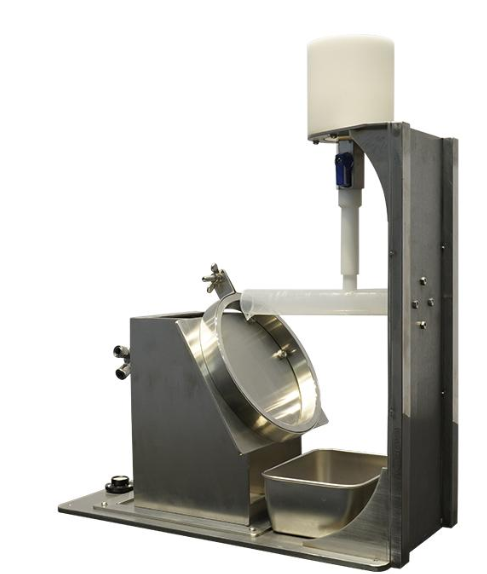
Functions and Applications of the Fabric Water Absorption Tester
The Fabric Water Absorption Tester is a professional instrument used to evaluate the water absorption performance of textiles. It is widely applied in quality control and research and development in fields such as textiles, apparel, and industrial fabrics.
Functions
Quantitative Measurement of Water Absorption Rate and Height:
Using standard methods such as capillary effect testing, the device measures the height to which liquid rises in the fabric or the amount of water absorbed per unit time.
Simulation of Real-World Usage Conditions:
The tester simulates the interaction between fabrics and liquids such as sweat or cleaning solutions, reproducing actual usage scenarios to evaluate absorption behavior.
Support for Multiple Testing Standards:
The system is compatible with internationally recognized textile testing standards, including ASTM D 4772 and GB/T 22799.
Automated Data Acquisition:
High-end models are equipped with digital sensors and dedicated software that can record and output real-time absorption curves for analysis.
Applications
Product Development:
Used in the development of high-moisture-absorbing and quick-drying fabrics, such as sportswear and medical textiles.
Quality Control:
Ensures that mass-produced fabrics meet industry standards and customer requirements for water absorption performance.
Academic Research:
Supports fundamental studies on the relationship between fiber structure, fabric design, and moisture absorption behavior.
Market Compliance:
Meets testing and certification requirements for export markets and high-end functional textile brands.
The Fabric Water Absorption Tester plays an important role in evaluating the functional performance of textiles, providing essential data support for product innovation, quality assurance, and scientific research in the textile industry.
Applicable Standards for the Fabric Water Absorption Tester
The Fabric Water Absorption Tester is primarily used to evaluate the moisture absorption capacity of textile materials, and it is widely applied across multiple industries. Its main application sectors include the following:
1. Hygiene Product Industry
Used in products such as diapers, sanitary napkins, and wet wipes, where nonwoven fabrics must undergo absorbency testing to ensure adequate liquid retention and performance stability.
2. Medical Industry
Applied to materials such as medical protective clothing, surgical gowns, and wound dressings. These products require specific absorbent or liquid-repellent properties to meet functional and safety requirements.
3. Textile and Apparel Industry
Used in the development and quality inspection of sportswear, outdoor clothing, and everyday garments to evaluate moisture-wicking, sweat absorption, or water resistance performance.
4. Nonwoven Fabric Manufacturing and R&D
Nonwoven materials are widely used in filtration, wiping products, agricultural coverings, and other applications. Water absorption performance is a key quality parameter in these fields.
5. Third-Party Testing and Research Institutions
Used for issuing authoritative test reports, supporting new material development, and verifying compliance with relevant standards and specifications.
Overall, the Fabric Water Absorption Tester plays a critical role in industries where moisture management performance is essential. It provides reliable data support for product development, quality control, and standard compliance verification across a wide range of functional textile applications.
Testing Principle of the Fabric Water Absorption Tester
The testing principle of the Fabric Water Absorption Tester varies depending on different standards and application scenarios. It can generally be divided into the following categories:
Principle Based on Siphon and Mass Change Measurement
This is one of the most widely used methods for evaluating water absorption performance under pressure or free-contact conditions:
A fabric specimen is placed on a porous plate, which is connected to a liquid reservoir via a siphon tube. The liquid level in the reservoir is lower than the porous plate, creating an initial height difference. Under constant pressure (such as loading with a weighted mass), the liquid is drawn through siphon action and absorbed by the fabric.
A high-precision electronic balance continuously monitors the mass reduction in the reservoir, allowing the system to calculate the amount of liquid absorbed by the fabric. Based on this data, parameters such as water absorption capacity and absorption rate can be derived.
Principle Based on Capillary Action and Liquid Rise Height Measurement
This method is mainly used for materials such as paper and nonwoven fabrics, and is also referenced in some textile tests:
The specimen is vertically suspended, with its lower end immersed in a liquid (e.g., distilled water) to a specified depth (such as 5 mm). Within a defined test duration (e.g., 10 minutes), the liquid rises along the fabric due to capillary action.
The height of liquid rise (in mm) is measured as an indicator of the material’s water absorption performance.
Principle Based on Wetting Rating Evaluation (Water Resistance Assessment)
Although the term includes “water absorption,” some testing configurations are actually used to evaluate water repellency:
The specimen is mounted at a 45° angle, and a specified volume of water (e.g., 500 mL) is sprayed onto its surface. After drying, the wetting pattern is compared with standard reference images to determine a wetting grade (typically 1–5) or a percentage score.
Overall, the testing principles of the Fabric Water Absorption Tester are based on fluid dynamics such as siphon effect, capillary action, and surface wetting behavior. These methods enable accurate evaluation of fabric moisture interaction characteristics, providing essential data for material development, quality control, and performance classification.
Operating Procedure of the Fabric Water Absorption Tester
The operating procedure of the Fabric Water Absorption Tester may vary slightly depending on the testing standard and instrument type, but the core steps are generally consistent.
1. Sample Preparation
Fabric specimens are cut according to standard requirements, typically in circular shapes with a diameter of about 100–125 mm.
The specimen surface must be clean, flat, and free from wrinkles or contamination to avoid affecting test results.
For repeatability, at least 5 or more parallel samples should be prepared.
2. Instrument Calibration and Parameter Setting
Check whether the instrument is properly leveled and ensure that sensors, balances, and timers are functioning correctly.
Set key test parameters according to the relevant standard, including:
Contact time (e.g., 30 s, 60 s, etc.)
Test liquid (usually deionized water; physiological saline may be used for special applications)
Sample area (ensuring consistency with the testing interface, e.g., 100 cm²)
3. Sample Installation and Fixation
Place the sample flat inside the test chamber or fixture, ensuring proper sealing to prevent liquid leakage from the edges.
Some instruments require a pressure ring or clamp to secure the edges of the specimen.
4. Liquid Application and Timing
Accurately measure the specified volume of test liquid (e.g., 50 mL or as required by the standard) and apply it to the sample or testing chamber.
Start the timer immediately to record the contact time between the liquid and the fabric.
5. End of Test and Surface Water Removal
After the specified time, remove the liquid container or tilt the instrument to drain excess liquid.
Use standard absorbent paper or a specified method to gently remove surface water.
Note: Do not press the sample, as this may force internal water out and affect accuracy.
6. Weighing and Calculation
Immediately weigh the wet sample using a high-precision balance (resolution ≤ 0.001 g) to obtain the wet mass (G₂).
The dry mass (G₁) is already known.
Water absorption is calculated using the formula:
C = \frac{(G_2 - G_1) \times 100}{A}
Where:
C = water absorption value (g/m² or mg/cm²)
G₁ = dry sample mass
G₂ = wet sample mass
A = sample area (cm²)
7. Result Recording and Analysis
Record the absorption values of each specimen and calculate the average value and standard deviation.
Compare results with relevant standards to determine compliance or to evaluate material performance differences.
8. Important Notes
Environmental Control:
Testing should be conducted under controlled conditions (e.g., 20±2°C, 65±5% RH) to minimize environmental influence.
Operation Speed:
The time from end of absorption to weighing should be as short as possible (ideally within 5 seconds) to avoid evaporation errors.
Instrument Variations:
Some automated models include touch-screen control, built-in printers, and automatic data acquisition, significantly reducing manual operation steps.
The Fabric Water Absorption Tester provides a standardized and precise method for evaluating textile water absorption performance. Proper operation ensures reliable data for quality control, material comparison, and product development.
Maintenance Recommendations for the Fabric Water Absorption Tester
To ensure long-term stable operation of the Fabric Water Absorption Tester and maintain the accuracy of test data, a systematic maintenance and troubleshooting program should be established. The following recommendations are based on general practices for precision analytical instruments and the specific characteristics of textile testing equipment.
Daily Maintenance Key Points
1.Instrument Cleaning and Storage
After each test, the testing platform, sample holding devices (such as rings), and water containers should be cleaned promptly to remove residual water and fiber debris.
The instrument should be stored in a dry and clean environment to prevent dust accumulation. When not in use for extended periods, key components should be protected with dust-proof sealing measures.
2. Maintenance of Key Components
Sensors and Measurement Units
For instruments equipped with precision sensors (such as load cells), regular checks of linearity and accuracy are required. Overloading or impact should be avoided, and the measurement area must be kept clean.
Nozzles and Water Supply System
For instruments that simulate spray testing, nozzles should be inspected regularly to prevent clogging and ensure uniform water distribution. The water supply system should be kept clean to avoid algae growth or sediment buildup that may affect flow consistency and water quality.
Electrical and Control Systems
Ensure stable power connections and avoid voltage fluctuations. The touchscreen interface should be kept clean, and sharp objects must not be used to prevent surface damage.
3. Calibration and Performance Verification
Calibration should be performed regularly according to the instrument manual or relevant testing standards such as ISO 9073-6 or EDANA 10.3-99.
Standard reference samples or materials with known performance values should be used periodically to verify repeatability and measurement accuracy.
4. Common Fault Diagnosis and Troubleshooting
When issues such as measurement deviation or operational abnormalities occur, troubleshooting should follow a “from external to internal” approach:
Environmental and Operational Factors
First, confirm whether the laboratory environment meets required conditions (temperature and humidity).
Verify that the test water meets standards in terms of quality and temperature.
Review whether sample preparation and installation procedures were correctly followed.
Instrument Component Inspection
Result Deviation Issues:
Check whether sensor readings are stable and whether spray distribution and water volume are consistent. For electronic balance components, ensure there is no vibration or airflow interference.
Mechanical Malfunctions:
Inspect sample holding rings and fixtures for looseness, deformation, or jamming.
Electrical System Failures:
If the display does not work, touch control is unresponsive, or the printer fails, check wiring connections and power supply. In some cases, faults may involve the main control board or display module.
Proper maintenance of the Fabric Water Absorption Tester not only ensures measurement accuracy but also extends the service life of the instrument. A structured maintenance routine combined with timely troubleshooting is essential for reliable and repeatable textile testing performance.
Importance of the Fabric Water Absorption Tester
The importance of the Fabric Water Absorption Tester is mainly reflected in its critical role in evaluating textile performance, ensuring product quality, and improving end-user experience. Its significance can be summarized as follows:
1. Ensuring Performance Compliance of Functional Textiles
This instrument is used to accurately measure the ability of fabrics to absorb liquid water and serves as a fundamental tool for evaluating key properties such as moisture absorption, moisture-wicking, hydrophilicity, and water resistance.
For example, sportswear requires rapid sweat absorption to keep the wearer dry, while rainwear must effectively prevent water penetration. Since different applications require completely different absorption behaviors, the tester enables precise quantification of these performance differences.
2. Supporting Industry Standards and Regulatory Compliance
The tester complies with multiple international and domestic standards, including GB/T 22799. ASTM D 4772. and ISO 9073-6. ensuring product conformity with regulatory requirements and facilitating market access and export certification.
In particular, in the medical and hygiene industries—such as nonwoven face masks and diapers—water absorption performance is directly related to product safety and effectiveness.
3. Improving Consumer Comfort and Safety
Water absorption properties directly affect wearing comfort. High-absorbency fabrics (such as cotton) quickly absorb sweat and reduce skin discomfort caused by moisture. Low-absorbency materials (such as waterproof coated fabrics) provide protection against rain and wet conditions.
In extreme environments such as high-temperature work or outdoor sports, fabric moisture management and wicking performance are closely related to human thermoregulation and health safety.
4. Driving Material Development and Innovation
By precisely measuring parameters such as absorption rate, absorption capacity, and liquid transport behavior, the tester supports the development of new fibers, finishing agents, and composite materials.
For instance, superabsorbent polymers (SAPs) can absorb 20–100 times their own weight in liquid, and their performance validation relies heavily on high-precision testing equipment.
5. Enabling Quality Control and Cost Optimization
During production, the tester helps identify batch-to-batch variations, effectively reducing defect rates and minimizing rework costs. With features such as high precision (e.g., 0.01 g resolution, ±0.5 s error), automation, and data output capabilities, it significantly improves testing efficiency.
In summary, the Fabric Water Absorption Tester is not merely a laboratory instrument but a core device that connects material science, industrial manufacturing, and end-user experience. It plays an indispensable role across multiple key industries such as textiles, medical care, and hygiene products, providing essential support for product performance evaluation, innovation, and quality assurance.