

What is a Hexapod Tumbler Test Machine?
The Hexapod Tumbler test machine is a precision testing instrument specifically designed to evaluate the appearance retention performance of carpets and other floor coverings. It scientifically measures the wear resistance, pilling tendency, and overall durability of the fabric surface by simulating repeated foot traffic and friction conditions encountered in actual use. This equipment is widely applied in textile quality control and research and development, providing objective quality testing data for manufacturers while helping related industries enhance product durability and user satisfaction. It serves as an essential tool for ensuring that floor materials meet standard requirements. This article will introduce the device from several aspects, aiming to provide a useful reference for readers.
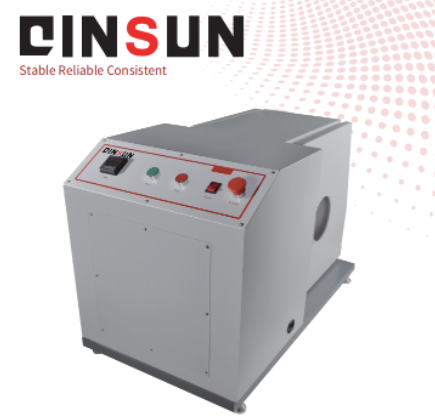
Purpose of the Hexapod Tumbler Test Machine
The Hexapod Tumbler Tester is a highly specialized laboratory instrument designed primarily to systematically evaluate the appearance retention and durability of various carpet products. Its core function lies in accurately simulating the long-term wear, continuous rolling, and everyday foot traffic that carpets may encounter in real-world use, thereby scientifically quantifying their resistance to deformation, pilling, and color fading. The main applications and specific uses of this testing machine can be described in detail as follows:
1. Comprehensive evaluation of carpet appearance retention
The primary purpose of the Hexapod Tumbler Tester is to assess the carpet’s ability to maintain its appearance. Using precision mechanical components, it simulates scenarios such as daily pedestrian traffic, furniture movement, and heavy rolling loads. The machine evaluates whether the carpet surface maintains its structural flatness and dimensional stability after repeated and sustained mechanical stress, whether the color remains even and resistant to fading, and whether unacceptable defects such as fiber wear, shedding, or pilling occur.
2. Underlay-supported testing for realistic conditions
The equipment supports testing modes that better approximate real-life installation conditions. Users can install various types and thicknesses of underlay or cushioning beneath the carpet samples according to testing requirements. This creates a composite structure closer to actual floor setups, enabling assessment of the overall performance of the carpet-underlay system. Such testing ensures that results are more representative of practical use.
3. Efficient and accelerated testing capabilities
The Hexapod Tumbler Tester features high-speed testing capabilities. A standard single test cycle is set at approximately one hour, during which the tumbler completes 2.000 rotation cycles. To achieve rigorous testing conditions, this process is typically repeated six times, totaling 12.000 rotations. Thanks to its automated design, the complete test sequence can be completed within a single working day, greatly enhancing efficiency in product development and quality control.
4. Standardized evaluation and comparable results
The instrument ensures standardized testing procedures and reliable, comparable results. Upon completion of the test, evaluations are performed strictly according to ISO 9405:2001 and relevant industry standards. This may involve visual comparison by trained personnel (against standard reference samples or untested originals) or using high-precision digital imaging systems to objectively and quantitatively assess appearance changes—such as pilling, compression marks, and gloss variation—before and after testing. These evaluations provide authoritative guidance for product grading and compliance determination.
Applicable Standards for the Hexapod Tumbler Tester
The Hexapod Tumbler Tester is primarily used to evaluate the surface durability and appearance retention performance of carpets and other textile floor coverings. Its applicable standards include the following:
BS EN 1471:1997 – British and European standard specifying the test method for assessing carpet appearance retention.
ISO 9405:2001 – International standard designating the Hexapod Tumbler as the specified testing instrument and providing guidelines for evaluating appearance changes in carpets after mechanical wear.
ISO 10361:2000 (BS) – British-adopted international standard applicable to carpet abrasion resistance testing.
Wools of New Zealand Test Methods 247 & 251 – Specialized testing methods used by the New Zealand wool industry, widely applied for evaluating carpet durability.
BS 6659 Part 2 – British standard specifically describing the use of the Hexapod Tumbler to perform fatigue testing on textile floor coverings, assessing surface structure and color changes.
These standards collectively ensure the comparability and authority of test results across international and industry contexts, and they are applicable to the durability assessment of carpets, carpet backings, and carpet-underlay composite materials.
Working Principle of the Hexapod Tumbler Tester
The Hexapod Tumbler Tester is primarily used to evaluate the appearance retention and wear resistance of carpets and other floor coverings under simulated long-term foot traffic conditions. Its working principle is based on mechanical friction that mimics real-life usage scenarios.
Working Principle:
Core Mechanism: The carpet sample is secured to the inner wall of a rotating drum, inside which a six-legged testing block (the "hexapod") equipped with polyurethane or steel pins is placed. As the drum rotates, the six-legged block rolls over the sample surface, generating random, multi-directional friction and pressure that simulates repeated walking and foot traffic by people or furniture on the carpet.
Movement Mode: Some models use a reciprocating drum design, which better replicates the real-life state of the carpet pile, improving the accuracy of the test.
Evaluation Criteria: After testing, the carpet is assessed according to relevant standards for changes in surface structure, color fading, and pilling. These evaluations provide an objective measure of the carpet's durability.
Operating Procedure for the Hexapod Tumbler Tester
The Hexapod Tumbler Tester must be operated strictly in accordance with relevant textile industry standards. It is primarily used to simulate wear under daily use conditions and to evaluate the appearance retention performance of carpets and other floor coverings. The detailed operating procedure is as follows:
1. Sample Preparation
Cut two carpet samples to dimensions of 1 m × 1 m.
Secure the samples onto flexible backing sheets using double-sided tape to ensure that the samples do not move or detach during testing.
2. Sample Installation
Mount the backed samples onto the inner surface of the test drum.
To better simulate real-life usage conditions, underlay or cushioning may be placed beneath the samples to enhance test accuracy.
3. Parameter Setting
Set the drum for 2.000 rotations per single test cycle, with a single cycle lasting approximately 1 hour.
Typically, six test cycles are performed, totaling 12.000 rotations to adequately simulate long-term use.
The drum is equipped with a reverse rotation mechanism to more realistically replicate pile disturbance during use.
4. Test Execution
Start the machine; it will automatically stop after reaching the preset rotation count.
After testing, remove the samples and clean them using a vertical vacuum cleaner to simulate regular maintenance.
5. Evaluation of Test Results
After cleaning, evaluate the samples’ appearance changes according to ISO 9405:2001 standards, using two primary methods:
Method A: Visual comparison with a standard grey card under specialized lighting.
Method B: Quantitative analysis using digital image reference scales for more precise measurements.
Maintenance Procedures for the Hexapod Tumbler Tester
Daily Maintenance (After Each Use or Daily)
Surface Cleaning: Use a soft cloth to remove dust, oil, or sample residue from the equipment casing, drum inner wall, and the hexapod mechanism to prevent foreign matter from affecting movement accuracy.
Check Fixtures and Connections: Ensure that sample holding devices are secure, and inspect for wear or deformation. Apply anti-rust oil if necessary.
Monitor Operational Status: Observe for abnormal noise, vibration, stuttering, or oil leakage.
Power Off and Cover with Dustproof Hood: Prevent dust from entering precision components.
Periodic Maintenance (Performed According to Schedule)
Weekly Maintenance:
Clean motion components such as guide rails, lead screws, and adjustment shafts.
Check all fastening screws and bolts for looseness.
Inspect cables and sensor connections for integrity and ensure they are not under tension.
Monthly Maintenance:
Apply specialized grease (e.g., lithium-based grease) to motion parts including lead screws, guide rails, and hexapod joints, avoiding excessive accumulation.
Clean dust from control cabinets and electrical boxes to ensure proper ventilation.
Conduct no-load operation tests to verify that the beam/drum moves smoothly and without deviation.
Quarterly / Semi-Annual Maintenance:
Calibrate key parameters such as force, displacement, and speed (recommended to use standard force gauges).
Inspect load sensors and extensometers for moisture, overload, or damage.
Replace heavily worn fixtures or anti-slip teeth plates (replace if wear depth > 0.3 mm).
Backup control software data and check system operation stability.
Annual Maintenance:
Perform a full precision inspection of the machine by qualified technicians (including six-degree-of-freedom motion accuracy).
Check the condition of motors, gear reducers, and bearings; replace if necessary.
Thoroughly clean the interior of the equipment and inspect electrical circuits and relays.
Upgrade or reinstall control software as required.
Significance of the Hexapod Tumbler Test Machine
The Hexapod Tumbler Test Machine is highly important because it plays an irreplaceable role in product transport safety assessment, packaging reliability verification, and quality control. The key values of this equipment can be summarized as follows:
1. Simulating Real Logistics Environments
The machine uses a hexagonal drum rotation to expose test samples to repeated, random drops, collisions, and rolling, closely replicating the complex mechanical impacts that products may encounter during storage, sorting, and transportation.
2. Revealing Design and Packaging Deficiencies
It quickly identifies issues such as insufficient structural strength, weak packaging protection, loose connections, or poor surface durability, providing direct experimental evidence for design optimization.
3. Supporting International Standards
The Hexapod Tumbler conforms to multiple international testing standards, including ISO 9405:2001 and ISTA 1A/2A, and is widely used for product certification and compliance testing in industries such as consumer electronics, small household appliances, children's toys, and textiles (e.g., carpets).
4. Enhancing Market Competitiveness and Brand Reputation
By verifying product resistance under harsh logistics conditions in advance, it reduces breakage, returns, and after-sales costs, thereby protecting user experience and brand image.
5. Broad Applicability
The tester can be used for various medium and small regular packages, including cartons, plastic boxes, and electronic products with inner cushioning. Additional padding can be added to simulate real-world use scenarios (e.g., carpet with underlay).
In summary, the Hexapod Tumbler Test Machine, as an advanced precision testing instrument, demonstrates significant value across material science, product development, and quality control. Its contributions are noteworthy and merit detailed attention and discussion.We sincerely invite and welcome readers to leave comments, share insights, or ask questions. You are also encouraged to contact us directly for detailed technical documentation, application cases, or customized solutions, enabling you to gain a comprehensive understanding of the functions and advantages of this high-performance instrument.