

What is a Universal Finger Abrasion Tester?
The Universal Finger Abrasion Tester is a highly specialized laboratory testing instrument. Its core function is to accurately simulate and reproduce the wear and aging processes that occur when human fingers, skin, or fingernails come into contact with, rub against, or press on the surfaces of various products.Through carefully designed test fixtures, programmable motion trajectories, and controllable load and frequency settings, the instrument enables systematic evaluation of material durability under long-term or high-intensity use conditions, as well as the evolution of surface performance over time.Due to its ability to closely replicate real-world usage scenarios, this tester has been widely applied in key industrial sectors such as consumer goods manufacturing, electronic product development, automotive interior and exterior component evaluation, and medical device surface validation. It has become an essential tool for assessing material abrasion resistance, coating adhesion, tactile durability, and overall appearance retention.It provides reliable experimental data support for product quality control and performance optimization. This document will introduce the equipment from the following aspects.
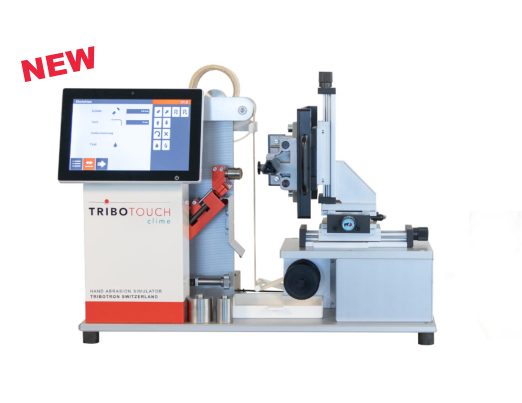
What Is the Purpose of a Universal Finger Abrasion Tester?
A Universal Finger Abrasion Tester is a testing instrument specifically designed to simulate the wear behavior that occurs when human fingers or skin come into contact with product surfaces. Its core purpose is to evaluate the resistance of materials, coatings, or finished products to fingertip friction, scratching, and chemically assisted mechanical wear during everyday use.
Simulation of Real-World Usage Scenarios
The instrument accurately reproduces actions such as finger sliding, tapping, pressing, and swiping, making it particularly suitable for high-contact components such as touchscreens, buttons, and armrests.
Evaluation of Surface Durability
It is used to assess the abrasion resistance, scratch resistance, and appearance retention of materials such as coatings, inks, plastics, metal plating, leather, and paper under repeated friction conditions.
Simulation of Realistic Contaminated or Chemical Environments
The tester can introduce substances such as sweat, sunscreen, cleaning agents, or hand lotion to simulate chemically and mechanically combined wear conditions, providing a closer representation of real-world usage.
Compliance with International Standards
It supports testing in accordance with international and corporate standards, including IEC 68-2-70. DIN EN 60068-2-70. BMW GS 97034/97045. and Ford WSS-M2P188-A1.
What Industries Are Universal Finger Abrasion Testers Used In?
A Universal Finger Abrasion Tester is primarily used to simulate wear caused by human fingers, fingernails, and skin contacting product surfaces. It is widely applied across multiple industries to evaluate material durability and surface quality under real-world usage conditions.
Automotive Industry
Used to test the abrasion resistance of interior components, exterior coatings, and control panels under frequent touching or hand friction. It complies with corporate standards such as BMW GS 97034/97045. Daimler DBL 7384. and Ford WSS-M2P188-A1.
Electronics Industry
Applied to smartphones, keyboards, touchscreens, smartwatches, and similar devices to evaluate surface coatings, glass covers, fingerprint resistance, scratch resistance, and sliding wear performance.
Aerospace and Marine Engineering
Used to evaluate the long-term surface durability of instrument panels, interior materials, and control interfaces under continuous operational use.
Household and Industrial Appliances
Used to assess the abrasion resistance of exterior coatings, handles, buttons, and frequently touched components.
Paper and Printing Industry
Used for testing writing paper, printed materials, security papers, credit cards, passports, and other identification documents for fingerprint resistance and abrasion durability.
Medical Device Industry
Used to evaluate the durability of dental materials, scale markings, and device housings under frequent contact or cleaning conditions.
Jewelry and Luxury Goods Industry
Used to assess scratch resistance and fingerprint resistance of metals, coatings, watch dials, and decorative surfaces under daily wear conditions.
Standards Compliance
This type of equipment complies with multiple international standards, including IEC 68-2-70. DIN EN 60068-2-70. and DIN 53160-2:2001. ensuring the comparability and authority of test results.
What Standards Does a Universal Finger Abrasion Tester Comply With?
A Universal Finger Abrasion Tester is primarily used to simulate wear caused by human fingers, skin, and similar contact on product surfaces. It is widely applied in automotive, electronics, household appliances, medical devices, printing, and other industries. According to publicly available information, the main applicable standards for this type of equipment include the following:
International Standards
IEC 60068-2-70: Environmental testing – Part 2-70: Test methods – Finger abrasion
ISO 12947-1: Textile abrasion resistance testing (partially supported depending on configuration)
German / European Standards
DIN EN 60068-2-70 (equivalent to IEC 60068-2-70)
DIN 53160-2:2001 (Artificial sweat resistance testing standard)
Automotive Industry Standards
BMW GS 97034 / GS 97045 (BMW internal standards)
Daimler DBL 7384 (Daimler Group standard)
Volkswagen TL 2265 (Volkswagen Group standard)
Ford WSS-M2P188-A1 (Ford global material specification)
Consumer Electronics Standards
Sony Ericsson 45/152 41-FEA 202 8139 Uen (historical Sony Ericsson standard)
Other Relevant Standards
EWIMA Specification (European Washing and Industrial Material Association)
DIN ISO 9022-12 (Environmental testing for optical instruments – resistance to sweat corrosion)
DIN EN 60068-2-70 (standardized finger abrasion test method in environmental testing)
In summary,these standards cover abrasion testing under both dry and wet conditions (e.g., sweat, sunscreen, cleaning agents, etc.), and support various simulation modes such as fingernail scratching, fingerprint resistance, and wear resistance evaluation under repeated contact conditions.
How to Operate a Universal Finger Abrasion Tester?
The operation of a Universal Finger Abrasion Tester should be carried out in accordance with the specific equipment model and applicable international or industry standards to ensure test accuracy and repeatability. The detailed operating procedure is as follows:
Basic Operating Procedure
Specimen Preparation
First, cut the specimen precisely according to the relevant test standards. Common shapes include circular or square specimens. The exact dimensions must strictly follow the specified standard; for example, a typical circular specimen diameter is Ø110 mm.
If a wet test condition is required, the specimen may be fully immersed in a specified liquid (such as artificial sweat, oil contamination, or cleaning solution), or uniformly sprayed using a spray device prior to testing.
Installation of Test Head and Test Fabric
Select the appropriate “finger” simulation test head according to the test objective. Common types include steel cones, diamond tips, and rubber fingertip pads, used to simulate different types of finger contact materials.
Then, securely attach the test fabric (e.g., standard cotton cloth or nonwoven fabric) onto the test head. If necessary, the fabric may also be pre-soaked in a specified liquid to better simulate real friction conditions.
Test Parameter Settings
Load: Typically adjustable from 1 N to 20 N, depending on product standards. For example, smartphone touchscreen testing commonly uses a 5 N load.
Speed: Usually set to 60 mm/s, though some test modes support higher speeds such as 200 mm/s or 700 mm/s, especially for high-speed scratch simulation (e.g., fingernail scratch testing).
Stroke: Adjustable within 4 mm to 40 mm. For example, a 20 mm stroke is often used to simulate swipe or zoom actions, while short strokes of 4–10 mm are used for tapping simulations.
Cycle Count: Can be set from a single cycle up to extremely high values (up to 100 million cycles) depending on durability requirements.
Mode Selection:
Standard Mode: Simulates everyday actions such as tapping and swiping
Mode A: Suitable for high-speed sliding applications such as gaming or rapid page scrolling
Mode E: Special high-speed scratch mode compliant with standards such as BMW GS 97034-2
Start Testing
Activate the pneumatic drive system to bring the test head into contact with the specimen surface at a 45° angle, and begin the preset reciprocating friction motion.
During testing, the system may automatically dispense test liquids (e.g., sweat, dirt suspensions, etc.) onto the test area to enhance realism and ensure consistent testing conditions.
Post-Test Evaluation
After testing, carefully remove the specimen and evaluate surface damage through visual inspection, optical microscopy, or weight measurement methods.
For more precise quantitative analysis, a 3D surface profilometer (such as Standard Groups® series instruments) may be used to measure surface morphology, deformation depth, or roughness changes, providing objective numerical evaluation results.
Key Considerations
Standard Compliance:
The equipment complies with multiple international standards, including DIN EN 60068-2-70 and IEC 60068-2-70. and is widely used for surface wear testing of consumer electronics, automotive interior components, household appliances, and other products.
Environmental Compatibility:
The system can operate under dry, humid, and high-temperature conditions, effectively simulating various real-world usage environments.
Multi-Station Options:
For example, Standard Groups® models may support simultaneous testing of up to three specimens, making them suitable for high-throughput laboratory or quality control applications and significantly improving testing efficiency.
How to Maintain a Universal Finger Abrasion Tester?
The maintenance of a Universal Finger Abrasion Tester can be summarized as follows:
Daily Maintenance Recommendations
Regular Cleaning of Sensors:
Sensor surfaces are prone to dust and contamination, which may affect measurement accuracy. They should be inspected and cleaned regularly to ensure sensitivity and reliability.
Lubrication of Mechanical Components:
Moving parts such as guide rails and sliding rods should be lubricated periodically with an appropriate amount of lubricant to prevent wear and mechanical sticking.
Inspection of the Loading System:
Verify that loading components such as weights and measuring rods are free from rust or deformation, and ensure that the applied loads meet standard requirements.
Cleaning of Friction Contact Areas:
After each test, promptly clean residual materials from the friction plate or contact surfaces to prevent contamination from affecting subsequent test results.
Calibration and Verification:
Regularly calibrate the equipment using standard reference specimens to ensure repeatability and accuracy of test data.
Precautions
Avoid operating the equipment in high-humidity or dusty environments, as these conditions may reduce the service life of electronic and mechanical components.
If the device is equipped with a touchscreen display, clean it with a soft cloth only. Do not use corrosive cleaning agents.
For model-specific maintenance instructions, it is recommended to contact the manufacturer or supplier to obtain official documentation.
Why Is a Universal Finger Abrasion Tester So Important?
The importance of a Universal Finger Abrasion Tester lies in its ability to realistically simulate repeated friction between human fingers or skin and product surfaces, thereby evaluating material wear resistance, durability, and surface stability under real-world usage conditions. This type of equipment plays an irreplaceable role across multiple key industries, and its core significance is reflected in the following aspects:
High Simulation Accuracy
The instrument can precisely reproduce finger actions such as sliding, pressing, and rubbing. It can also incorporate real environmental media such as sweat, cleaning agents, and sunscreen, providing test data that closely reflects actual usage scenarios.
Cross-Industry Applicability
It is widely used in industries such as automotive (interior components and coatings), electronics (mobile phone screens and keyboards), medical devices (device housings and dental coatings), packaging (passports and credit cards), aerospace, and household appliances.
Standardization and Compliance
The equipment complies with multiple international and corporate standards, including IEC 60068-2-70. DIN EN 60068-2-70. as well as internal testing specifications from companies such as BMW, Ford, and Sony.
Improving Product Quality and Service Life
By quantifying material performance under repeated friction, it helps manufacturers optimize material formulations and surface treatment processes, thereby extending product lifespan.
Support for Research and Development
It provides a reliable and repeatable testing platform for the development of new materials, such as flexible electronics, smart textiles, and wear-resistant coatings.
In conclusion, the Universal Finger Abrasion Tester is not only a fundamental quality control tool, but also a key device for driving product innovation and continuous improvement of user experience. While ensuring product durability and reliability, it provides valuable experimental data for R&D teams, thereby supporting the application of new materials and the optimization of product design.We sincerely invite you to visit our official website for more detailed technical specifications, application cases, and the latest updates regarding this equipment.