

FAQs About Simulated Human Body Underwear Tester
The Human Body Simulation Underwear Testing Machine is a specialized device designed to evaluate various types of underwear—particularly form-fitting garments—under realistic wearing conditions. It assesses the physical pressure exerted on the body, long-term wearing comfort, and functional performance of the clothing.By accurately replicating the human body’s anatomical structure and simulating a variety of daily dynamic movements, the machine precisely quantifies the mechanical properties of the garment-skin interface, such as pressure distribution and friction coefficient, as well as thermal and moisture characteristics, including breathability and moisture management.This enables comprehensive and objective data support for underwear product design improvements, material selection, and systematic optimization of wearing comfort.
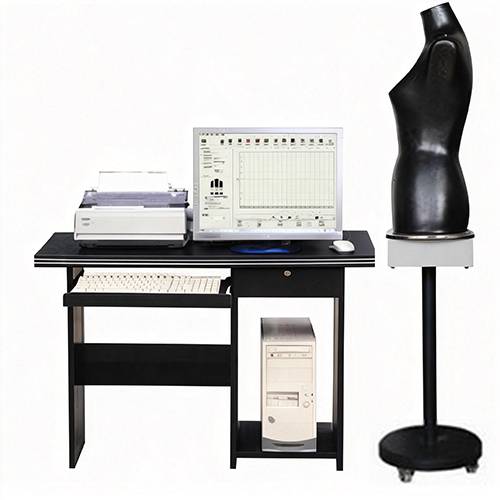
Which Industries are Suitable for the Simulated Human Body Underwear Tester?
The Simulated Human Body Underwear Tester, developed based on sweating and thermoregulating manikin technology, is widely applied across multiple industries:
Apparel and Textile Industry
Used to test underwear, sportswear, and functional garments for thermal resistance (Clo value), moisture resistance, breathability, and overall thermal-moisture comfort performance. Compliant with international standards such as ISO 15831 and ASTM F2370.
Personal Care and Adult Incontinence Products
Specifically designed to evaluate adult diapers, incontinence underwear, and similar products for absorption rate, leak-proof performance, water retention, and skin-contact comfort, simulating real human sweating and excretion conditions.
Automotive and Aerospace Industry
Assesses thermal regulation of underwear or protective garments for occupants or astronauts under extreme environments, such as high-temperature vehicle cabins or spacesuit scenarios, ensuring thermal comfort and safety.
Home Appliances and Electronics Industry
Tests the thermal impact of products like electric blankets, heaters, and portable heating devices on skin-contact layers (e.g., underwear) to prevent local overheating or burn risks.
Occupational Safety and Protective Equipment Development
Provides thermal-moisture performance data for underwear layers in firefighter suits, chemical protective clothing, military garments, optimizing overall ergonomic and protective system performance.
Medical and Rehabilitation Devices
Evaluates post-surgery underwear, compression garments, and incontinence care products for sensitive skin compatibility, supporting personalized medical and rehabilitation solutions.
In summary, the Simulated Human Body Underwear Tester is not only a core tool for underwear R&D but also a key device for ensuring thermal comfort and product safety. It has significant application value across apparel, healthcare, automotive, aerospace, home appliances, and occupational protective industries.
What functions does a simulated human body underwear tester perform?
Multi-point micro-force measurement
High-precision force sensors are installed at key contact areas of the simulated human model (e.g., chest, back, shoulders, waist sides) to measure the tiny forces exerted by underwear on the skin. Measurement range typically spans 0.00–200.00 cN with an accuracy of 0.03 cN.
Dynamic body shape simulation
The tester can simulate changes in human body shape (e.g., expansion and contraction), with a control range of 0–50 mm, enabling assessment of how underwear adapts to different body states and the stability of pressure distribution.
Long-term pressure monitoring
Continuously records pressure variation curves of underwear under static or dynamic conditions, evaluating long-term pressure attenuation or garment deformation after prolonged wear.
Multi-station parallel testing
Some models support multiple testing positions simultaneously, improving efficiency and enabling batch product evaluation.
Environmental simulation and extension
Advanced versions can integrate temperature and humidity control (e.g., 37℃ ± 1℃) and fluid immersion (physiological saline), simulating real wearing environments to assess material aging and performance changes.
How to Use the Simulated Human Body Underwear Tester?
The Simulated Human Body Underwear Tester is not a single device but a system of specialized instruments tailored to different testing objectives. Based on current practices, it can be divided into two main categories:
Devices for Mechanical Performance Testing of Underwear or Shapewear
These devices simulate the effects of body movement or pressure on underwear or shapewear, commonly used in product development and quality control.
Applicable products: Shapewear, sports underwear, supportive underwear, etc.
Core test parameters:
Compression performance (compression ratio, pressure distribution)
Tensile strength and elastic recovery
Fatigue durability (repeated compression)
Dynamic comfort (restriction sensation during movement)
Operating Steps:
Prepare the sample: Flatten and fix the underwear or shapewear on the testing fixture, ensuring no wrinkles.
Set parameters: Use the control panel (e.g., 7-inch touchscreen) to select the test type (compression, tensile, cyclic fatigue, etc.), load range (e.g., 0–500 N), speed (e.g., 90 ± 10 mm/min), and number of cycles.
Start the test: Press “Start” to begin automatic testing. The system collects force, displacement, and pressure distribution data in real time.
Generate reports: After testing, the system automatically produces stress-strain curves, pressure distribution maps, and pass/fail results.
Example equipment: Universal testing machines, pressure mapping systems, Martindale abrasion testers, etc.
Thermal-Moisture Comfort Testing Using a Heated/Sweating Mastemnikin Sy
These devices simulate human sweating and heat dissipation to evaluate the breathability, moisture management, and thermal insulation of underwear.
Applicable products: Daily underwear, sports underwear, protective garments, and other products with high thermal-moisture comfort requirements.
Core test parameters:
Thermal resistance (insulation capability)
Moisture permeability index (sweat wicking)
Evaporative resistance
Dynamic or static wearing comfort
Operating Steps:
Preconditioning: Place the heated or sweating manikin (multi-segment copper manikin or sweating manikin) in a controlled temperature and humidity environment (e.g., 22°C ± 2°C) for 30 minutes to preheat.
Dress the sample: Put the underwear on the manikin, ensuring natural body fit.
Set test mode:
Constant temperature mode: Set body segment temperatures (e.g., 34°C) to measure garment thermal resistance.
Sweating mode: Activate the simulated sweating system to measure evaporative resistance and moisture permeability index.
Run the test: Activate motion modes such as walking or standing (if applicable) to record heat flux and humidity changes in different body regions.
Analyze results: Use software to generate thermal-moisture performance maps and comprehensive comfort scores.
How should the simulated human body underwear tester be maintained going forward?
The Simulated Human Body Underwear Tester is a professional testing device, and its maintenance should follow general instrument care principles as well as industry-specific standards.
1. Daily Cleaning and Surface Care
Use a soft, lint-free cloth dampened with neutral detergent or clean water to gently wipe the device surface. Avoid strong acids, alkalis, or corrosive solvents.
For devices with sensor windows or probe contact surfaces, ensure they are free of dust, dirt, or moisture. Clean with a dry soft cloth or specialized lens tissue.
2. Environmental and Storage Requirements
Store the device in a well-ventilated, dry, and shaded area, avoiding direct sunlight to prevent material aging or discoloration.
Avoid high humidity environments to prevent internal circuit moisture. Keep the device away from water sources and high-temperature heat sources.
3. Connectivity and Functional Checks
Regularly inspect power cords, data interfaces, and mechanical connectors for looseness or wear, ensuring all connections are secure.
For computer-integrated testers, avoid connecting unknown USB drives or external storage to prevent virus infections.
4. Periodic Calibration and Performance Verification
Daily / Before Each Use: Run the self-check procedure to confirm software operation, check for error messages, and verify indicator lights are functioning properly.
Quarterly / Annually: Have the device fully calibrated by a professional engineer or return it to the manufacturer. Calibration should include sensor accuracy and measurement consistency verification.
Calibration must follow national metrology standards or manufacturer guidelines to ensure data accuracy.
5. Troubleshooting and Support
In case of anomalies, do not attempt to disassemble the device yourself. Contact the manufacturer or authorized service provider immediately.
Keep a record of the device model, serial number, and detailed fault description to facilitate rapid technical support.
Why the Simulated Human Body Underwear Tester is So Important?
The Simulated Human Body Underwear Tester is essential because it provides a safe, controllable, and repeatable way to objectively evaluate key performance indicators of underwear products under real-wearing conditions, including fit, comfort, thermal-moisture performance, and pressure distribution. Its significance can be summarized in the following aspects:
1. Avoids Risks and Ethical Issues of Human Testing
By using high-fidelity human body models instead of real participants, the tester can safely conduct extreme environment tests (e.g., high/low temperatures, high humidity) and pressure assessments, effectively avoiding ethical controversies and potential health risks.
2. Provides Quantitative and Repeatable Scientific Data
Equipped with high-precision sensors (e.g., temperature, humidity, force, displacement), the simulator can capture biomechanical metrics such as thermal resistance (Clo), moisture resistance, local pressure, and compression levels, offering reliable data for product design optimization.
3. Supports Multiple Scenarios and Diverse User Coverage
The system can simulate different ages, genders, body sizes (e.g., 5th, 50th, 95th percentile), and physiological states (e.g., sweating, sitting, walking), allowing accurate evaluation for specific markets such as adult women, post-surgery users, and athletic populations.
4. Accelerates R&D and Compliance to Market Standards
By conducting virtual or physical trials before physical garment production, the tester significantly shortens development cycles, reduces prototyping costs, and ensures compliance with international standards.
In summary, the Simulated Human Body Underwear Tester is not only an indispensable tool in the product development stage but also a critical infrastructure for ensuring consumer safety, optimizing wearing comfort, and driving the industry toward digitalization and inclusivity.By precisely simulating human body shapes and dynamic movements, the device allows brands to better understand product performance in real use scenarios, ensuring comfort and safety while laying a solid foundation for technological innovation and sustainable development in the underwear industry.We invite you to visit the official website for detailed technical specifications, application cases, and related information.