

FAQs About Drying Rate Tester Heated Plate Method
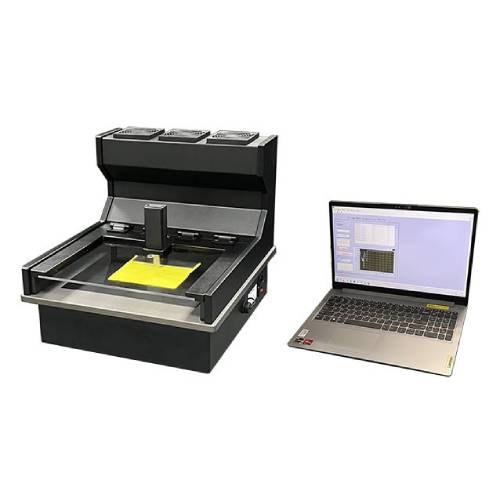
The Drying Rate Tester (Heated Plate Method) is a high-performance specialized instrument designed for the accurate determination of the drying rate of textiles. Based on the core principle of the heated plate method, this instrument evaluates the moisture evaporation and transfer efficiency of materials by simulating the drying process under specific temperature and humidity conditions.It is widely used in the research and development, performance evaluation, and quality control of garments, sports fabrics, underwear, and various textile materials that require strict moisture absorption, perspiration management, and quick-drying performance. It is one of the key testing devices for assessing the dynamic moisture comfort of textiles.
What is Drying Rate Testing?
Drying rate testing is a standardized experimental method used to evaluate the drying performance of fabrics. It quantifies drying efficiency by accurately measuring the time required for a wet fabric to become completely dry under specified conditions.
The drying rate tester is the core equipment used to perform this test. Its working principle mainly relies on a constant-temperature heated plate to simulate heat source conditions in real use scenarios. Specifically, the temperature of the heated plate is typically set and maintained at 37°C (99°F). This temperature is selected to simulate the typical surface temperature of human skin when perspiration begins, making the test conditions closely resemble the moist environment encountered during actual wear.
During the test, when a wet fabric sample is placed on the heated plate, the evaporation of moisture absorbs heat, causing a noticeable drop in the fabric’s temperature. As the drying process continues and moisture gradually evaporates, the temperature of the fabric rises progressively until it returns to a level close to that of the heated plate. At this point, the fabric is considered completely dry.
By monitoring this temperature change over time and recording the corresponding duration, the drying rate of the fabric can be calculated, providing important data for evaluating its moisture absorption and moisture management performance.
What Are the Testing Standards for the Drying Rate Tester (Heated Plate Method)?
The Heated Plate Method for determining the drying rate of textiles is currently based on several major international and domestic standards:
Major International and Domestic Standards
AATCC 201-2012:
Developed by the American Association of Textile Chemists and Colorists (AATCC), “Drying Rate of Fabrics: Heated Plate Method” is a widely recognized international testing method. This standard simulates human perspiration conditions. Under constant temperature (typically 37°C) and airflow (e.g., 1.5 m/s), a fixed amount of water (e.g., 0.2 mL) is applied, and the drying process is monitored to calculate the drying rate.
FZ/T 01176-2024:
A newly released recommended Chinese textile industry standard, officially implemented in 2024. It introduces the heated plate method systematically into China’s textile drying rate testing field. Compared with earlier drafts, it significantly improves temperature control accuracy (±0.5°C), airflow range (0.5–2.5 m/s), and data fitting methods (7/25-point segmented fitting).
GB/T 38473-2020:
A Chinese national standard titled “Textiles — Determination of Drying Rate under Dynamic Conditions (Evaporative Heated Plate Method)”. Although it refers to an “evaporative heated plate,” its principle still falls within the heated plate method and is suitable for simulating drying performance under dynamic wearing conditions.
Scope of Application and Limitations
Applicable fabrics:
Suitable for general textiles such as woven and knitted fabrics. Not suitable for materials with excessive thickness, severe surface wrinkling, large open structures, or fabrics that prevent moisture penetration.
Key parameters:
Water volume: typically (0.200 ± 0.001) mL
Hot plate temperature: 37 ± 0.1°C (AATCC 201) or ±0.5°C control accuracy (FZ/T 01176-2024)
Airflow speed: 0.5–2.5 m/s (FZ/T 01176-2024) or 1.5 ± 0.1 m/s (AATCC 201)
Recommended Selection Guidelines
For international trade or export products, AATCC 201 is recommended.
For the Chinese market or domestic certification, the latest FZ/T 01176-2024 should be adopted.
For research on dynamic wearing comfort (e.g., sportswear), GB/T 38473-2020 can be referenced.
What Are the Applications of the Drying Rate Tester (Heated Plate Method)?
The Drying Rate Tester (Heated Plate Method) is mainly used to evaluate the drying speed of textiles under simulated human perspiration conditions. Its core applications include:
Evaluating moisture management and quick-drying performance:
By simulating skin temperature (37°C) and controlled moisture supply, the tester measures the evaporation rate of water from fabrics in a controlled environment, thereby quantifying their drying capability.
Supporting functional apparel development:
It is especially suitable for the development of sportswear, casual wear, underwear, and other textiles with high comfort requirements, helping optimize fabric structures and finishing processes.
Compliance with international testing standards:
Testing is conducted according to standard methods such as AATCC 201-2014. ensuring that results are comparable and authoritative within the industry.
Providing real-time drying process data:
Some advanced equipment (e.g., Constant Power Drying Rate Testers) can continuously monitor weight or temperature changes and generate drying curves, enabling in-depth analysis of evaporation dynamics.
Applicable to various fabric types:
Suitable for woven fabrics, knitted fabrics, nonwovens, and even cut pieces of finished garments.
This tester is widely used in textile quality control, product development, and third-party testing institutions, making it an essential tool for evaluating the “quick-dry” performance of textiles.
What Is the Function of the Drying Rate Tester (Heated Plate Method)?
The Drying Rate Tester (Heated Plate Method) is primarily used to simulate human perspiration conditions and measure the drying speed of fabrics after moisture exposure, thereby evaluating their wearing comfort. It is especially suitable for textiles such as sportswear, casual wear, and underwear that require high moisture management performance.
Core Functions and Principle
Simulation of real wearing conditions:
The fabric is placed on a constant-temperature heated metal plate at 37°C (close to human skin temperature), while water is supplied at a controlled rate (e.g., 10 mL/hr) to simulate perspiration.
Real-time monitoring of the drying process:
The tester continuously measures changes in fabric mass to calculate the amount of moisture evaporated per unit time, thereby determining the Drying Rate (DR).
Quantification of fabric performance:
A higher drying rate indicates faster moisture transport, meaning the fabric feels less sticky and provides greater comfort during wear.
Main Application Scenarios
Textile R&D and quality control:
Used to compare the effects of different fabrics, finishing processes, or blend ratios on drying performance.
Compliance with international standards:
Testing is conducted in accordance with standards such as AATCC 201-2014. which is widely recognized worldwide.
Product development support:
Helps manufacturers optimize fabric structures and improve the market competitiveness of functional apparel.
How to Operate the Drying Rate Tester (Heated Plate Method)?
The operation of the Drying Rate Tester (Heated Plate Method) is mainly based on industry standards such as FZ/T 01176-2024 and AATCC 201-2012. Its core principle is to simulate the fabric drying process using a constant-temperature heated plate and to calculate the drying rate through real-time measurement of mass changes. The procedure is as follows:
Instrument Preparation
Ensure the heated plate surface is clean and level.
Set the plate temperature (typically 37°C, simulating human skin temperature).
Configure a constant water supply system (e.g., set a dripping rate of 10 mL/hr).
Sample Preparation
Cut the fabric sample to the specified size (e.g., 10 cm × 10 cm).
Measure the initial dry weight (optional; some methods test directly in the wet state).
Sample Placement
Place the sample flat on the heated plate, ensuring full contact with the surface.
Start the water supply system to uniformly wet the sample (or directly apply a fixed amount of water).
Start Testing
Activate a high-precision balance or weighing module to continuously record the sample mass over time.
Continue the test until the mass stabilizes (typically less than 30 minutes).
Data Recording and Calculation
Calculate the drying rate (DRCP) based on the mass loss curve, expressed in mL/hr or g/(m²·h).
Generate drying curves to analyze parameters such as critical moisture content and equilibrium moisture content.
Completion and Cleaning
Remove the sample after testing and clean the heated plate and weighing system.
Allow the instrument to cool before conducting the next test.
Why Is the Drying Rate Tester (Heated Plate Method) So Important?
The importance of the Drying Rate Tester (Heated Plate Method) lies in its critical role in textile performance evaluation, product development, and quality control. The key reasons are as follows:
Accurate quantification of drying performance:
This method simulates human skin temperature (typically 37°C) along with controlled airflow and humidity conditions to precisely measure the rate of moisture evaporation from fabrics (unit: mL/h), providing repeatable and comparable quantitative data for drying rate evaluation.
Support for functional textile development:
In fields such as sportswear, underwear, and outdoor apparel—where moisture management and quick-drying performance are essential—the heated plate method effectively differentiates the impact of various fibers (e.g., cotton, polyester) and fabric structures (knitted vs. woven) on drying rate, supporting material optimization.
Standardization and industry compliance:
The latest Chinese textile industry standard FZ/T 01176-2024 officially adopts the heated plate method and significantly improves temperature control accuracy (±0.5°C), defines airflow ranges (0.5–2.5 m/s), and introduces more refined data fitting methods, enhancing the scientific validity and authority of the test.
Improvement of product comfort and market competitiveness:
Drying rate directly affects wearing comfort. For example, water-repellent finishes can reduce drying rates by more than 60%, while fabrics such as Coolmax® dry about 42% faster than standard polyester. These differences can be accurately identified using the heated plate method, guiding product positioning and marketing.
Wide applicability and high efficiency:
The method is suitable for most conventional fabrics, with testing typically completed within 30 minutes, making it ideal for rapid screening in both laboratories and production environments.
In summary, the Drying Rate Tester (Heated Plate Method) is a precise and efficient evaluation tool that plays an indispensable role in textile research and development. It is also a key element in ensuring consistent product performance, meeting the growing demand for high-quality consumer products, and complying with industry standards and regulations.We sincerely invite you to visit our official website for more detailed technical specifications, application cases, and related information about this equipment. We look forward to further communication and exploring potential cooperation opportunities to jointly promote industry development and progress.