

FAQs About Textile UV Protection Performance Tester
The Textile UV Protection Performance Tester is a precision instrument specifically designed to quantitatively evaluate the ultraviolet (UV) protection capability of textiles. By simulating ultraviolet radiation in sunlight, it accurately measures the blocking performance of fabrics against both UVA and UVB wavelengths, and calculates key protection indicators such as the Ultraviolet Protection Factor (UPF).This equipment is widely used in textile production quality control, new product research and development, as well as market supervision and compliance testing. It is an essential tool for ensuring that textiles provide effective sun protection and for safeguarding consumer health and safety.
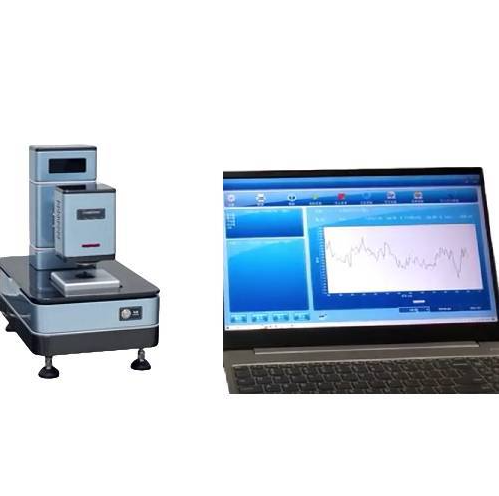
What is the purpose of a Textile UV Protection Performance Tester?
The Textile UV Protection Performance Tester is a professional instrument used to evaluate the UV protection performance of textiles. Its main applications include:
Measurement of Ultraviolet Protection Factor (UPF):
Directly measures the UPF value of textiles to determine whether they meet the requirements for “UV-protective products.”
For example, according to China’s national standard GB/T 18830. a product can be labeled as UV-protective only if UPF > 40 and UVA transmittance < 5%.
Calculation of UV Transmittance (T%):
Measures the transmittance of UVA (320–400 nm) and UVB (280–320 nm) separately, quantifying the material’s ability to block different UV wavelengths.
Support for Product Development and Quality Control:
Widely used in the development, manufacturing, and market supervision of products such as sun-protective clothing, outdoor apparel, umbrellas, and tents, ensuring that actual protection performance matches product claims.
Compliance with International Testing Standards:
Testing is conducted in accordance with domestic and international standards such as GB/T 18830. AATCC 183. PREN 13758. and AS/NZS 4399. ensuring product compliance and market access.
How does a Textile UV Protection Performance Tester work?
The Textile UV Protection Performance Tester quantitatively evaluates the UV-blocking performance of textiles through scientific measurement. Its core evaluation indicators include UV transmittance (T%) and the Ultraviolet Protection Factor (UPF).
The operation of the instrument is based on spectral analysis and energy ratio calculations, and its working process can be divided into the following key stages:
1. UV Light Source Emission Stage
The instrument is equipped with a stable UV light source (such as a deuterium lamp or mercury lamp), capable of accurately simulating ultraviolet radiation in sunlight.
The emitted spectrum typically covers the full wavelength range from 280 nm to 400 nm, including:
UVA (long-wave UV, 320–400 nm)
UVB (mid-wave UV, 290–320 nm)
These are the primary UV bands affecting human skin.
2. Uniform Irradiation of the Sample
The UV light beam generated by the source is collimated through a precision optical system, including lenses and a monochromator, to form parallel light.
This light is then directed and uniformly projected perpendicularly onto the surface of the textile specimen, which is securely mounted on a dedicated sample holder.
3. Transmission Signal Collection and Detection
When UV radiation passes through the textile, the fabric attenuates the radiation through absorption, reflection, and scattering. The remaining UV radiation that is not blocked penetrates the sample.
The detection system typically consists of:
An integrating sphere, which efficiently collects transmitted light from all directions
A high-sensitivity spectral detector, such as a photomultiplier tube (PMT) or a spectrometer
The detector captures the transmitted light signal and precisely analyzes the spectral energy distribution at different wavelengths.
4. Data Processing and Parameter Calculation
The system software compares the detected transmitted spectral energy with a pre-calibrated incident (reference) light spectrum, point by point, to determine the UV transmittance T(λ)% at each wavelength.
Based on built-in international or national testing standards (such as GB/T 18830. AATCC 183. and EN 13758), the instrument then performs weighted integration and mathematical processing across the full spectral range to automatically calculate:
Ultraviolet Protection Factor (UPF)
Average UVA transmittance
Average UVB transmittance
What are the technical features of the Textile UV Protection Performance Tester?
Comprehensive Spectral Coverage:
The instrument strictly covers the ultraviolet wavelength range of 280–400 nm, enabling precise analysis of both sub-bands:
UVB (290–320 nm), primarily responsible for skin sunburn
UVA (320–400 nm), mainly associated with skin photoaging
This allows accurate evaluation of a textile’s protective performance against different types of UV radiation.
Wide Compatibility with International Standards:
The equipment design and software algorithms strictly comply with major global testing standards, including but not limited to:
GB/T 18830
AATCC 183
EN 13758
AS/NZS 4399
This ensures that test results are internationally recognized, comparable, and suitable for global market access.
High Efficiency, Automation, and Intelligence:
The testing process is highly automated and user-friendly. After the test is completed, the instrument or its supporting software can automatically generate and clearly display a full set of data reports, including:
This fully meets the textile industry’s needs for efficient and accurate performance in product quality control, new product development, and certification labeling.
UPF rating
Average UVA transmittance (T(UVA)av)
Average UVB transmittance (T(UVB)av)
Overall average transmittance
What are the technical advantages of the Textile UV Protection Performance Tester?
The Textile UV Protection Performance Tester is a professional instrument used to evaluate the ultraviolet (UV) protection performance of textiles, with key indicators including the Ultraviolet Protection Factor (UPF) and UVA/UVB transmittance. This type of equipment offers the following key technical advantages:
1. High-Precision Measurement Capability
Accurately measures transmittance in both UVA (315–400 nm) and UVB (280–315 nm) wavelength ranges.
Transmittance measurement accuracy can reach ±0.01%, with a UPF measurement range of 0–100+; some high-end models offer higher sensitivity, with UPF values up to 2000.
Utilizes dual-beam calibration technology and cooled high dynamic range photodetectors, effectively suppressing ambient light interference and dark noise, achieving a signal-to-noise ratio (SNR) of over 1000:1.
2. Compliance with International Testing Standards
Supports major global standards, including:
GB/T 18830 (China)
AATCC 183 (USA)
PREN 13758 (EU)
AS/NZS 4399 (Australia/New Zealand)
Equipped with an integrating sphere, enabling collection of diffuse transmitted light and more accurately simulating real-world multi-angle UV exposure conditions.
3. Intelligent and Automated Operation
Integrated with PLC + Windows system or embedded industrial computer, supporting bilingual (Chinese/English) interfaces and one-click automatic testing sequences.
Enables a fully automated workflow from spectral acquisition to UPF calculation without requiring highly specialized operators.
Features a high-definition touchscreen and SOP-driven logic, reducing operational complexity and improving testing efficiency.
4. Wide Dynamic Range and High Sensitivity
The photodetection system offers a dynamic range of up to 50.000:1. allowing accurate measurement of both highly UV-blocking fabrics (e.g., UPF 100+) and highly transmissive materials.
Quantum efficiency in the UV range approaches 90%, ensuring strong responsiveness to weak signals.
5. Broad Application Scenarios
Suitable for testing sun-protective clothing, outdoor equipment (e.g., tents, umbrellas), and more.
Also widely used in functional textile R&D, UV-protection product quality inspection, and third-party testing and certification.
Why is the Textile UV Protection Performance Tester Important?
The Textile UV Protection Performance Tester is critically important because it plays a key role in protecting consumer health, ensuring product quality compliance, and promoting the development of functional textiles. Its significance can be summarized as follows:
1. Protecting Consumer Health and Safety
Prevention of UV Damage:
Long-term exposure to ultraviolet radiation—especially UVA and UVB—can lead to sunburn, photoaging, and even skin cancer. This tester accurately evaluates the UV-blocking capability of textiles, helping identify garments and outdoor products that provide genuine protection.
Support for “UV-Protective Product” Certification:
According to standards such as GB/T 18830-2009. textiles can only be classified as “UV-protective products” if the Ultraviolet Protection Factor (UPF) > 40 and the average UVA transmittance < 5%. The tester is an essential tool for making this determination and enabling proper labeling.
2. Ensuring Compliance with Domestic and International Market Requirements
Meeting Regulations and Standards:
Major global markets—including China, the European Union, the United States, and Australia—have established mandatory or recommended standards for UV protection in textiles (such as GB/T 18830. AATCC 183. PREN 13758. and AS/NZS 4399).
This tester ensures that products comply with these regulatory requirements before entering the market.
Supporting Third-Party Testing and Certification:
Manufacturers often rely on accredited testing institutions using this type of equipment to obtain authoritative test reports, thereby enhancing product credibility and market trust.
3. Promoting Functional Textile R&D and Quality Control
Guiding Material Innovation:
During the development of UV-resistant fibers, coatings, and fabric structures, the tester provides objective data to optimize formulations and manufacturing processes.
Evaluating Durability:
In addition to initial performance, the tester can assess UPF retention after washing, light exposure, abrasion, and other treatments, ensuring that products maintain protective performance throughout their lifecycle.
In conclusion,the Textile UV Protection Performance Tester is not only a laboratory testing instrument but also a vital bridge connecting scientific research, industrial compliance, and public health protection.
Which industries is the Textile UV Protection Performance Tester suitable for?
The Textile UV Protection Performance Tester is primarily used to evaluate the UV-blocking capability of textiles. Its core application industries include:
1. Textile and Apparel Industry
Used to test the Ultraviolet Protection Factor (UPF) of functional fabrics such as sun-protective clothing, outdoor apparel, and swimwear.
Ensures products comply with relevant standards, including GB/T 18830. AATCC 183. and AS/NZS 4399.
2. Outdoor Products Industry
Evaluates the UV protection performance of products such as umbrellas, tents, and sunshades.
Helps ensure consumer safety during outdoor activities.
3. Functional Textile R&D
Supports the development and performance validation of UV-resistant fibers and fabrics.
Provides technical data for the innovation of new protective materials.
4. Quality Control and Market Supervision
Widely used by third-party testing laboratories, customs authorities, and market regulatory agencies.
Ensures that textiles available on the market comply with national and international UV protection standards.
5. Coatings, Plastics, and Cosmetics Industries
Some instruments can also be used to test UV transmittance or protection performance of these materials.
Particularly relevant when UV-blocking functionality is required.
In summary, the Textile UV Protection Performance Tester is a professional testing instrument that demonstrates excellent accuracy and reliability in evaluating the UV protection performance of textiles. It is highly valuable for professionals across multiple industries and deserves close attention and in-depth understanding.For more detailed product information, technical specifications, or application cases, you are warmly invited to visit our official website. Our professional team is always ready to provide comprehensive consultation and support.