

How to test insulation gloves?
The Glove Thermal Insulation Tester is a specialized testing instrument designed to accurately measure and evaluate the thermal insulation performance of various protective gloves, including electrical insulating gloves, industrial cold-resistant gloves, fireproof heat-resistant gloves, and other specialty work gloves. The core function and primary purpose of this device is to scientifically and quantitatively analyze and determine the effectiveness of the materials, overall structural design, and manufacturing processes of gloves in resisting heat transfer and maintaining internal temperature stability under simulated hot or cold conditions.By rigorously testing and evaluating this key performance parameter, the device provides objective and reliable data to support the protective efficacy of gloves. This ensures that users’ hands receive adequate, sustained, and standards-compliant thermal protection in extreme temperature work scenarios—such as high-temperature operations, low-temperature cold environments, welding, and cold storage handling—effectively preventing occupational injuries such as burns and frostbite, thereby safeguarding worker health and safety.
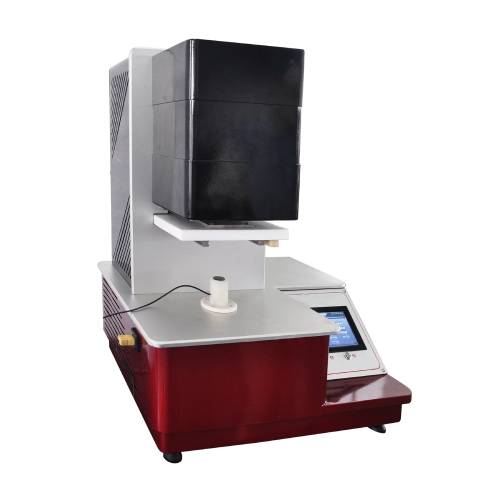
Industry Background of the Glove Thermal Insulation Tester
The development of the Glove Thermal Insulation Tester has been driven by the continuous advancement of industrial safety, labor protection, and standardization requirements, particularly under conditions where extreme temperatures demand enhanced hand protection.
1. Stricter Occupational Safety Regulations
With increasing global emphasis on worker health and safety, mandatory regulations—such as the European EN 511 standard—require that heat-protective gloves must pass thermal insulation performance certification before entering the market.
2. Growth of Extreme Temperature Work Scenarios
Industries including cold chain logistics, frozen storage, metallurgy, firefighting, and aerospace have seen a surge in demand for hand protection under extreme temperatures, driving the need for quantitative evaluation of glove thermal insulation performance.
3. Advances in Materials and Design Technologies
The adoption of new insulating materials, such as Mylar reflective layers and Thinsulate™, has led to significant differences in glove thermal performance, creating a need for standardized and objective testing methods.
4. Enhanced Research on Ergonomics and Thermal Comfort
Studies indicate that glove size and fit can significantly affect localized heat loss, necessitating precise testing to optimize designs that balance protection and operational dexterity.
5. Adoption of Heated Hand Technology by Authoritative Institutions
Organizations such as SATRA in the UK have implemented computer-controlled heated hand systems to evaluate glove thermal insulation performance, providing commercial testing services based on EN 511 standards.
6. Establishment of International Standard Systems
Standards such as EN 511 and ANSI/ISEA 105 define glove classification and test methods, providing a foundation for the development and application of thermal insulation testers.
7. Demand for Multi-Dimensional Performance Evaluation
Beyond overall thermal insulation values, localized heat loss in areas such as fingertips must also be measured, promoting the development of testing equipment with high precision and multi-point sensing capabilities.
In summary, the Glove Thermal Insulation Tester is the result of the combined influence of industrial safety standardization, advancements in material technology, and research in human thermal management. Its purpose is to ensure that heat-protective gloves provide reliable protection in real-world working environments.
Technical Advantages of the Glove Thermal Insulation Tester and Its Impact on Industry Development
The Glove Thermal Insulation Tester is a specialized device used to evaluate the thermal insulation performance of protective gloves in cold environments. Its technical advantages and industry impact can be summarized as follows:
Current Technical Advantages
1. High-Precision Heat Flow Measurement
Equipped with standardized heat flux sensors (such as thermopiles or heat flux meters), the tester can accurately measure heat loss from gloves under simulated cold conditions, with precision within ±3%.
2. Localized Heat Loss Analysis
The system can differentiate heat transfer across different areas of the hand (e.g., palm, back of hand, fingertips, thumb), identifying regions with weaker insulation. For example, studies show that the heat transfer coefficient in the pinky and thumb regions ranges from 8.3 to 12.7 W/m²·°C, significantly higher than that of the middle finger.
3. Compliance with International Standards
Testing methods conform to ISO 11092 and EN 13590 standards, ensuring that results are comparable, reliable, and compliant.
4. Integrated Environmental Simulation System
Modern testers incorporate controlled thermal chambers, wind speed regulation, and humidity adjustment to realistically replicate outdoor or industrial low-temperature working conditions.
5. Automated Data Acquisition
Supports real-time recording, trend analysis, and automated report generation, reducing human error and improving testing efficiency.
Impact on Industry Development
1. Enhancing Personal Protective Equipment (PPE) Safety
By quantifying thermal insulation performance, companies can select gloves suitable for specific low-temperature environments, reducing occupational risks such as frostbite and hand stiffness. This is particularly valuable in industries such as construction, mining, cold chain logistics, and outdoor operations.
2. Promoting Materials and Design Innovation
Test data can drive the development of new insulating materials (e.g., Thinsulate™, PrimaLoft®) and optimized structural designs (such as segmented elastic needle insulation layers), achieving a balance between warmth and dexterity.
3. Supporting Regulatory and Standards Development
Provides scientific evidence for establishing mandatory thermal protection standards for gloves worldwide, advancing industry standardization.
4. Enabling Personalized and Task-Specific Designs
Combining ergonomics and localized heat loss data allows for the development of specialized gloves for specific occupations or activities (e.g., welders, skiers, ice fishermen), improving operational efficiency and comfort.
5. Facilitating Integration with Smart Wearables
When combined with battery-heated gloves or thermocouple feedback systems, the tester supports a “test–feedback–adjust” closed loop, promoting the entry of intelligent thermal management gloves into both industrial and consumer markets.
Glove Thermal Insulation Tester Operating Instructions
After understanding the historical background of this instrument and its critical role in industry development, we will now provide a detailed explanation of how to operate the device in practice.
Operating Steps
Sample Conditioning
Place the palm portion of the glove samples to be tested in a standard atmospheric environment (temperature 23±2°C, relative humidity 50±5%) for at least 24 hours to stabilize material moisture content and prevent environmental factors from affecting test results.
Sample Preparation
Using a dedicated cutting tool, cut circular test specimens with a diameter of 70±1 mm, ensuring smooth, burr-free edges. Prepare at least three specimens per batch for repeat testing.
Power On and Preheating
Turn on the power and start the heating system. Heat the brass cylinder to the set temperature (according to the standard, typically 180°C or 250°C). Preheat for no less than 30 minutes until temperature fluctuations are within ±0.5°C.
Calibration
Calibrate the thermocouple zero point. Use a standard temperature source to verify the temperature acquisition system, ensuring measurement error is within ±0.1°C. Check that the brass cylinder’s drop guide is smooth, set the drop speed to 25 mm/s (adjustable range: 1–60 mm/s), and confirm that the return speed is the same.
Specimen Placement
Place the prepared glove specimen flat at the center of the polyethylene specimen mounting plate (120×120×25 mm), ensuring close contact with the embedded thermocouple and no air gaps. Proper placement is critical for accurate data.
Input Test Parameters
On the touchscreen control panel, input the test standard number, heating temperature, maximum contact time (e.g., 60 seconds), temperature rise threshold (e.g., 24°C), and confirm that the thermal protection plate is closed and the emergency stop button functions correctly.
Start Test
Press the Start button. The thermal protection plate will automatically move aside, and the servo motor will drive the brass cylinder to descend and contact the specimen at the preset speed. The screen will display the temperature-time curve in real time. Observe the curve; if there are sudden deviations, stop the test immediately to check the contact condition.
Automatic Stop
When the set time is reached or the temperature exceeds the threshold, the instrument will automatically stop heating. The brass cylinder will quickly return to its original position, and the protective plate will close to prevent excessive damage to the specimen.
Data Storage and Reporting
After the test, the system automatically saves the data. Data can be transferred to a computer via USB or network port. The software will automatically generate the temperature rise curve, calculate key metrics (e.g., t24: time required for a 24°C temperature rise), and create a standardized report including test conditions, raw data, curve graphs, and conclusions. Reports can be printed for archival purposes.
Precautions
High-Temperature Safety
Although the instrument is equipped with protective features, always wear basic heat-resistant gloves when replacing specimens or cleaning around the brass cylinder to prevent accidental burns.
Cleaning
After each test, clean oxidation or residues from the bottom of the brass cylinder with a lint-free cloth to avoid affecting heat conduction efficiency. Regularly clean the polyethylene plate surface to prevent dirt from affecting thermocouple sensitivity.
Calibration and Verification
It is recommended to have a third-party calibration of the temperature sensors, drop speed, and timer every six months to ensure the reliability and authority of laboratory data.
Troubleshooting Abnormal Temperature Curves
If the temperature rise curve shows abnormal fluctuations, first check that the specimen is mounted flat. Then verify that the thermocouple connections are secure and properly connected.
Glove Thermal Insulation Tester Purchasing Recommendations
The Glove Thermal Insulation Tester is typically used to evaluate the thermal insulation performance of gloves and other personal protective equipment (PPE), i.e., their ability to prevent heat loss in cold environments. This type of equipment is widely applied in industrial safety, military gear, and outdoor sports equipment R&D and quality control. When selecting a glove thermal insulation tester, the following aspects should be carefully considered:
1. Clarify Testing Requirements and Standards
Applicable Standards: Confirm whether the instrument needs to comply with relevant standards, such as:
ISO 11092: "Sweating Guarded Hotplate Method" for measuring fabric thermal resistance and water vapor resistance (using a sweating manikin or hotplate tester).
ASTM F1291: For evaluating thermal performance of protective clothing.
EN 421 / EN 511: Thermal conductivity testing for cold-protective gloves.
Test Type: Determine the measurement parameters: thermal resistance (Rct), heat transfer coefficient, or local hand heat loss. Different instruments may emphasize different parameters.
2. Core Selection Criteria
Measurement Range and Accuracy:
Ensure the thermal resistance range covers typical glove materials (e.g., 0.1–2.0 m²·K/W).
Temperature control precision (e.g., ±0.1°C) directly affects test reliability.
Test Environment Simulation Capability:
Ability to simulate realistic conditions, such as low temperature, wind speed, and humidity.
High-end devices may include sweating simulation to evaluate insulation performance under wet conditions.
Sensor Layout:
Support for multi-point local heat flux measurement (e.g., palm, back of hand, fingertips), since fingertips generally exhibit higher heat loss.
Automation and Data Output:
Automatic calculation of thermal resistance, report generation, and connectivity to computers or cloud platforms.
Calibration and Compliance:
Whether the device comes with NIST-traceable calibration certificates.
Compliance with laboratory accreditation requirements (e.g., ISO/IEC 17025).
3. Reference for Mainstream Device Types
Hotplate Method Testers: Suitable for laboratory-level testing of glove materials or finished products for steady-state thermal resistance. Representative manufacturers include Standard groups.
Local Heat Loss Measurement Systems: Attach heat flux sensors to the surface of a hand model to measure thermal flux at different regions. These systems better simulate real-world usage and are suitable for R&D and optimization.
Portable Infrared Thermal Imaging Assistants: Can quickly compare surface temperature distribution across different gloves. Accuracy is lower; suitable for screening rather than certification testing.
4. Practical Recommendations
If assessing true insulation performance in wet-cold environments (e.g., snow or ice operations), prioritize systems with combined hotplate + sweating simulation functionality.Confirm that the supplier provides glove-specific fixtures or hand model adapters.For non-research applications, consider outsourcing testing to a third-party laboratory to avoid high equipment costs.
In summary, the Glove Thermal Insulation Tester plays a critical role in evaluating glove insulation performance. Accurate test data is essential to ensure user safety and comfort in extreme high or low-temperature environments. Therefore, when selecting such a testing device, it is crucial to fully consider your specific needs, relevant testing standards, and intended application scenarios. This ensures that the selected instrument is not only technologically advanced and reliable but also genuinely suited to your actual work requirements. Ultimately, the most effective and cost-efficient choice is the one that best aligns with your testing objectives and conditions.