

How to measure water evaporation rate?
The Textile Water Evaporation Rate Tester is a specialized testing instrument designed to accurately measure the rate at which moisture contained within textile materials evaporates under strictly controlled environmental conditions.The device primarily simulates parameters such as temperature, humidity, and airflow that may be encountered during actual use or processing. By doing so, it quantifies the rate of moisture loss from the surface and between fibers of the fabric, thereby scientifically evaluating the fabric’s moisture absorption, quick-drying performance, and overall drying efficiency.This type of testing is essential for the research, development, and quality control of functional textiles. It is widely used in areas such as sportswear, outdoor equipment, and home textiles. The objective data obtained helps manufacturers optimize fabric design and ensure that products achieve the expected moisture management performance and wearing comfort.
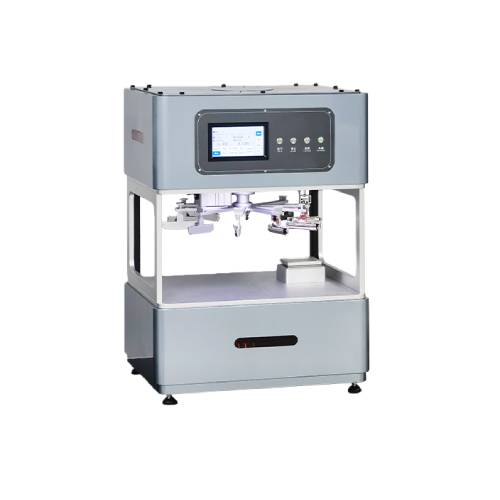
Background of Textile Water Evaporation Rate Tester
The development of the Textile Water Evaporation Rate Tester is mainly driven by the increasing and more refined demand in the global textile industry for product comfort, functionality, and standardized performance evaluation.
With technological advancement and consumption upgrading, the market has placed higher expectations on the moisture management performance of textile materials. The main reasons are as follows:
1. Significant Growth in Functional Apparel Demand
With the rapid development of sportswear, outdoor gear, and smart textiles, modern consumers are no longer only concerned with basic functions such as waterproofing and thermal insulation. They now place greater emphasis on moisture-wicking and quick-drying capabilities during dynamic wear.
The ability of fabrics to rapidly evaporate sweat directly determines thermal comfort and microclimate regulation, especially under intense physical activity, high temperature and humidity, or specialized working environments. This has become one of the key indicators for evaluating high-performance apparel.
2. Establishment and Improvement of Standardized Testing Methods
To objectively, accurately, and reproducibly quantify the moisture evaporation performance of different textiles and enable industry-wide comparison and quality certification, the establishment of unified and scientific testing methods has become an urgent requirement.
Accordingly, a series of domestic and international standards have been introduced, such as the Chinese national standard GB/T 21655.1-2008 “Textiles — Evaluation of Moisture Management Properties — Part 1: Single Combination Test Method.”
These standards clearly define the testing principles, conditions, and procedures, significantly promoting and standardizing the systematic development, commercialization, and widespread application of dedicated evaporation rate testing equipment.
3. Refinement in Product Development and Quality Control
Textile manufacturers and material suppliers require rapid and accurate evaluation of the drying characteristics and evaporation kinetics of new fibers, fabric structures, or functional finishes (such as moisture-wicking treatments) during product development and formulation optimization.
Advanced instruments, such as constant-power drying rate testers, are therefore developed. These devices can simulate human skin conditions in laboratory environments (e.g., maintaining a constant temperature of 37°C and a typical sweating rate of 10 mL/h), while continuously monitoring and recording weight changes during the evaporation process.
They provide real-time, quantitative evaporation data curves, greatly supporting efficient, data-driven material development, process optimization, and strict quality control before product release.
4. Expanding Applications Across Multiple Industries
The application scope of such testing instruments has extended far beyond traditional apparel.
They are now widely used in medical protective clothing (which requires liquid barrier properties while allowing moisture vapor transmission), automotive interior materials (to prevent condensation and mold), home textiles (such as bedding and towels requiring quick drying), and industrial textiles.
This diversification of application scenarios has further driven continuous innovation in testing precision, fixture adaptability, and simulation capabilities (such as airflow, temperature, and humidity control), promoting the evolution toward higher accuracy and specialization.
In summary, the Textile Water Evaporation Rate Tester has emerged and continuously evolved under three major driving forces: the rapid growth of the global functional textile market, the increasing demand for standardized quality evaluation systems, and the growing need for efficiency and precision in R&D and quality control processes.
Technical Advantages and Industry Value
The Textile Water Evaporation Rate Tester is a precision instrument specifically designed to accurately measure the rate of moisture evaporation from textiles under controlled environmental conditions. Its core function is to provide highly accurate and reliable quantitative data for textile design, research and development, and final quality control.
Technical Advantages
1. High Precision and Excellent Repeatability
Modern testing instruments typically use high-sensitivity electronic balances or non-contact infrared sensors to continuously monitor subtle changes in sample weight or surrounding water vapor concentration.
This ensures both the accuracy of individual test results and high repeatability and consistency across different times and operators.
2. High Simulation of Real Usage Conditions
Advanced testing instruments can precisely control environmental parameters such as temperature, relative humidity, and airflow velocity, either independently or in combination.
Notably, they can simulate human skin conditions (e.g., maintaining 37°C) and set different perspiration rates, creating a testing environment very close to actual wearing conditions, making the results highly practical and meaningful.
3. Fast and Efficient Testing Process
Compared with traditional methods relying on natural drying or simple weighing, modern intelligent testers can complete the entire drying process within a short period (e.g., less than 30 minutes).
They not only provide the final evaporation rate but also generate dynamic curves from initial wetting to complete drying, greatly improving R&D and quality inspection efficiency.
4. Multi-Dimensional Performance Parameters
In addition to the core evaporation rate, advanced testers can simultaneously measure and calculate multiple key thermo-moisture properties, including moisture resistance, water vapor transmission, drying rate constants, and cumulative evaporation.
This provides strong data support for a comprehensive evaluation of fabric thermal and moisture management performance and wearing comfort.
5. High Automation and Intelligent Integration
Modern testers integrate automated temperature and humidity control modules, high-frequency data acquisition systems, and intelligent data analysis software.
They minimize human error, ensure standardized and automated testing processes, and allow seamless integration into enterprise digital quality management systems, improving overall efficiency.
Industry Value
1. Promoting Functional Textile R&D and Innovation
In fields such as sportswear, outdoor equipment, protective clothing, and high-end casual apparel, the ability of fabrics to quickly dry and manage moisture directly affects comfort, safety, and functionality.
This tester provides essential quantitative tools for developing innovative fabrics with advanced moisture control features such as evaporative cooling, directional moisture transport, and adaptive humidity regulation.
2. Optimizing Product Performance and User Experience
With precise test data, manufacturers can scientifically select optimal fiber combinations, fabric structures, and finishing processes to improve drying performance.
For example, in sports fabrics, the exact percentage improvement in evaporation rate can be quantified after adding functional fibers or adopting specific weaving techniques, ensuring better sweat management.
3. Ensuring Product Quality Stability and Batch Consistency
In mass production, this tester serves as a critical quality control tool. By testing each batch, manufacturers can ensure that key performance indicators such as evaporation rate meet internal standards or customer requirements, preventing defective products from entering the market.
4. Supporting Standards and Compliance
The objective and accurate data provided by the tester serve as a scientific basis for developing and improving textile standards, including national, industry, and international standards such as ISO and AATCC.
It helps manufacturers and testing institutions ensure compliance with regulations and market access requirements.
5. Supporting Sustainability and Energy Efficiency
The textile and apparel industry is a major consumer of water and energy globally. Improving drying performance directly reduces energy consumption during product use, such as reducing tumble drying time.
Developing faster-drying textiles contributes to lower energy footprints and aligns with global sustainability and low-carbon development trends.
6. Supporting Advanced Scientific Research
In fields such as textile materials science, apparel ergonomics, and textile chemistry, this tester serves as a fundamental experimental device for studying the interaction between fabrics, moisture, and thermal environments.
It provides reliable data for academic research and helps solve practical challenges such as thermal-moisture accumulation and microclimate regulation in protective clothing.
In summary, the Textile Water Evaporation Rate Tester, with its high precision, efficiency, and environmental simulation capabilities, has become an indispensable core instrument across the entire textile industry chain—from fundamental research and product development to quality control.It plays a significant and far-reaching role in improving industry technology levels, enhancing product competitiveness, and promoting sustainable development.With the continued global demand for high-performance, high-comfort, and intelligent textiles, the importance of such precision testing equipment and technologies will only continue to grow.