

What is a Thermal Protective Performance (TPP) Tester?
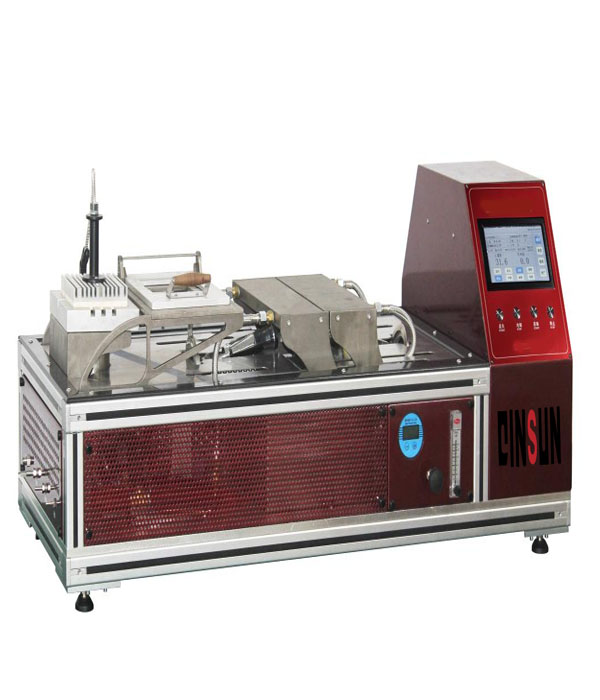
The TPP Thermal Protective Performance Tester is a specialized device used to evaluate the thermal protective performance of materials. By simulating flame and radiant heat sources, it measures the heat transfer through materials to assess their protective effectiveness. It is primarily used for testing the thermal protective performance of the outer surfaces of products such as protective clothing, safety shoes, gloves, and helmets. The tester can measure Thermal Protective Performance (TPP) and assess the surface’s thermal protective effectiveness (Thermal Protective Effectiveness, TPE), evaluating potential skin burn levels and the material’s ability to resist heat convection and radiant heat penetration. It is widely used in the textile, firefighting, and military sectors, providing critical data for product quality control and safety protection.
Testing Principle
TPP thermal protective performance refers to the amount of heat energy transmitted through a fabric that would cause second-degree burns to human skin, expressed in kilowatt-seconds per square meter (kW·s/m²). The higher the TPP value, the stronger the thermal protective performance of the fabric.
When a gap is left between the sample and the heat sensor, gap thermal protection can be tested, evaluating the fabric’s ability to block heat between the heat source and the human skin.
When the fabric is in direct contact with the heat sensor, contact thermal protection is tested, measuring the fabric’s insulation against direct heat transfer.
Product Features
High Accuracy and Stability: Capable of precisely measuring heat transfer through materials and evaluating protective effectiveness. For example, the new-generation TPP tester from Huajian Technology adopts core international technology, with all critical components sourced from reputable imported brands and carefully calibrated to ensure accurate, stable, and reproducible results.
High Degree of Automation: Features intelligent automation, capable of completing portions of the test automatically, improving efficiency. For instance, it can automatically generate test reports, reducing manual operation and human error.
Excellent Safety Performance: Equipped with a safe gas circuit design, multiple sensors for real-time monitoring, an emergency gas shut-off system, anti-flashback protection, and a closed-loop water circulation monitoring system to ensure both instrument and operator safety.
Ease of Operation: Features a visual software control interface for intuitive operation. Standard testing software outputs process monitoring curves and reports for analysis.
Operation Procedures
The TPP Thermal Protective Performance Tester is a key device for evaluating the thermal protection capability of protective clothing. Proper usage and standardized operation are critical to ensuring accurate and reliable test results.
1. Pre-Test Preparation
Inspect the heating system, sensors, and data acquisition devices to ensure all components are functioning properly.
Prepare test samples according to standards, ensuring correct size and condition.
Install samples correctly in the designated position, simulating human contact with heat sources.
Adjust the position of the heat source and sensors to establish consistent initial conditions.
Familiarize yourself with the testing process and safety precautions, especially for high-temperature operations.
2. Standardized Test Procedure
Turn on the device and gradually increase the heat source temperature according to preset programs to simulate actual thermal radiation or contact scenarios.
Monitor the tester and data continuously during heating to ensure stability.
Record surface temperature changes using sensors at key points.
Maintain a stable environment to avoid airflow or external interference.
Stop heating and save data once preset conditions are met or sample changes are observed.
For multiple tests, ensure consistent conditions for comparability.
3. Operation Tips and Precautions
Precisely position samples to ensure correct orientation and angle relative to the heat source.
Condition samples before testing to avoid affecting thermal protection performance.
Monitor for anomalies during testing and analyze causes promptly.
Follow proper shutdown and cooling procedures after testing to prolong equipment life.
Maintain detailed test records, including sample information, test conditions, and raw data for analysis.
4. Data Analysis and Maintenance
Evaluate protective clothing performance under various heat conditions to determine compliance with safety standards.
Compare results across different samples to guide garment selection and improvement.
Regular calibration and maintenance of the tester ensure measurement accuracy and reliability.
Inspect the heating system and sensors, replacing worn or damaged parts as needed.
Operators should receive professional training to enhance testing standardization and accuracy.
Functions and Benefits
Ensure Personnel Safety:
The TPP tester accurately measures protective clothing thermal performance, helping assess protection in high-temperature or fire scenarios. This is critical for firefighters, electrical maintenance personnel, chemical industry workers, and others. By evaluating material thermal protection, the tester ensures effective protection against burns and heat injuries, safeguarding human life.
Enhance Product Quality and Reliability:
Manufacturers can verify thermal protective performance during design and production, ensuring compliance with standards and user requirements. Continuous testing improves product quality, durability, and market competitiveness, supporting brand reputation.
Compliance with Safety Regulations:
The TPP tester meets multiple international and domestic standards, including NFPA (National Fire Protection Association) and European EN standards. Scientific data from TPP testing helps manufacturers and certification bodies confirm compliance, facilitating certification and regulatory approval.
Promote Technology Innovation and R&D:
The tester allows R&D teams to evaluate material performance under high temperatures, identifying strengths and weaknesses. This supports the development of lighter, more comfortable, and higher-performing protective clothing.
Reduce Occupational Injuries and Risks:
Accurate assessment of thermal protection capability lowers the risk of heat-related accidents. Regular TPP testing ensures protective clothing offers sufficient protection in high-temperature environments, reducing occupational hazards.
Improve Testing Efficiency and Accuracy:
The TPP tester provides fast, precise measurements and generates detailed thermal performance data in a short time. Automation improves efficiency, reduces human error, and ensures reliable and consistent test results.
In summary,the TPP Thermal Protective Performance Tester plays a critical role in evaluating and ensuring protective clothing thermal safety. It helps safeguard workers in high-temperature environments, enhances product quality and reliability, supports regulatory compliance, promotes technological innovation, and reduces workplace hazards. By providing precise, reliable test data, the TPP tester aids in the design, production, R&D, and certification of protective clothing, ultimately improving worker safety and reducing fire and heat-related accidents.