

What is evaluation of textile materials?
TheTextile Material Feel Style Evaluation Instrument is a specialized device designed to objectively quantify the hand feel and tactile style of textile materials. By precisely measuring the response of fabrics under various mechanical actions—such as compression, bending, friction, and tensile forces—the instrument systematically evaluates key tactile attributes including softness, stiffness, smoothness, and fullness. Its development aims to achieve objective and quantitative evaluation of fabric hand feel, effectively compensating for the limitations of traditional subjective assessment methods (such as manual touch), and improving both accuracy and consistency.
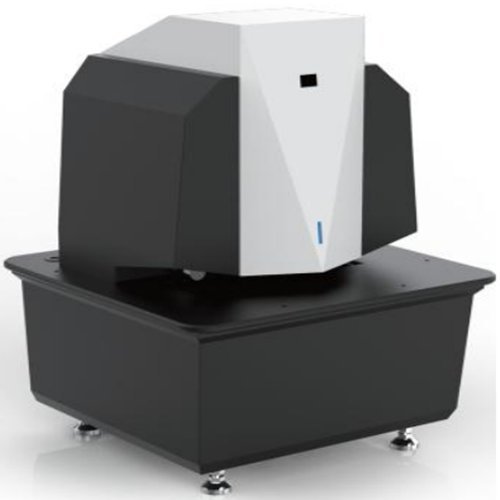
Main Operating Procedure of the Textile Material Feel Style Evaluation Instrument
1. Environmental Preparation Stage
To ensure the accuracy and reproducibility of test results, laboratory environmental conditions must first be strictly controlled. The temperature should be maintained at (21 ± 3) °C, and the relative humidity at (60 ± 5)%. The textile samples to be tested must be conditioned under these standard environmental conditions for no less than 4 hours, allowing the moisture content of the fabric to reach equilibrium with the ambient humidity. This minimizes the potential influence of temperature and humidity on test results.
2. Sample Preparation Stage
Standard certified cutting equipment (such as a Lab Roll Cutter or equivalent device) should be used to prepare test specimens according to specified requirements. A typical specimen is L-shaped, with dimensions of 110 mm (width) × 310 mm (inner edge length) × 310 mm (outer edge length), and a maximum thickness not exceeding 5 mm. During preparation, ensure that the sample surface is flat, free of visible creases or wrinkles, and free from static electricity. The selected sample area should represent the typical structural characteristics and tactile style of the entire batch.
3. Instrument Calibration and Preheating Stage
Before formal testing, the instrument should be powered on and fully preheated, typically for less than 15 minutes, to ensure stable temperature conditions within the measurement plates (commonly a 10 °C temperature difference between upper and lower plates). After preheating, standard weights or calibration plates should be used to accurately calibrate the zero point and full measurement range according to operating procedures, ensuring the instrument is in a precise and standard measurement state.
4. Sample Installation and Test Execution Stage
Place the prepared textile sample flat on the dedicated testing platform (typically 125 mm × 125 mm) and secure it firmly using clamps or fixtures to prevent displacement during testing. According to the tactile property to be measured (such as compression hardness, surface friction, or bending stiffness), select the corresponding test mode (e.g., compression mode, friction mode, flexural mode) via the instrument interface, and set the relevant parameters (e.g., compression speed of 1 mm/s, applied pressure of 42 gf/cm²).
Once parameters are set, initiate the test program. The instrument will automatically run and record key tactile performance indicators in real time, including:
Surface friction force (typical range: 0–250 cN)
Bending/flexural force (typical range: 0–250 cN)
Compression recovery rate (reflecting the fabric’s elastic recovery capability)
5. Data Recording and Result Analysis Stage
A single complete test cycle typically takes no more than 3 minutes. To ensure reliability and statistical significance, it is recommended to perform at least three repeated measurements on different areas of the same sample or on multiple samples. The arithmetic mean of these measurements should be taken as the representative hand feel evaluation value.
The obtained data and analysis results can be compared with relevant domestic and international standards, such as:
GB/T 35263-2017 Textiles—Subjective Evaluation Method for Fabric Handle
FZ/T 01166-2022 Textiles—Objective Evaluation of Fabric Handle—Instrumental Method
6. Equipment Maintenance and Care Stage
After each test, the measurement plates and contact components (such as rollers) must be carefully cleaned to remove residual fibers and dust, preventing interference with future tests and sensor performance. To ensure long-term accuracy and reliability, a regular verification and calibration schedule should be established.
Calibration can be conducted in accordance with standards such as:
ISO 139 Textiles—Standard Atmospheres for Conditioning and Testing
AATCC TM177 Fabric Hand: Instrumental Evaluation Method
The instrument should be periodically inspected and calibrated by qualified metrology institutions.
Significant Value of Textile Material Feel Style Evaluation Instruments in the Textile Industry
The advantages of textile material feel style evaluation instruments profoundly impact multiple stages of the textile industry, including product quality improvement, R&D optimization, trade fairness enhancement, cost reduction, and standardization advancement. The key benefits are summarized as follows:
1. Realization of Objective, Quantitative, and Standardized Evaluation
Traditional subjective evaluation methods relying on human touch are easily influenced by individual experience, mood, environmental conditions, and lighting, leading to inconsistent and incomparable results.
This instrument integrates advanced mechanical and thermal sensing principles (such as compression, bending, friction, and thermal sensation simulation), converting vague subjective perceptions into measurable, repeatable, and comparable physical data—quantifying attributes like softness, stiffness, smoothness, fullness, and elasticity.
2. Strong Support for Efficient Product Development and Process Optimization
The instrument enables precise quantification of how different finishing processes, chemical treatments, and material variations affect fabric hand feel. This allows R&D personnel to quickly compare multiple solutions and determine optimal process routes and material combinations.
It is widely applicable to wool, linen, cotton, silk, synthetic fibers, and blended fabrics, covering diverse products such as high-end shirting, denim, underwear fabrics, and home textiles.
3. Enhanced Production Quality Control and Batch Consistency
In mass production or contract manufacturing, the instrument ensures that each batch meets the required tactile specifications by benchmarking against standard samples. This reduces customer complaints, returns, and disputes caused by hand feel inconsistencies.
It also serves as a critical supplement to conventional physical testing methods, providing objective evidence in case of disputes regarding fabric hand feel.
4. Promotion of International Trade Facilitation and Standard Alignment
Mainstream international systems—such as Japan’s KES system, Australia’s FAST system, and China’s CHES-FY system—have established standardized testing procedures and data frameworks. These facilitate global technical communication, data comparability, and contract specification.
Using instruments compliant with GB/T, AATCC, and ISO standards enhances the credibility of test reports and supports entry into international markets.
5. Reduction of Operational Costs and Improvement of Efficiency
Compared with trial-and-error development methods, the instrument provides rapid, multi-dimensional data acquisition, significantly shortening product development cycles and improving responsiveness to market demands.
For small and medium-sized enterprises, even second-hand equipment can offer high precision and stability at a lower initial investment, achieving cost reduction and efficiency improvement.
In conclusion, increasing attention must be given to the development of textile material feel style evaluation instruments. With continuous advancements in textile technology and rising consumer expectations for product quality, these instruments play a vital role in ensuring quality, improving R&D efficiency, and meeting personalized demands.Therefore, sustained investment in research and development, and the promotion of these instruments toward greater intelligence, precision, and convenience, have become essential trends and key tasks for the future development of the textile industry.