

Industrial Dry Cleaning Machine,ISO 15797
An industrial dry cleaning machine is a large-scale washing device specifically designed for cleaning clothes, linens, and other textiles in bulk. Its key feature is that it does not use water as the primary cleaning medium. Instead, it uses organic solvents such as perchloroethylene or petroleum-based solvents to remove dirt and stains. These machines are widely used in hotels, hospitals, laundries, garment factories, and dry-cleaning shops where large quantities or high-end textiles need to be processed.
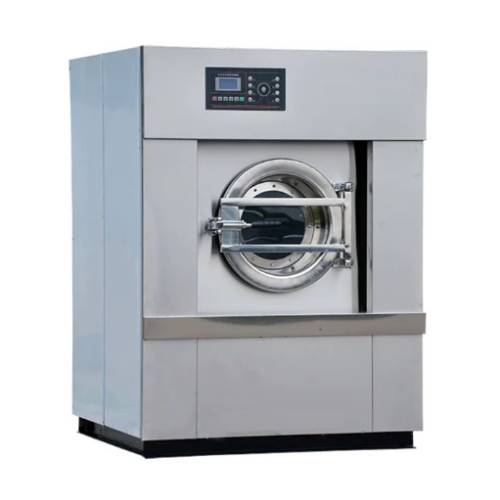
Working Principle of Industrial Dry Cleaning Machines
The working principle of an industrial dry cleaning machine differs fundamentally from that of an industrial water washing machine. The core concept is the use of organic solvents rather than water as the cleaning medium, which helps prevent shrinking, deformation, or damage to fabrics.
1. Operating Principle
Solvent-based stain removal:
Industrial dry cleaning machines use organic solvents such as perchloroethylene or petroleum solvents to dissolve oily contaminants on fabrics. These solvents have strong dissolving capabilities for grease, wax, and other lipophilic stains. Since they contain little or no water, they effectively protect the structure and color of the fabric.
Mechanical action assistance:
Inside the solvent bath, the drum rotates to generate mechanical forces such as agitation, friction, and impact, which help loosen and detach dirt from the fabrics.
Closed-loop system:
Modern industrial dry cleaning machines adopt a dry-to-dry closed-loop design. From loading dirty garments to unloading clean ones, the process occurs in a sealed system, minimizing solvent evaporation and environmental pollution.
Solvent regeneration and recovery:
After washing, the solvent contains dirt and moisture and must be purified through distillation to recover clean solvent for reuse.
The distillation temperature is usually controlled below 150°C to prevent the decomposition of perchloroethylene, which could otherwise produce acidic substances that corrode the equipment.
The solvent also passes through filtration systems such as cartridge filters to remove particulate impurities, and residual solvent vapors are recovered through activated carbon adsorption.
Drying and cooling:
After washing, the drum rotates at high speed to centrifugally remove most of the solvent from the garments.
Hot air is then introduced for drying, during which solvent vapors are condensed and recovered.
Finally, the cooling stage stabilizes the garment shape and improves fabric feel.
2.Typical Process Flow
Loading garments:
Place the textiles evenly into the drum to avoid imbalance and excessive vibration.
Solvent washing:
Solvent is pumped into the drum to fully contact the garments and dissolve stains. At the same time, detergent (surfactant additives) is introduced to help disperse water-soluble dirt.
Circulating filtration:
The solvent continuously circulates through filters and the distillation system to maintain cleanliness.
Spin extraction:
Centrifugal force is used to remove most of the solvent from the garments.
Drying and recovery:
Hot air evaporates the remaining solvent, which is then condensed and recovered by the refrigeration system.
Cooling and unloading:
After cooling, the garments are removed, completing the cleaning process.
Operating Procedure
The operation of an industrial dry cleaning machine must strictly follow safety regulations and equipment manuals to ensure cleaning performance, extend equipment life, and protect operator safety.
1. Pre-operation Preparation
Familiarize with the equipment:
Operators must understand the machine’s structure, performance, and emergency procedures.
Check equipment condition:
Ensure the drum can be rotated manually several turns to verify there is no mechanical fault or load imbalance. Check solvent pipelines, seals, and filtration systems for leaks or damage. Ensure the ventilation system is functioning properly, especially when using hazardous solvents such as perchloroethylene (Perc).
Wear protective equipment:
Depending on the solvent used (such as Perc or hydrofluoroether), wear appropriate protective gear such as gloves and safety goggles.
2. Loading and Charging
Distribute garments evenly:
Place garments evenly inside the drum to prevent imbalance that may cause vibration or mechanical damage.
Do not overload:
Load according to the rated capacity of the machine (for example, Suprema S-75: 75 kg) and never exceed the maximum load.
Close and lock the door:
Ensure the door is securely locked to prevent accidental opening during operation.
3. Start-up and Operation
Select program:
Choose the appropriate cleaning program on the control panel (such as the touchscreen system on Suprema machines) according to fabric type and stain level.
Start the machine:
Press the start button. The machine will automatically complete the following stages:
Pre-wash / Main wash: Solvent is injected for agitation or spray cleaning.
Rinsing: Fresh solvent removes remaining dirt.
Extraction: High-speed rotation removes most of the solvent.
Drying: Hot air circulation recovers solvent and dries the garments.
Do not interfere during operation:
Never use the braking device or open the door while the machine is running.
4. Troubleshooting
If abnormalities occur:
Conveyor belt slipping: Stop the machine immediately and check for oil contamination or wear; clean or replace if necessary.
Abnormal noise or severe vibration: Stop the machine and check whether garments are evenly distributed or if mechanical components are loose.
Solvent leakage: Stop the machine immediately, ensure proper ventilation, and handle according to safety procedures.
5. Shutdown and Unloading
Wait until the program finishes:
Ensure the machine has completely stopped before opening the door.
Remove garments:
Take out the garments promptly to prevent wrinkles or residual solvent.
Clean filters:
Regularly clean the lint filter to ensure efficient solvent circulation.
Routine Maintenance
Daily:
Clean the external surface of the machine and check the solvent level.
Weekly:
Clean or replace solvent filters and inspect sealing rings.
Every six months:
Lubricate bearings and other moving parts with fresh grease and perform a comprehensive inspection of the mechanical and electrical systems.
Functions of Industrial Dry Cleaning Machines2
Industrial dry cleaning machines are professional equipment designed for high-capacity, high-intensity commercial or industrial applications. They are primarily used to clean various textiles without water, relying instead on organic solvents (such as perchloroethylene, hydrocarbon solvents, or environmentally friendly alternatives) to remove grease, sweat stains, cosmetics, and other contaminants that are difficult to remove through conventional water washing.
Main Functions
Efficient cleaning of large quantities of textiles:
Suitable for high-load environments such as hotels, hospitals, garment factories, and chain dry-cleaning stores. A single cycle can process dozens or even hundreds of kilograms of garments.
Protection of delicate fabrics:
Solvent-based cleaning prevents shrinkage, deformation, or color fading in delicate materials such as wool, silk, and tweed.
Strong oil stain removal capability:
Highly effective at removing oil-based stains such as lubricants, cosmetics, and food oils, often outperforming conventional water washing.
Water and energy savings:
Modern machines are equipped with intelligent control systems that optimize the use of heat, solvent, and electricity. Some models can reduce energy consumption by more than 50% compared with traditional methods.
Solvent recovery and environmental protection:
Multi-stage filtration and distillation systems allow solvent recovery rates of over 95%, reducing emissions and meeting green certification standards.
Automation and precise control:
Integrated technologies such as PLC systems, frequency converters, and sensors automatically adjust washing time, drum speed, temperature, and solvent dosage to ensure consistent cleaning results.
Future Development Trends of Industrial Dry Cleaning Machines
Future development of industrial dry cleaning machines will focus on intelligence, environmental sustainability, and service-oriented solutions. The global market size is expected to continue growing, with Asia becoming a major driver of expansion.
Intelligent technology:
Machines will incorporate sensors and artificial intelligence to enable smart detection, automated operation, and network connectivity, improving operational efficiency and reliability.
Energy-saving and environmental technologies:
Advanced heating systems, solvent recovery systems, and water-saving technologies will become key development directions. As environmental awareness grows, machines will increasingly focus on energy conservation, resource recycling, and improved waste management.
Service-oriented industry transformation:
The industry is gradually shifting from simple equipment manufacturing to providing comprehensive laundry solutions and integrated service models.
In conclusion, industrial washing machines, as efficient and high-speed cleaning equipment, have broad application prospects and strong development potential. With continuous technological advancements and evolving market demands, industrial washing machines are expected to develop more advanced, intelligent, and environmentally friendly products in the future, providing better cleaning solutions for various industries.