

What is Retro-Reflective Coefficient Tester?
The retro-reflective coefficient tester is an instrument used to measure the reflective performance of high-visibility safety materials, commonly used in occupational safety applications. It is also applicable in the traffic safety field, capable of measuring the optical properties of highway traffic sign reflective films, delineators, vehicle reflective markings, and other retro-reflective materials. This tester is suitable for use in material production units, quality supervision departments, engineering inspection, and construction units for quality control and on-site inspection. It can also meet the on-site testing requirements of highways, railways, aviation, and other related authorities.
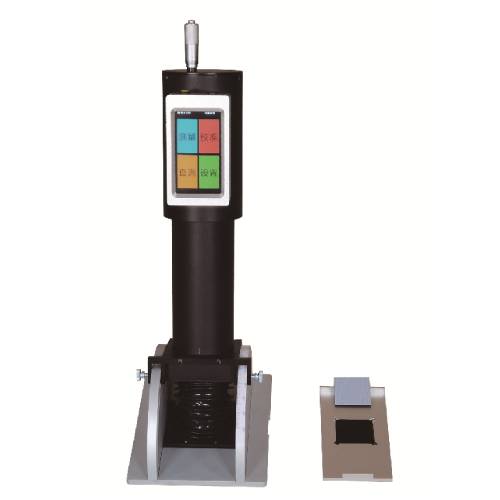
Core Measurement Principle
The working principle of the retro-reflective coefficient tester is based on photometric and optical theory. The core measurement principle is: under specific geometric conditions, the brightness per unit area of a reflective material under unit illumination is defined as the retro-reflective coefficient, expressed in candelas per lux per square meter (cd/(lx·m²)).
During measurement, a parallel light beam is incident on the sample at 60° to the normal. The reflected light is measured at 60° and 30° positions for specular and diffuse components, respectively. The light intensity is converted into an electrical signal through a photoelectric circuit and displayed digitally. The light source uses a parallel light tube with an effective aperture of Φ20 mm to ensure parallel illumination at the effective distance. The light paths for the source, specular reflection, and diffuse reflection are positioned with high-precision guides to converge at the sample center.
Calibration Standards
The retro-reflective coefficient tester is primarily used for measuring materials such as road signs and vehicle reflective markings. Typical calibration procedures include:
Visual Inspection: Check that the instrument exterior is intact, all components are present, and there is no visible damage or corrosion.
Function Testing: Power on the instrument, verify that the display, buttons, and other functions operate correctly.
Calibration: Use standard reflective panels to calibrate the instrument, ensuring accurate measurement. Perform calibration in a darkroom or controlled environment to minimize ambient light interference.
Repeatability Test: Measure the same standard panel multiple times; repeatability error should typically not exceed ±2%.
Linearity Test: Measure panels with different reflective values to check linearity, typically requiring a linearity error within ±3%.
Environmental Adaptability Test: Test performance under different temperature and humidity conditions to ensure stable operation.
Regular maintenance is also required, such as cleaning optical components and inspecting power lines. The calibration cycle is generally one year, but for frequent use or harsh environments, a shorter interval is recommended. Calibration records should be documented for traceability.
Usage Method
The operation of the retro-reflective coefficient tester generally involves four steps:
Connection: Connect the instrument to the main unit via cable, ensuring the connectors are secure and properly oriented. Turn on the main unit; the instrument panel will display its working status.
Zero Adjustment: Cover the lens with a black shading cap; the display should read 000. If abnormal, rotate the zero adjustment knob to reset.
Calibration: Using a set of engineering-grade standard panels, calibrate the instrument for specific colors or reflective films. Place the instrument on the rotating stage, insert the standard panel into the measurement aperture, and adjust the calibration knob until the displayed value matches the standard panel.
Measurement: Place the test sample in the measurement aperture after calibration. Record the data once stable. Rotate the incident angle to obtain measurements at different angles; recalibrate if the observation angle changes. Ensure the instrument and rotating stage are perpendicular and tightly aligned to avoid data deviation. Lock and store measurements as needed.
Maintenance and Precautions
To ensure accurate testing, keep the instrument lens clean and perform regular maintenance. Common issues, such as a black screen, can affect operation but are preventable. Check that:
All hardware, including the control system, is powered on correctly.
Connections between the tester and the main control board are secure and properly oriented.
Ribbon cables between the control board and HUB are properly seated and not loose.
Interface definitions match the HUB board; check jumpers for looseness, breaks, or short circuits.
Serial port cables connecting the tester to the controller are secure.
Loose or improperly connected lines during operation may cause a black screen.
Selection Guidelines
When selecting a retro-reflective coefficient tester, consider test materials, standard compliance, technical performance, and application scenarios. Identify the materials to be tested (e.g., road markings, traffic signs, reflective clothing, or films) as they require specific measurement geometries. Choose instruments that comply with relevant standards (e.g., ASTM E1710. ASTM E809. EN 1436) to ensure valid results.
Focus on technical indicators such as light source stability, measurement accuracy, repeatability, and support for data storage or output (USB/RS232/software). For field inspections, portable or handheld testers are recommended; for laboratory testing, high-precision bench-top units are preferred. User-friendly interfaces and convenient software improve testing efficiency. Ensure that standard calibration panels and reliable after-sales services (training, repair, software updates) are provided. Overall, selection should prioritize application, standard compatibility, precision, and usability to achieve accurate and stable measurements.
The retro-reflective coefficient tester enables rapid and accurate measurement of material reflectivity, providing quantitative data for road markings, traffic signs, and reflective safety products. It helps assess standard compliance, improves visibility and safety, supports quality control, R&D optimization, and regulatory certification, thereby enhancing testing efficiency and reliability.