

Dynamic Seam Fatigue Tester,GMW 3405
The dynamic seam fatigue tester is a specialized testing device designed to evaluate the durability and fatigue behavior of stitched seams in fabrics or soft materials under repeated impact loads. It is widely used in industries such as furniture upholstery, automotive interiors, apparel, and footwear, providing scientific data on seam stability and product reliability during long-term use. With continuous advancements in stitching technology and fabric materials, dynamic seam fatigue testing has become an important method for assessing seam performance. This article summarizes its principles, standards, applications, equipment composition, testing procedures, and precautions, providing a comprehensive overview of the significance and function of dynamic seam fatigue testers.
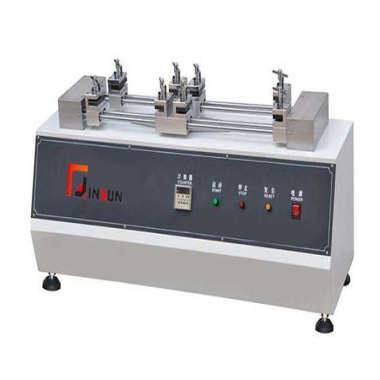
What is a Dynamic Seam Fatigue Tester?
A dynamic seam fatigue tester simulates the repeated impact and penetration loads that stitched seams experience during real-life usage. By applying cyclic, impact, and penetration forces to stitched seams, the device evaluates the seam structure’s durability. This test is particularly suitable for seams in fabrics, upholstery, leather, and similar materials, and is commonly applied in furniture, automotive seating, clothing, and other textile products.
The core mechanism of the tester involves clamping the sample with its stitched seam onto a flexible foam support pad. A wheel with a rubber surface continuously impacts the sample with a preset weight and frequency. The degree of seam damage or failure is observed after a specified number of cycles.
Testing Principle and Simulation of Real Use Conditions
The principle of dynamic seam fatigue testing is to simulate seam fatigue under repeated impact loads, mimicking real-world use. During testing, the rubber wheel repeatedly strikes the area around the stitched seam at a high frequency, gradually inducing damage such as thread slippage, seam opening, or thread breakage.
This process replicates the stresses that occur during daily use, such as sitting, body movement, or vibrations from vehicles. Therefore, dynamic seam fatigue testing provides an accurate reflection of product performance under actual use conditions.
ASTM Standard and Testing Methods
The most commonly adopted standard for dynamic seam fatigue testing is ASTM D4033 (Dynamic Seam Fatigue Testing Method). This standard was originally developed to assess the resistance of upholstery fabric seams to yarn slippage by simulating repeated impacts.
ASTM D4033 specifies that samples with seams are tested in three common stitching directions:
Warp-to-warp seams
Filling-to-filling seams
Warp-to-filling seams
The standard requires the impact wheel to repeatedly apply the load for a set number of cycles, typically 7.000. If no significant damage occurs within this number of cycles, the seam is considered compliant with the standard.
Composition and Structure of the Dynamic Seam Fatigue Tester
Impact System:
Includes a freely rotating rubber wheel, adjustable bracket, and counterweight system. The rubber wheel continuously impacts the sample at a set height, simulating repeated real-life loads on seams.
Sample Fixture:
The sample is clamped in a fixture with a foam pad beneath it, simulating support conditions of actual products. The foam elasticity affects load distribution and sample stress.
Control and Counting System:
Features an electronic control panel, cycle counter, and system for setting the number of cycles and impact frequency. It automatically records the test process.
Auxiliary Functions:
Modern testers may include safety covers, display screens, air or power interfaces, and control modules to enhance operational stability and safety.
Testing Procedure
1. Sample Preparation:
Cut samples to standard dimensions and seam orientations, ensuring seam paths are intact and undamaged.
2. Sample Installation:
Clamp the sample with a foam pad in the fixture, adjusting height and position so the seam is within the impact wheel’s range.
3. Parameter Setting:
Use the control system to set the number of cycles, impact frequency (e.g., 25±2 impacts per minute, approximately 0.4±0.03 Hz), simulating typical usage conditions.
4. Test Execution:
Start the test; the rubber wheel continuously impacts the sample according to the set parameters.
5. Observation and Evaluation:
After testing, inspect the seam for thread slippage, seam opening, or broken stitches. Evaluate results based on the standard.
Key Test Indicators
Thread Slippage: Yarn moving from its original position under repeated impacts, leading to seam loosening or eventual rupture.
Seam Opening: Enlargement of seam holes indicates fatigue damage, showing loss of tightness under cyclic load.
Thread Breakage or Structural Failure: The most severe damage, where stitching breaks or the seam fails entirely.
Application Areas
Furniture Manufacturing:
Seam durability in sofas, armchairs, and other furniture affects product lifespan and user comfort. Dynamic seam fatigue testing helps select high-quality stitching and improve overall furniture quality.
Automotive Interiors:
Seams in car seats, door panels, and headrests endure frequent vibration and motion. Dynamic testing evaluates and optimizes interior material design and manufacturing.
Apparel and Footwear:
For performance garments and premium footwear, seam strength and fatigue resistance are key to comfort and durability. Dynamic fatigue testing identifies potential seam defects and informs material and structural optimization.
Other Textile Products:
Including bags, outdoor gear, and other items subjected to bending, stretching, or weight-bearing, ensuring seam fatigue resistance guarantees user safety.
Technological Development and Equipment Trends
Automation and Data Acquisition: Modern testers use digital sensors and automation to monitor seam fatigue in real-time, generating dynamic curves for product development.
Multi-Functional Testing Platforms: Advanced testers may integrate with other textile testing devices, such as static tensile or tear tests, for comprehensive performance evaluation.
Human-Machine Interaction and Intelligent Control: Touchscreens, programmable controls, and networked data analysis improve testing efficiency and enable automated batch analysis.
The dynamic seam fatigue tester is a key instrument for assessing seam durability under repeated loads, effectively reflecting seam performance and potential damage mechanisms in real-world use. The test adheres to ASTM and other international standards and plays an essential role in quality control, product development, and reliability prediction in furniture, automotive, apparel, and other industries. With ongoing advancements in precision, intelligence, and data processing, dynamic seam fatigue testers provide more scientific and comprehensive support for product design and performance evaluation.