

What is the method of fiber fineness test?
Fiber fineness is a core indicator in the textile industry, high-performance fiber material development, and material quality control. It describes the thickness of fibers and is a key parameter that determines textile softness, strength, luster, and overall performance. Because different materials require different measurement approaches, understanding various fiber fineness testing methods and their principles is essential for scientific evaluation and rational material selection.
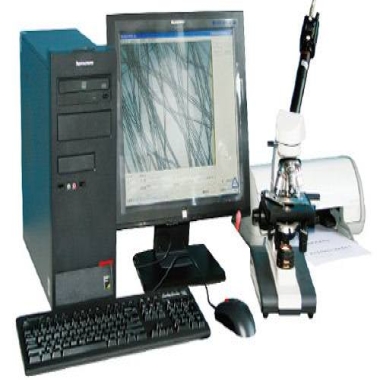
Concept of Fiber Fineness
Fiber fineness generally refers to the thickness of a fiber and can be expressed in several common ways:
Diameter or cross-sectional area — directly describing fineness by the physical size of the fiber cross section.
Linear density — mass per unit length of fiber, expressed in Tex, dtex, or denier.
Length per unit mass — the inverse of linear density.
Fiber fineness is one of the fundamental characteristics of fiber materials. Smaller fineness values indicate finer fibers, which are typically associated with better yarn quality, softer fabric handfeel, and improved weaving performance. Fiber fineness also influences spinning behavior, fabric durability, and wearing comfort.
Importance of Fiber Fineness Testing
Fiber fineness directly affects several key aspects:
Yarn and fabric handfeel: finer fibers generally produce smoother, softer fabrics.
Yarn strength and uniformity: uniform fineness helps create more consistent yarns and better final product performance.
Processing and dyeing behavior: large fineness variations may cause uneven dyeing or excessive hairiness during processing.
High-performance materials: in composite materials and nanofibers, precise fineness measurement is critical for research and development.
For these reasons, accurate fiber fineness testing is highly valuable for textile manufacturers, research institutions, and advanced materials developers.
Common Methods for Fiber Fineness Testing
Fiber fineness measurement methods can be broadly classified into:
Gravimetric (weighing) method
Airflow method
Optical measurement (microscopy and image analysis)
Projection microscope method
Mechanical vibration method
Advanced laser and digital imaging techniques
Each method is explained below in terms of principle, applicability, advantages, and limitations.
Gravimetric Method
Principle and Procedure
The gravimetric method is the most traditional and straightforward approach. The basic steps are:
Wind or cut a specific length of fiber.
Weigh the sample.
Calculate linear density based on length and mass.
For example, if 1000 meters of fiber weighs m grams, its linear density is m dtex.
Applicability
This method is suitable for natural fibers (such as cotton and wool) and many chemical fibers when only a rough estimation is needed. It is commonly used for quick laboratory checks or basic production monitoring.
Advantages and Limitations
Advantages: simple operation and low cost.
Limitations:
Requires highly uniform samples.
Sensitive to environmental conditions.
Low resolution for very fine fibers.
Airflow Method
Basic Principle
The airflow method is an indirect measurement based on the relationship between airflow resistance and fiber fineness. The procedure involves:
Placing fibers in a test chamber.
Passing air through the fiber mass.
Measuring airflow resistance.
Converting resistance into a specific surface index or linear density.
Certain standards use this principle to evaluate the fineness of flax and other fibers.
Advantages and Limitations
This method is fast and suitable for non-uniform or short fibers. However, results may be influenced by fiber maturity and morphology, so additional methods are sometimes required for confirmation.
Optical Measurement Methods
Projection Microscope
This traditional method is widely used for measuring the diameter of animal fibers such as wool. Fibers are placed on a slide, projected under a microscope, and measured manually or digitally. It works best for fibers with nearly circular cross sections.
Digital Image Analysis
Modern systems use high-resolution cameras and software to automatically detect fiber boundaries and calculate diameters and cross-sectional areas. This method can also generate statistical distributions, making it highly accurate and efficient.
Advantages and Limitations
Optical methods are precise and visually intuitive, but require expensive equipment and careful sample preparation. They are mainly used in research and high-precision quality control laboratories.
Mechanical Vibration Method
This technique measures fiber fineness by analyzing the vibration frequency of a tensioned fiber. The frequency is mathematically related to linear density, allowing the system to estimate fineness. It is particularly useful for rapid measurement of single fibers in specialized instruments.
Advanced Technologies in Fiber Fineness Measurement
Laser Diffraction
Laser diffraction analyzes light scattering patterns produced when a laser passes through fibers to estimate their diameter. It is fast, non-destructive, and highly accurate, making it suitable for high-performance fibers.
Automated Digital Imaging Systems
Modern microscopy systems combined with artificial intelligence and image processing can analyze thousands of fibers automatically, filter impurities, and even distinguish different fiber types in blends.
Standards for Fiber Fineness Testing
Globally recognized standards include:
ISO 137 / IWTO methods for wool fiber diameter measurement.
ASTM D8394 for automated cotton fineness and maturity testing.
Various industry standards specifying environmental conditions, sample preparation, and calibration requirements.
These standards ensure consistency and comparability across laboratories.
Practical Testing Considerations
When conducting fiber fineness tests, the following points are critical:
Conditioning: samples should be equilibrated at 20 ± 2°C and 65 ± 5% RH before testing.
Representative sampling: random sampling is necessary to avoid bias.
Instrument calibration: regular calibration using reference materials is essential.
Statistical analysis: mean, standard deviation, and coefficient of variation (CV) should be reported to describe fineness distribution.
Significance in Applications
Fiber fineness testing is widely used in:
New material development such as nanofibers and functional polymers.
Blend analysis to compare different fiber types.
Performance evaluation in relation to strength, abrasion resistance, and thermal properties.
Textile grading and market classification based on fineness.
Fiber fineness testing is a fundamental part of textile and materials science. Through gravimetric, airflow, optical, laser, and digital imaging methods, researchers and manufacturers can obtain comprehensive and precise fiber fineness data. With ongoing technological advancements, automated and digital measurement systems are becoming mainstream, providing strong data support for high-performance fiber innovation and product optimization.