

What is a curl elasticity detector?
In the fields of textiles, materials science, and quality control, the Curl Elasticity Detector is a specialized instrument used to quantitatively evaluate the curl performance and elasticity of fibers and materials. Curl elasticity, as an important parameter measuring the physical properties of fibers, is closely related to fiber softness, resilience, and the comfort and durability of end products. By using automated and high-precision testing methods, the Curl Elasticity Detector helps manufacturers, research institutions, and testing laboratories obtain reliable and repeatable fiber performance data, guiding fiber selection, product development, and quality control.
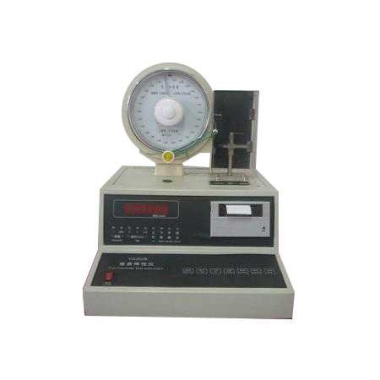
This article systematically introduces the nature, function, and scientific value of the Curl Elasticity Detector from multiple dimensions, including its definition, working principle, core metrics, typical testing process, main applications, industry standards, and future development.
What is a Curl Elasticity Detector?
A Curl Elasticity Detector is a testing device designed to quantitatively analyze the curl characteristics and elasticity of textile fibers. It can automatically measure and calculate fiber curl radius, curl count, curl shrinkage, and curl elasticity rate, helping to evaluate the fiber's physical response under specific loads and relaxation conditions.
Compared with traditional manual observation and calculation methods, the Curl Elasticity Detector relies on automation and sensor systems for precise measurements, avoiding human error and subjective judgment and improving testing accuracy and repeatability. Modern devices often integrate image processing, force sensors, and computer control systems for automated analysis and data output.
Why Are Curl and Elasticity Important?
The curl and elasticity characteristics of fibers are key indicators in evaluating textile material performance. Their importance can be summarized as follows:
1. Curl affects fiber softness and bulkiness
Fibers with higher curl typically exhibit better softness and loft. This property significantly affects the hand feel and volume of blankets, knitted garments, and home textiles. The design and control of fiber curl directly influence the final product's tactile comfort and user experience.
2. Elasticity determines recovery and stretchability
Fiber elasticity reflects the ability of fibers to return to their original shape after deformation. Fibers with high elasticity maintain shape stability under load and are less likely to deform, loosen, or elongate. This property is particularly important for stretch fibers, sportswear, and close-fitting clothing.
3. Provides scientific data to guide material selection and design
Accurately measuring fiber curl and elasticity allows researchers to obtain quantitative data for comparing different fiber types, processing methods, or treatment technologies. This is valuable for new product development, formula optimization, and quality control.
Principle and Core Metrics
The design of the Curl Elasticity Detector mainly involves mechanical loading and length measurement, simulating fiber deformation and recovery under different loads to obtain relevant indicators.
1. Mechanical Loading System
The instrument applies “light load” and “heavy load” to fibers through a controllable tensioning mechanism. Built-in force sensors measure the applied load accurately and control the loading, holding, and unloading process. During the loading stages, the fiber length under different forces is recorded, and the fiber’s recovery length is automatically measured during unloading or relaxation. These data are used to calculate curl radius, curl elasticity rate, and other metrics.
2. Optical or Pulse Length Measurement
The length measurement system typically uses optical sensors or pulse encoders (e.g., stepper motors combined with optical encoders) to capture fiber length accurately in different states. These measurements form the basis for calculating curl parameters, and the instrument can record changes on the millimeter or sub-millimeter scale.
3. Typical Metrics Explained
Curl Radius: Calculated by analyzing the bending of the fiber under load, reflecting the initial curl magnitude.
Curl Elasticity Rate: Measures the fiber’s ability to return to its original shape during load and relaxation cycles. A higher rate indicates stronger elastic recovery.
Curl Count: The number of curls per unit length, describing the frequency and density of fiber bends.
Typical Testing Process
To ensure accuracy and comparability, testing generally follows these steps:
Sample Preparation
Fiber samples are pretreated according to standard lengths and environmental conditions, such as cleaning and equilibrating under standard temperature and humidity.
Sample Installation
Samples are fixed in the instrument’s clamps and adjusted to an initial synchronized length before loading. The control system ensures precise alignment and fixation.
Loading and Measurement
The instrument applies a light load first and records the corresponding length, followed by a heavy load. Optical or pulse sensors capture real-time length changes.
Relaxation and Recovery Recording
During unloading or relaxation, the system records fiber recovery lengths, and internal software calculates the elasticity metrics automatically.
Applications
Textile Quality Control
Used in production to determine whether fiber batches meet physical performance specifications, especially for functional, composite, or high-end fibers.
Scientific Research
Supports quantitative evaluation of fiber mechanical behavior in materials and polymer research, providing accurate and repeatable data for research projects and publications.
Standardized Testing by Testing Agencies
Third-party labs rely on automated and standardized testing capabilities to improve efficiency and consistency when performing fiber curl tests according to standards.
Education and Training
Serves as an experimental tool in textile engineering and material science education, helping students understand fiber mechanics and performance testing principles.
Industry Standards and Regulations
Many national and industry standards define explicit test methods for fiber performance. For example, the standard GB/T 14338 “Test Methods for Fiber Curl Performance” specifies technical requirements and testing procedures for curl and elasticity, providing a reference for equipment design and result evaluation.
Advantages and Limitations
Advantages
High automation, improved testing efficiency: Automatic data acquisition, calculation, and analysis reduce human error.
Quantitative indicators support scientific comparison: Allows for accurate comparison between different fiber types for research and quality control.
Reduces uncertainty from manual observation: Curl count and elasticity calculations no longer rely on subjective judgment.
Limitations
Sample preparation sensitive: Environmental and handling differences can affect results, requiring strict sample preparation.
Applicable to specific fiber types: Short or extremely soft fibers may be difficult to fix or measure accurately.
Future Trends
With the development of smart manufacturing and digital testing technologies, curl elasticity detection is evolving. Future systems may incorporate higher-resolution sensors, AI image analysis, and cloud-based data processing to make testing smarter, results more precise, and expand capabilities for a broader range of fibers and complex shapes.
The Curl Elasticity Detector is an essential tool for fiber performance testing. By precisely measuring fiber curl, elasticity, and response characteristics, it provides quantitative, standardized physical data for the textile industry, research, and quality control. Its automation, high precision, and repeatability make it indispensable in modern fiber testing, and ongoing technological advancement will further expand its capabilities and applications, supporting innovation in fiber science and materials development.