

What is a Button Sewing Machine?
With the large-scale development of the garment industry and the continuous improvement of automation, sewing equipment is steadily evolving toward higher efficiency, greater precision, and increased intelligence. In the garment production process, button sewing, although a relatively specialized operation, directly affects the functionality, appearance, and durability of clothing. To meet modern garment manufacturing requirements for consistency and efficiency, the Button Sewing Machine has become an indispensable specialized piece of equipment in apparel production. This article provides a systematic overview of button sewing machines, including their definition, working principles, structural components, classification methods, typical applications, and development trends.
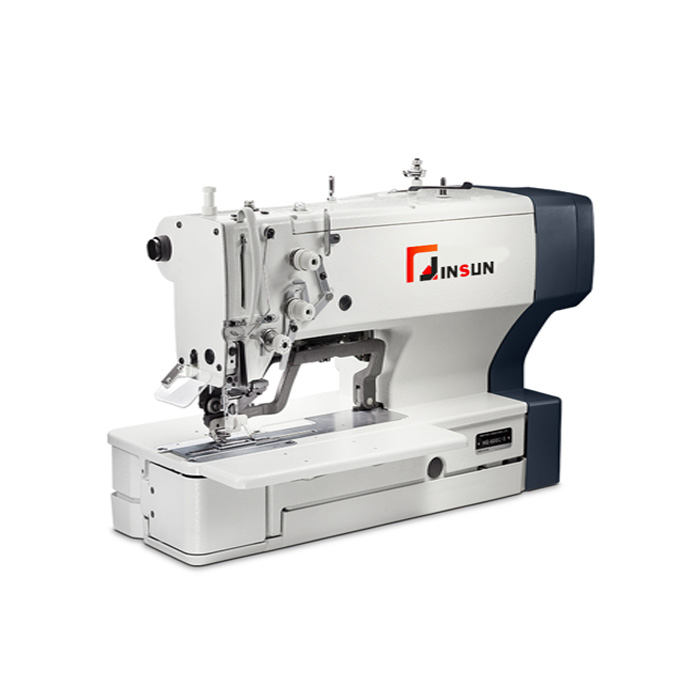
A button sewing machine is an industrial sewing device specifically designed to securely attach buttons to textiles or garments. Unlike conventional lockstitch sewing machines, this equipment is optimized for the specific process of button attachment, enabling stable and highly repeatable sewing operations. According to information from public web sources, button sewing machines can be used for various button types, such as flat buttons, four-hole buttons, two-hole buttons, and certain decorative buttons. They are widely applied in the production of shirts, jackets, uniforms, denim garments, and knitted apparel.
In modern garment production lines, button sewing machines are typically positioned as post-processing equipment and operate in coordination with automatic buttonhole machines and pressing equipment, forming a complete garment manufacturing system. Their primary role is to improve consistency in button attachment, reduce manual errors, and significantly enhance production efficiency.
Definition and Basic Functions
From a functional perspective, a button sewing machine is a specialized mechanical device that secures buttons at designated positions on fabric by preset sewing paths and stitch counts. Web-based technical references indicate that the machine can complete multiple stitching cycles for a single button within a short period, ensuring that buttons remain firmly attached during repeated use, pulling, or washing.
Its core functions include:
Automatic positioning and sewing: Buttons are fixed in position using clamps or positioning devices to ensure uniform placement.
Repeatable stitch control: The stitch count can be preset to guarantee consistent fastening strength for each button.
Adaptability to multiple button types: By adjusting clamps or parameters, the machine can accommodate different button hole configurations.
Improved production efficiency: Compared with manual sewing or conventional sewing machines, processing time per garment is significantly reduced.
These functions make the button sewing machine an irreplaceable piece of equipment in large-scale garment manufacturing.
Working Principle
The basic working principle of a button sewing machine involves mechanical or electronic control systems that coordinate the movement of the needle bar, feeding mechanism, and button clamp. This coordination allows the needle to repeatedly pass through the button holes and fabric along a preset trajectory, completing the sewing process.
Based on publicly available information, the typical operating procedure includes the following steps:
Placement of the button and fabric: The operator positions the fabric on the worktable and places the button into a dedicated clamp.
Clamp fixation: The clamp closes automatically or manually to securely hold the button at the designated position.
Sewing activation: Once the machine starts, the needle bar moves according to the preset sewing pattern, completing multiple penetrations.
Completion and thread trimming: After the preset stitch count is reached, the machine stops automatically and performs thread trimming or securing operations.
In more advanced models, electronic control systems precisely manage the entire process, minimizing human intervention and enhancing consistency and stability.
Structural Components
From a structural standpoint, a button sewing machine generally consists of the following main components:
1. Frame and Worktable
The frame serves as the supporting structure of the machine, ensuring operational stability. The worktable supports the fabric and sewing area and is typically designed to be wear-resistant and vibration-dampening.
2. Needle Bar and Drive System
The needle bar is the core component responsible for sewing action, achieving high-speed and stable vertical motion through the drive system. The drive mechanism converts rotational motion from the power source into reciprocating motion of the needle bar.
3. Button Clamp
The button clamp secures buttons of various sizes and hole configurations and is critical for sewing accuracy. Some designs allow quick replacement of clamps to accommodate different production requirements.
4. Control System
The control system is used to set stitch counts, sewing paths, and operating parameters. In modern machines, electronic or digital control systems are commonly employed to improve operational flexibility.
5. Auxiliary Devices
These include thread trimming mechanisms, presser foot assemblies, and safety protection structures, which enhance operational convenience and user safety.
Classification of Button Sewing Machines
According to information compiled from web sources, button sewing machines can be classified from several perspectives:
1. By Drive Method
Mechanical button sewing machines
Electronically controlled button sewing machines
2. By Button Type
Two-hole button sewing machines
Four-hole button sewing machines
Multi-function universal button sewing machines
3. By Level of Automation
Semi-automatic button sewing machines
Fully automatic button sewing machines
Different types of machines are suitable for production environments of varying scales and technical requirements.
Typical Application Fields
1. Garment Manufacturing
Button sewing machines are widely used in mass production and standardized manufacturing of shirts, suits, and outerwear.
2. Uniform and Workwear Production
Uniforms require high durability, making consistent and secure button attachment particularly important. Button sewing machines ensure uniform sewing quality.
3. Denim and Heavy Fabric Garments
For thicker materials, button sewing machines provide stable stitch control to ensure reliable button attachment.
4. Knitted and Lightweight Fabrics
By adjusting operating parameters, the machines can also handle lightweight fabrics, preventing fabric damage or wrinkling.
Operation and Maintenance Considerations
To ensure long-term stable operation, web-based technical references emphasize the following maintenance practices:
Regular cleaning: Remove thread debris and dust to prevent interference with mechanical precision.
Lubrication: Properly lubricate moving components to reduce wear.
Clamp inspection: Periodically check button clamps for looseness or wear.
Parameter calibration: Adjust stitch counts and sewing paths according to different products.
Good maintenance practices not only extend equipment service life but also ensure consistent sewing quality.
Development Trends and Technical Direction
As garment manufacturing advances toward intelligent production, button sewing machines are exhibiting the following development trends:
Higher levels of automation: Reducing manual intervention and improving overall production efficiency.
Digital control systems: Enabling rapid switching between product models through parameterized settings.
Enhanced flexible manufacturing capabilities: Adapting to small-batch and multi-variety production needs.
Improved ergonomics: Enhancing operational convenience and safety.
These trends indicate that button sewing machines are evolving from traditional specialized equipment into intelligent production units.
As a key specialized device in garment manufacturing, the Button Sewing Machine plays a vital role in ensuring product quality, improving production efficiency, and enabling standardized manufacturing. This article systematically reviews button sewing machines from the perspectives of overview, working principles, structural components, classification methods, application scenarios, maintenance considerations, and development trends. With the continuous upgrading of the garment industry, this type of equipment will continue to play an irreplaceable role within intelligent manufacturing systems, providing strong support for the high-quality development of the apparel industry.