

How to do a fabric stretch test?
In the textile industry, fabric tensile testing is a core step in evaluating the mechanical properties of materials, and its results directly affect product durability, safety, and market competitiveness. Whether it's the tear resistance of automotive interiors, the elongation of clothing fabrics, or the load-bearing capacity of industrial conveyor belts, all require standardized testing verification. This article will systematically outline the equipment selection, standard basis, operating procedures, and key parameters for fabric tensile testing, providing the industry with a practical technical guide.
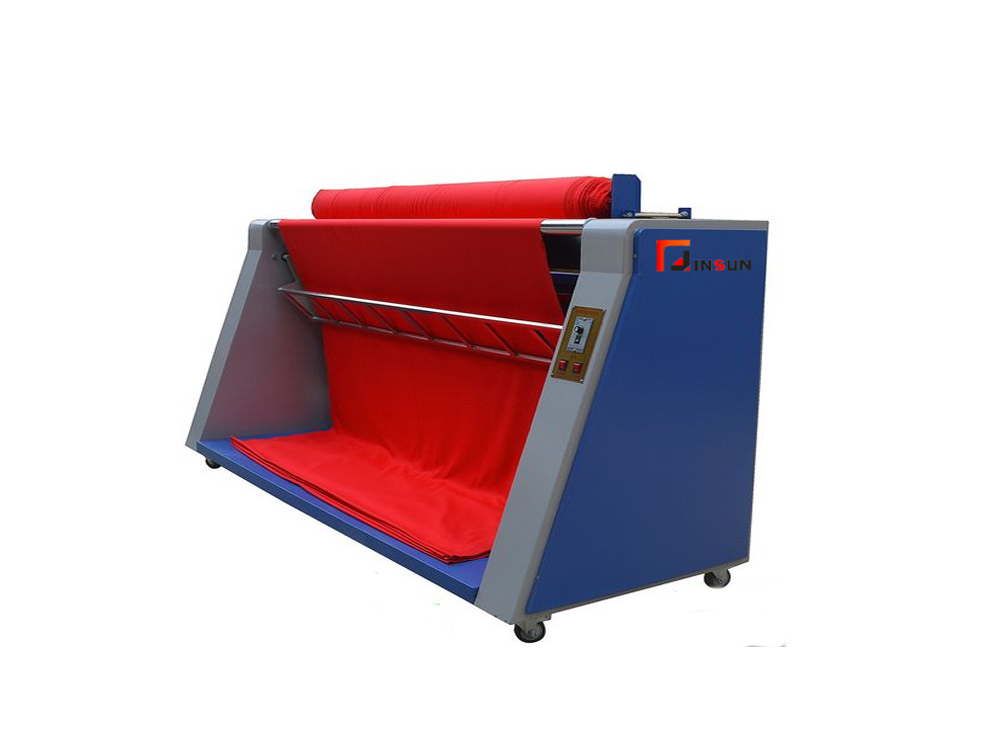
Testing Equipment
1. Basic Fabric Tensile Testing Machine
Basic equipment uses mechanical or simple electronic control and is suitable for routine tensile testing. Its core components include:
Sample clamping device: Equipped with pneumatic or manual clamps, the clamping force is adjustable to prevent sample slippage. For example, one model uses a 5kN pneumatic flat clamp with a clamping tooth design of flat teeth and corrugated teeth (R5) to adapt to different fabric textures.
Tension transmission mechanism: Driven by a motor, a ball screw is used to achieve constant speed elongation (CRE) or constant speed traction (CRT) modes. The testing speed range is typically 10-500 mm/min, meeting diverse needs from slow tensile testing to high-speed impact testing.
Force Measurement and Data Acquisition System: Built-in high-precision sensors (accuracy ±1%) record tensile and displacement data in real time, supporting dynamic curve display and data export.
2. High-Precision Electronic Tensile Testing Machine For high-end applications, the equipment integrates a computer control system and a multi-sensor network:
Multi-mode Testing Capability: In addition to tensile testing, it supports composite tests such as compression, bending, and tearing. For example, when testing the seam strength of automotive seat fabrics, it can simulate multi-directional stresses encountered in actual use.
Environmental Simulation Module: Optional temperature and humidity control chamber simulates extreme environments (e.g., -40℃ to 80℃, humidity 0-100%RH) to evaluate material weather resistance.
Non-Contact Measurement Technology: Employs a laser extensometer or video extensometer, avoiding interference from clamps on highly elastic fabrics (such as spandex). Elongation measurement accuracy can reach 0.01 mm.
3. Specialized Testing Equipment
Ring Method Tester: Used for knitted fabrics. The sample is sewn together at both ends to form a ring, which is then placed in upper and lower clamps to test its resistance to ring tensile stress.
High-Speed Traction Testing Machine: Designed for high-strength fabrics such as seat belts and parachutes. Tensile speeds can reach over 1000 mm/min, simulating extreme impact scenarios.
Testing Standards
1. International Standard System
ISO 13934-1: The most widely used strip method standard globally. It specifies a sample width of 50 mm (effective tensile width), a clamping distance of 200 mm, and a testing speed of 100 mm/min (normal) or 300 mm/min (fast). Applicable to woven fabrics, elastic fabrics, and some technical fabrics.
ASTM D5034: American Society for Testing and Materials standard. Uses the gripping method. Sample width ≥ 100 mm, clamping width 50 mm. Focuses on rapid testing of apparel fabrics.
EN ISO 13935-2: For seam strength testing, specifies the use of the gripping method to evaluate the bond strength between the seam and the fabric.
2. Domestic Standards System
GB/T 3923.1: Equivalent to ISO 13934-1. adding exclusion clauses for geotextiles and coated fabrics, specifying that conditioned fabrics must be conditioned for 24 hours in standard atmosphere (23℃±2℃, 50%RH±5%) before testing.
FZ/T 01034: For industrial textiles, a dynamic fatigue testing method is added to simulate the performance degradation of fabrics under repeated stretching.
3. Industry-Specific Standards
Automotive Industry: Requires interior fabrics to have a warp breaking strength ≥1500N/50mm, a weft breaking strength ≥1200N/50mm, and a breaking elongation of 15%-35%.
Aerospace: Specifies that parachute fabrics must have a breaking strength of ≥3000N/50mm at a speed of 50mm/min, and the fracture morphology must be linear.
Test Procedure
Size Control: For the strip method, the sample width is 50mm (cut width 60mm, leaving 50mm effective stretch width after removing the edge yarn), and the length is ≥300mm; for the gripping method, the sample width is ≥100mm, and the clamping width is 50mm.
Direction Marking: Clearly mark the warp (longitudinal) and weft (transverse) directions to avoid data deviations caused by differences in fabric texture.
Edge Treatment: Use tape to wrap the edges to prevent yarn detachment, or use laser cutting to reduce mechanical damage.
2. Equipment Calibration
Force Calibration: Verify sensor accuracy using standard weights (e.g., 100N, 500N); the error must be ≤±1%.
Displacement Calibration: Calibrate the stretch length using a grating ruler or laser interferometer to ensure data accuracy.
Clamp Alignment: Use the copy paper method to check the effective clamping points of the clamps to avoid eccentric stretching of the sample.
3. Test Execution
Pre-tension: Apply a 0.5N pre-tension to the highly elastic fabric to eliminate the effect of relaxation.
Speed Setting: Standard testing uses 100 mm/min; for high-elastic fabrics, the speed can be reduced to 10 mm/min to capture minute deformations.
Data Recording: Automatically collects parameters such as breaking strength (N), elongation at break (%), and initial modulus (N/mm), generating stress-strain curves.
4. Result Analysis
Abnormal Data Removal: Specimens with fracture locations within 5 mm of the clamp or exhibiting stepped fractures are considered invalid.
Statistical Processing: Calculate the average value and coefficient of variation (CV%) to assess batch consistency. For example, a batch of automotive seat fabric with a warp breaking strength CV% ≤ 8% is considered合格 (qualified).
Morphological Assessment: Record fracture morphology (straight, oblique, stepped) to aid in the analysis of material defects.
Key Parameters
1. Core Indicators
Tear Strength: Reflects the material's tensile strength, measured in N/50mm. For example, the tear strength of industrial conveyor belt cover rubber needs to be ≥2000N/50mm.
Elongation at Break: Measures the material's ductility. Too high an elongation may lead to dimensional instability, while too low an elongation makes it brittle. Apparel fabrics typically require 15%-40%.
Initial Modulus: Characterizes the material's rigidity. The higher the value, the less easily the fabric deforms. Automotive interior fabrics need an initial modulus ≥50N/mm.
2. Composite Performance Indicators
Constant Elongation Load: The tensile force at a specified elongation (e.g., 5%), evaluating the fabric's elastic recovery ability.
Tear Strength: Tested using the trapezoidal or tongue-shaped method, reflecting the material's resistance to localized damage, measured in N.
Fatigue Life: Evaluated through dynamic cyclic tensile testing, assessing the fabric's durability under repeated stress, measured in cycles.
Application Scenarios
1. R&D Stage
Material Selection: Compare the tensile properties of different fibers (cotton, polyester, aramid) or blend ratios to optimize the formula.
Structural Optimization: Improve strength in specific directions by changing fabric density and weave structure (plain weave, twill weave, satin weave).
2. Quality Control
Batch Inspection: Randomly sample 5-10 samples from each batch to ensure that breaking strength and elongation meet standards.
Online Monitoring: Install miniature sensors on the production line to provide real-time feedback on fabric tension and prevent deformation due to excessive stretching.
3. Failure Analysis
Fracture Origin: Determine whether the failure is due to fiber breakage, yarn slippage, or weaving defects through fracture morphology analysis (e.g., SEM).
Environmental Impact Assessment: Compare performance degradation under standard and actual usage environments (e.g., high temperature, humidity) to guide product improvement.
Fabric tensile testing is not only a "gatekeeper" for quality control but also a "catalyst" for material innovation. Through standardized equipment, rigorous processes, and in-depth data analysis, companies can accurately pinpoint material performance bottlenecks and develop more durable, comfortable, and environmentally friendly textile products. In the future, with the integration of intelligent sensing technology and big data, fabric testing will evolve towards real-time and predictive methods, providing core support for the transformation and upgrading of the global textile industry.