

What is Carpet Tile Thickness Gauge?
In the fields of architectural decoration and interior design, carpet tiles have gradually become a popular choice for commercial spaces and home settings due to their modular installation, ease of replacement, and diverse design styles. However, the uniformity of carpet tile thickness directly affects the paving effect, foot comfort, and overall lifespan. To ensure product quality meets industry standards, the Carpet Tile Thickness Gauge has emerged as an indispensable precision tool in production, quality inspection, and construction.
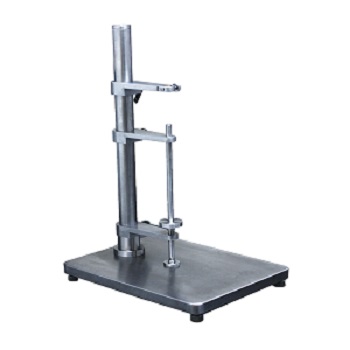
Technical Principle
The core function of the carpet tile thickness gauge is to accurately obtain the total thickness data of carpet tiles through physical contact or non-contact methods. Based on the measurement principle, mainstream equipment can be divided into three main categories:
1. Mechanical Contact Measuring Instrument This type of equipment adopts a "pressure plate + displacement sensor" structure, simulating the actual paving state through standardized pressure. During measurement, the carpet tile sample is placed between two parallel pressure plates, and a constant pressure of 5N-10N is applied (according to BS 5920:1980 standard). The displacement sensor records the change in the distance between the pressure plates in real time and directly displays the total thickness value. Test data for a certain model of equipment shows that its measurement repeatability error is ≤0.05mm, meeting the testing requirements for carpet tile thickness tolerance of ±0.2mm.
2. Ultrasonic Non-Contact Measuring Instrument For flexible carpet tiles or samples with textured surfaces, ultrasonic technology calculates thickness by emitting high-frequency sound waves and analyzing the reflected signals. The emitted ultrasonic waves penetrate the carpet pile layer and reflect off the substrate surface to form echoes. The system calculates the thickness based on the sound wave propagation time difference and the known speed of sound (typically 340m/s). Comparative tests in a laboratory show that this technology achieves a measurement accuracy of ±0.1mm for carpet tiles with a thickness of 5mm-12mm, and is unaffected by sample color or pattern interference.
3. Laser Scanning Measuring Instrument High-end equipment integrates a laser displacement sensor, generating a three-dimensional topographic map by high-speed scanning of the carpet tile surface. One model of equipment has a scanning speed of up to 50 scans/second, simultaneously acquiring thickness, flatness, and warpage data. In a carpet tile production line, this technology increased the thickness sampling frequency from 10 pieces per hour to 200 pieces per hour, and improved the defect detection rate to 99.7%.
Application Scenarios
1. Production Stage: Real-time Monitoring of Process Stability
In carpet tile production lines, thickness gauges are deployed after the extrusion molding and lamination processes. One company uses an online laser measurement system to monitor the composite thickness of the substrate layer and the pile layer in real time. When the thickness deviation exceeds ±0.15mm, an alarm is automatically triggered, increasing the product qualification rate from 92% to 98.5%. Furthermore, the equipment data is traceable to specific production batches, providing quantitative basis for process optimization.
2. Quality Inspection Stage: Strict Control of Outgoing Standards
A third-party testing agency uses a dual-pressure plate measuring instrument to conduct random inspections of carpet tiles according to ISO 17659:2016 standards. The test requires applying 10N pressure to the sample at 23℃±2℃ for 5 seconds, then reading the thickness value. Five samples are tested per batch, and the average value is taken. Data from one batch shows a median thickness of 8.2mm and a standard deviation of 0.08mm, meeting the stringent requirements for thickness uniformity in high-end commercial projects.
3. Construction Phase: Ensuring Consistent Laying Results
The construction team uses portable measuring instruments to verify whether the carpet tile thickness matches the design requirements. For example, an airport terminal project required a total carpet tile thickness of 9mm ± 0.3mm. Through random sampling, construction personnel discovered that a batch of products actually had a thickness of 9.5mm, promptly intercepting the work to prevent unevenness after installation. Furthermore, the equipment can also detect thickness differences at joints, ensuring a seamless finish.
4. R&D Phase: Supporting New Material Innovation
The materials laboratory uses high-precision measuring instruments to evaluate the impact of new substrates on thickness. A study showed that carpet tiles using a bio-based polyurethane foam layer, while maintaining an 8mm total thickness, exhibited a 20% increase in compression resilience. The thickness measurement data provides key performance parameters for the commercialization of this material.
Technological Evolution
1. Accelerated Standardization Process
The International Organization for Standardization (ISO) and the British Standards Institution (BSI) have successively released carpet tile thickness testing standards. BS 5920:1980 explicitly specifies a measurement pressure of 10N±1N and a pressure plate diameter of 50mm±0.5mm, providing a unified technical specification for global equipment manufacturers. One model of equipment is certified by NIST (National Institute of Standards and Technology), ensuring global interoperability of its measurement results.
2. Breakthrough in Intelligent Upgrades
The new generation of equipment integrates an IoT module, enabling real-time data uploads to a cloud platform. A certain intelligent measurement system analyzes historical data using machine learning algorithms to automatically identify production deviation patterns. For example, when three consecutive samples exceed the thickness tolerance, the system not only issues an alarm but also recommends adjustments to specific process parameters such as extruder temperature or compounding pressure.
3. Multi-Parameter Detection Fusion
Some high-end models integrate thickness measurement with density and hardness testing functions. One composite equipment, while measuring thickness, calculates the compression deformation of carpet tiles using pressure sensors, generating a "thickness-pressure" curve to provide multi-dimensional data for evaluating product durability. Tests show that this technology can predict the thickness decay trend of carpet tiles under long-term foot traffic up to six months in advance.
4. Portable Design Optimization
To meet the needs of construction sites, equipment manufacturers have developed handheld laser measuring instruments. One model weighs only 350g, has a measuring range of 0.1mm-20mm, an accuracy of ±0.02mm, and features Bluetooth transmission. Construction workers can complete the thickness measurement of a single carpet tile within 30 seconds, and the data is directly synchronized to the project management software.
Industry Impact
1. Enhanced Product Competitiveness
Strict quality testing prompts companies to optimize production processes. One manufacturer, by introducing an online thickness monitoring system, reduced the product thickness tolerance from ±0.5mm to ±0.2mm, successfully entering the high-end hotel market, and even with a 15% increase in unit price, demand still exceeds supply.
2. Promoted Standardization
The widespread adoption of third-party testing data makes the thickness indicators of products from different manufacturers comparable. Statistics from an industry association show that between 2020 and 2024. the pass rate for carpet tile thickness spot checks increased from 78% to 94%, significantly improving the overall quality level of the industry.
3. Support for Green Building Certification
In green building evaluation systems such as LEED and BREEAM, the uniformity of carpet tile thickness is a key indicator affecting indoor acoustics and thermal comfort. An office building project obtained bonus points in the "Indoor Environmental Quality" category by using carpet tiles with a thickness tolerance ≤0.3mm, helping the project achieve Platinum certification.
4. Support for the Circular Economy
Thickness measurement data provides a basis for the recycling and grading of carpet tiles. A recycling company categorizes waste carpet tiles into three grades based on thickness and substrate type. Tiles with a thickness ≥8mm and a PET substrate can be reused in automotive interiors after recycling, increasing resource utilization by 40%.
Future Outlook
With the deep integration of materials science and artificial intelligence, carpet tile thickness measuring instruments are entering a new stage of development. It is projected that by 2030. the equipment will possess three core capabilities:
Microstructure Analysis: Integrating X-ray fluorescence spectrometry, it can analyze the material distribution of the substrate layer and the pile layer, predicting thickness variation trends.
Adaptive Measurement: AI algorithms automatically identify carpet tile types (e.g., carpet tiles, wall-to-wall carpets) and dynamically adjust measurement pressure and speed.
Digital Twin Application: Establishing a virtual model of carpet tile production and installation, simulating the impact of thickness variations on the overall effect in real time, achieving optimization across the entire "design-production-construction" chain.
From ensuring stable processes in the production stage to assisting in strict quality control, from meeting the actual needs of construction scenarios to driving continuous breakthroughs in research and development, the Carpet Tile Thickness Gauge plays a vital role in the field of architectural decoration and interior design. It has not only witnessed the technological evolution of the carpet tile industry in terms of standardization, intelligence, multi-parameter fusion, and portability, but also profoundly influenced the overall development trend of the industry, enhancing product competitiveness, promoting standardization, supporting green certification, and contributing to the circular economy. Looking to the future, with the gradual realization of core capabilities such as microstructure analysis, adaptive measurement, and digital twin applications, the Carpet Tile Thickness Gauge will continue to lead industry transformation, injecting continuous momentum into the high-quality and sustainable development of the carpet tile industry, and opening a new chapter that is more intelligent, precise, and green.