

What is Stoll Quartermaster Abrasion Tester?
In the textile, footwear, and industrial textiles sectors, the abrasion resistance of materials directly impacts product lifespan and user experience. From the friction resistance requirements of outdoor sportswear to the durability testing of automotive interiors, accurately quantifying the abrasion resistance of materials has become a crucial aspect of industry R&D and quality control. The Stoll Quartermaster abrasion tester (a universal abrasion performance tester), as a multi-functional precision device, has become a core tool in global materials R&D and quality testing due to its high precision, multi-scenario adaptability, and internationally standardized testing capabilities.
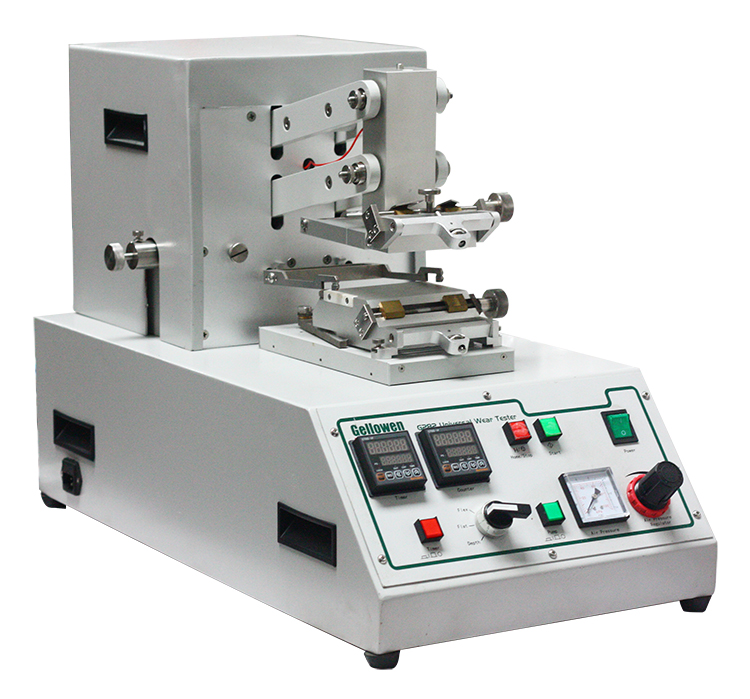
Technical Principles:
The core design concept of the Stoll Quartermaster is to reproduce the complex wear process of materials in actual use. Its working principle is based on tribology, simulating the wear behavior of materials under bending, folding, and edge friction conditions through a combination of mechanical motion and load control. The equipment mainly consists of three systems:
Friction System: Equipped with a flat abrasion test head (air-filled film abrasion test method) and a curved abrasion test head, which can simulate planar friction and bending friction scenarios respectively. The flat abrasion test head applies uniform pressure through an inflatable diaphragm to ensure stable contact between the sample and sandpaper; the flexural abrasion test head simulates the wear of fabrics under bending conditions through a flexure device, such as wear at the elbows of clothing or creases in shoe uppers.
Load control system: Through a combination of weights and a pressure adjustment device, the friction force range (1-9 psi) can be precisely controlled, covering testing needs from gentle friction (such as underwear fabrics) to high-intensity abrasion (such as industrial conveyor belts).
Motion control system: The lower clamp base adopts a reciprocating linear motion design with a stroke length of 25.4 mm and a motion frequency of up to 120 times per minute, simulating high-frequency friction scenarios. Some high-end models are equipped with a rotating sample tray, enabling multi-directional sliding friction, more closely resembling real-world usage environments.
Taking automotive seat fabric testing as an example, the equipment can simultaneously load flat abrasion and flexural abrasion test heads, simulating flat surface friction of the seat while replicating crease wear at the backrest's bending points, comprehensively evaluating the material's durability under complex working conditions.
Core Functions
The Stoll Quartermaster's modular design provides versatile testing capabilities, meeting diverse testing needs from basic R&D to large-scale production:
Basic Abrasion Testing: Using a flat abrasion test head in conjunction with standard sandpaper, it quantifies the material's mass loss rate under dry or wet conditions. For example, when testing the abrasion resistance of outdoor sports fabrics in dusty environments, immersion in water can simulate rainy conditions, assessing the material's abrasion resistance after moisture absorption.
Bending and Folding Abrasion Testing: The bending abrasion test head, combined with a flexure device, simulates fiber breakage after repeated bending. For example, when testing the abrasion resistance of sock toe seams, the device can record the degree of pilling and fuzzing after 100.000 bends.
Edge and Fold Abrasion Testing: A dedicated edge abrasion kit includes three clamps to fix fabric edges for directional friction testing. For example, when evaluating the abrasion resistance of carpet edges under pedestrian traffic, the device can precisely control the direction and pressure of friction, simulating real-world usage scenarios.
Pilling and Frosting Tests: Using a combination of an elastic friction pad and a special sample holder, the pilling tendency of material surface fibers after friction can be detected. For example, when testing the pilling properties of wool fabrics, the equipment can record the number and size of pills after 5000 cycles of friction, providing data support for fabric grading.
An international footwear company used this equipment to test the abrasion resistance of athletic shoe fabrics and found that traditional flat abrasion tests could not reproduce the wear patterns at the flex points of the shoe upper. By introducing a flex abrasion test head and an edge abrasion kit, the company optimized its material formulation, improving upper durability by 40% and reducing product return rates by 25%.
International Standards and Industry Applications
Stoll Quartermaster test results are globally recognized, and its design strictly adheres to multiple international standards, including:
ASTM standards: D3514 (Fabric Abrasion Resistance), D3885 (Textile Fabric Pilling Resistance), D3886 (Furniture Fabric Abrasion Resistance);
AATCC standards: 119 (Fabric Abrasion Resistance: Flat Abrasion Test), 120 (Fabric Abrasion Resistance: Flexural Abrasion Test);
Automotive industry standard: FORD EFB 15J2/BN 112-01 (Automotive Interior Materials Abrasion Resistance);
Military standard: FTMS 191-5300/5302 (Military Fabric Durability).
In the automotive industry, Stoll Quartermaster is a core testing device for supplier qualification. For example, a certain automotive brand requires seat fabrics to pass the ASTM D3886 standard test, meaning that the mass loss after 5000 abrasion cycles should not exceed 0.5%. Suppliers must use this equipment for pre-inspection to ensure that the materials meet the requirements before entering the mass production stage. In the textile industry, equipment is widely used for fabric grading and process optimization. A high-end fabric company discovered through equipment testing that adding 0.5% polyester fiber can significantly improve the abrasion resistance of cotton fabrics, extending product life from 3 years to 5 years.
Technological Advantages
Compared to traditional abrasion testing equipment, the Stoll Quartermaster offers a comprehensive upgrade in performance and user experience:
High-Precision Control: Employing a precision motor and closed-loop feedback system ensures the stability of motion frequency and load. For example, when testing ultra-thin fabrics (thickness <0.1mm), the equipment can control friction pressure fluctuations within a range of <0.1 psi, avoiding testing errors caused by uneven pressure.
Automated Testing: Built-in timers and mechanical cycle counters allow for preset test counts (0-99.999 times) and automatic stopping. Some models are equipped with a multilingual touchscreen interface, supporting custom test programs. Operators only need to input parameters to start the test, reducing test time by 30% compared to traditional equipment.
Data Traceability: The equipment records parameters such as the number of friction cycles, pressure values, and ambient temperature and humidity for each test, generating detailed reports. One testing agency, through analysis of historical data, discovered that the abrasion resistance of a certain batch of fabric decreased by 15% when humidity >70%, providing a basis for companies to improve storage conditions.
Modular Expansion: By replacing the test head and accessories, the equipment can be upgraded to a rotary abrasion tester, Martindale abrasion tester, etc., to meet special testing needs. For example, a research institution modified the equipment into a test platform simulating tire-ground friction by adding a rotating sample disk, expanding its application scenarios.
Maintenance and Care
To ensure the accuracy of test results, the Stoll Quartermaster requires regular maintenance:
Daily Cleaning: Clean abrasive debris and dust after each test to avoid affecting the flexibility of moving parts. It is recommended to use a soft brush and a low-pressure air gun to clean sandpaper and clamps.
Critical Component Inspection: Check the sealing of the inflation diaphragm, the wear of the weights, and the tension of the motor drive belt monthly. For example, if the inflation diaphragm leaks, it will cause unstable pressure and affect the test results.
Calibration Service: Annual calibration by a professional organization ensures that parameters such as friction force and motion frequency meet standards. Some manufacturers offer remote calibration services, adjusting equipment parameters in real time using sensor data.
Consumable Replacement: Regularly replace sandpaper (recommended every 500 tests), the inflatable diaphragm (lifespan approximately 2000 tests), and the flexure blade (lifespan approximately 10.000 bending tests) to avoid testing errors caused by consumable aging.
The Stoll Quartermaster abrasion tester, with its precise testing capabilities, wide applicability, and internationally recognized authority, has become an indispensable quality testing tool in the textile, footwear, and industrial textiles industries. From material research in the laboratory to quality control on the production line, from the grading of high-end fabrics to the certification of automotive interiors, the equipment provides the industry with a standard method for quantifying abrasion resistance performance, driving continuous progress in materials science and manufacturing processes. In the future, with the in-depth application of intelligent and modular technologies, Stoll Quartermaster will continue to lead the development of the abrasion testing field, safeguarding the high-quality development of global manufacturing.