

Fabric Hexapod Roller Tester ISO 9405: 2001
In the textile industry, abrasion resistance, stain resistance, and appearance retention are core indicators for measuring product quality. The six-legged fabric roller tester, a precision instrument specifically designed to evaluate the appearance quality and durability of fabrics, provides manufacturers with scientific and reliable data support by simulating wear and friction in real-world usage scenarios, becoming a key tool for quality control and R&D innovation.
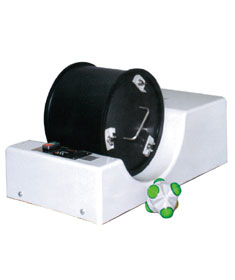
The six-legged fabric roller tester is a specialized testing device designed based on mechanical principles. Its core function is to evaluate changes in surface structure, color stability, and overall appearance retention by simulating the wear process of fabrics during long-term use. The main body of the device consists of rollers, six-legged test blocks, a transmission system, and a control system. It employs electric drive to achieve automated testing, ensuring data accuracy and repeatability.
Working Principle
The core principle of the six-legged fabric roller tester is to simulate the wear and tear of fabrics in actual use through mechanical motion. At the start of the test, the fabric sample is flattened and fixed to the inner wall of the roller, ensuring a wrinkle-free surface to avoid testing errors. Then, the six-legged test block is placed into the roller, with its column heads contacting the fabric surface to simulate pressure points. After the equipment is started, the roller rotates at a set speed, and the six-legged block rolls under centrifugal force, generating friction and compression on the fabric surface. During this process, the fiber structure of the fabric surface gradually changes, such as pile flattening and fiber breakage, and the color may also change due to friction. The built-in sensors of the equipment record these changes in real time, including surface structure parameters and color differences (ΔE value). The equipment automatically stops operating after the preset number of revolutions (e.g., 2000. 4000. or 12000 revolutions).
Operating Method
The operation of the six-legged fabric roller tester must follow standardized procedures to ensure the accuracy and repeatability of test results.
In the preparation phase, a comprehensive inspection of the equipment is necessary first. Ensure the inside of the drum is clean and free of debris, the polyurethane nails on the six-legged blocks are uncontaminated, and the transmission system is well lubricated. Next, rotate the drum cover counter-clockwise until the recesses are aligned, remove the cover, and secure the fabric sample flat against the inner lining plate, ensuring it is secure; otherwise, it will affect the test results.
Then, connect the power supply and select the standard test mode (e.g., ISO 10361) or a custom mode via the color touchscreen, setting the rotation speed (e.g., 4000 rpm) and reversing interval (e.g., 15 minutes).
Once the testing phase begins, place the six-legged blocks into the drum, align them with the recesses, and tighten the cover clockwise. Press the "Run/Stop" button to start the equipment.
During the test, observe whether the drum rotates smoothly and whether the six-legged blocks make any abnormal noises. If a pause is needed, press the "Run/Stop" button again. After the test is completed, proceed to the cleaning and rating phase.
First, place the sample in the center of a cleaning frame and vacuum clean it four times along its length, both forwards and backwards. The final cleaning should be done along the direction the pile is tilted to thoroughly remove surface fiber debris.
Next, place the sample separately and flat, with the pile facing upwards, and conditioned for at least 24 hours to eliminate the influence of stress on the test results.
Finally, compare the sample with a standard reference chart (such as the ISO reference chart) to evaluate changes in the fabric's surface structure (e.g., pile density, fiber breakage) and color differences (ΔE value), and assign a grade (e.g., 1-5. with 5 being the best) to obtain the final abrasion resistance evaluation of the fabric.
Application Areas
The six-legged fabric roller tester has a wide range of applications, covering multiple market segments within the textile industry. In the textile and carpet industry, it has become an important tool for quality control and R&D support. By evaluating the abrasion resistance, stain resistance, and appearance retention of carpets, it ensures that products meet standards such as ISO 10361. reducing after-sales return rates. Simultaneously, R&D personnel can optimize formulations and processes by comparing test data from different fiber materials (such as nylon and polyester), enhancing product competitiveness. In the furniture fabric sector, this equipment also plays a crucial role. For sofa and seat fabrics, it can simulate long-term sitting pressure and friction to test the fabric's resistance to pilling and fuzzing, extending product lifespan; for curtains and window coverings, it can assess the color stability of the fabric under sunlight exposure and frequent opening and closing, ensuring aesthetics and durability. The automotive interior industry is also one of its important application scenarios. In testing seats and carpets, the equipment can simulate abrasion resistance and anti-aging performance under high temperature and high humidity environments, meeting automotive-grade standards (such as ISO 6452). For headliners and door panels, it can assess the bonding strength between fabrics and rigid substrates, preventing detachment or deformation after long-term use. Furthermore, the fabric six-legged roller tester is indispensable in the outdoor products industry. In testing tents and sunshades, it can simulate surface wear under wind, sand, and rain erosion, testing the weather resistance of waterproof coatings and fibers. For sportswear, it can assess the friction damage to fabrics during strenuous activity, optimizing fabric structure to improve comfort and durability.
Maintenance and Repair
Regular maintenance is crucial to ensure the long-term stable operation and testing accuracy of the fabric six-legged roller tester.
For daily maintenance, after each test, the inside of the rollers should be cleaned with a soft brush to remove fiber debris, preventing it from entering the bearings and causing jamming or wear. Simultaneously, the polyurethane pins on the six legs should be checked regularly, wiping away surface dust and stains to ensure they are smooth and scratch-free, thus avoiding affecting the accuracy of test results. The transmission system is one of the core components of the equipment and requires regular lubrication checks. Lubricating oil should be added or grease replaced as needed to reduce friction and wear, extending its service life. Furthermore, the electrical system should not be overlooked. Power cords, plugs, and touchscreen connections should be checked regularly for secure connections and any signs of damage or aging to ensure safe operation.
Regular maintenance is recommended, with a comprehensive inspection and calibration every six months. Calibration should include key parameters such as speed, rotation count, and color measurement to ensure the equipment is always in optimal working condition. Simultaneously, the mechanical structure should be checked for tightness to prevent loose screws or component displacement due to prolonged vibration. If the equipment malfunctions or experiences performance degradation, contact professional repair personnel immediately. Do not attempt to disassemble or repair it yourself, as this could cause further damage or safety hazards. Scientific maintenance and repair measures can effectively extend the service life of the fabric six-legged roller tester, ensuring testing accuracy and stability, and providing strong support for quality control and R&D innovation in the textile industry.
The fabric six-legged roller tester, with its precise simulation and efficient evaluation capabilities, occupies an irreplaceable and vital position in quality control and R&D innovation within the textile industry. From its ingeniously designed working principle to its rigorous and standardized operating procedures; from its wide range of applications to its meticulous maintenance, every aspect showcases its exceptional value as a professional testing device. As the textile industry continues to develop, the requirements for fabric quality will become increasingly stringent. The six-legged fabric roller tester will undoubtedly continue to be upgraded and optimized, continuously injecting strong momentum into the high-quality development of the textile industry and helping it move towards a more brilliant future.