

What is a Fabric Formaldehyde Content Tester?
With consumers' increasing awareness of environmental protection and health and safety, more and more customers are demanding products that meet environmental and health safety requirements, leading to a more comprehensive understanding of textile quality. Traditional concepts of practicality, durability, and aesthetics are no longer sufficient to fully meet the demands of consumers, while hygiene and safety are receiving increasing attention. The pursuit of pollution-free and non-toxic environmentally friendly textiles has become the mainstream in textile development, production, and consumption.
Textiles undergo multiple processing steps during production, including pretreatment, dyeing, and finishing, resulting in residual formaldehyde. Formaldehyde can enter the human body through respiration and skin contact, causing various diseases. The amount of formaldehyde in textiles has become a topic of great concern.
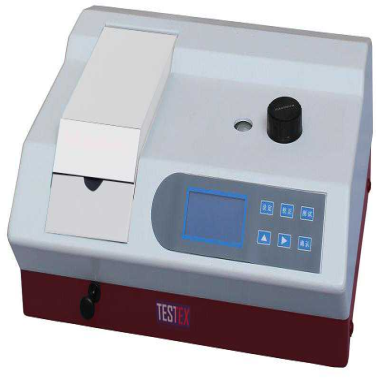
The formaldehyde content in textiles is an important indicator for assessing their safety. By discussing the sources and hazards of formaldehyde in textiles and the research progress of domestic and international formaldehyde testing standards, it was found that high-performance liquid chromatography (HPLC) and gas chromatography (GC) can effectively determine the formaldehyde content in textiles, and these methods have high accuracy and repeatability. The formulation of formaldehyde limit standards and their impact on human health were also introduced, emphasizing the necessity of strictly controlling formaldehyde content in textiles to protect consumer health. Ensuring the safety of textiles through scientific and reasonable formaldehyde detection methods has become one of the key tasks in current textile quality supervision.
In today's society, consumers are increasingly focusing on the health and comfort of clothing. Harmful substances in textiles, such as formaldehyde, have always been a matter of concern. Formaldehyde is a colorless, highly irritating gas with potential health hazards, especially for children, the elderly, and people sensitive to chemicals.
The Dangers and Effects of Formaldehyde
Formaldehyde can not only cause allergic skin reactions but also trigger respiratory diseases, especially in asthma sufferers. Long-term exposure to high concentrations of formaldehyde can also increase the risk of nasopharyngeal cancer. Formaldehyde is also one of the major sources of indoor air pollution, especially prevalent in furniture, wallpaper, flooring, and other decorative materials, therefore, its threat to human health should not be underestimated.
Methods for Measuring Formaldehyde
To ensure the safety of textiles and the health of consumers, testing the formaldehyde content in textiles is particularly important. There are two main measurement methods: gas chromatography (GC) and high-performance liquid chromatography (HPLC).
Gas Chromatography
Gas chromatography involves heating the sample to a high temperature, causing it to evaporate into a vapor. The various components are then separated using a chromatographic column, and their signal intensity is recorded by a detector to determine the presence and content of formaldehyde. This method is simple, fast, and accurate, but it requires high sample purity and relatively sophisticated equipment.
High-Performance Liquid Chromatography
High-performance liquid chromatography separates components based on different mobile phases in the chromatographic column. Ultraviolet or fluorescence detectors are used to detect the retention time and peak area of the target substance, thereby quantitatively analyzing the formaldehyde content. Compared to gas chromatography, high-performance liquid chromatography requires less sample pretreatment, is more flexible in operation, and is suitable for various types of textiles.
Formaldehyde Content Testing in Textiles
When testing the formaldehyde content in textiles, the following aspects require special attention:
1. Formaldehyde Standard Solution: Determining the concentration of the formaldehyde standard solution is crucial, as the accuracy of the solution's concentration will affect the accuracy of the experimental results. The iodometric method specified in GB/T2912—1982 "Method for Determination of Formaldehyde Release from Resin-Treated Fabrics" is very simple and feasible. It is understood that many methods for determining formaldehyde content, both domestically and internationally, use the iodometric method to standardize the formaldehyde standard solution. Therefore, if preparing the formaldehyde standard solution yourself, it is best to use the iodometric method for standardization. Another method is to purchase the formaldehyde standard solution directly from the National Standard Material Center to ensure the accuracy of its concentration.
2. Acetylacetone Reagent: GB/T2912.1—1998 standard indicates that the sensitivity of the acetylacetone reagent changes after prolonged storage, so a new standard working curve should be prepared weekly. Analysis shows that when the formaldehyde concentration is the same, the absorbance measured using acetylacetone reagents stored for different lengths of time differs. To ensure the accuracy of the experimental results, attention should be paid to the storage time of the acetylacetone reagent, and corrections should be made promptly.
3. Extraction Temperature: GB/T2912.1—1998 standard specifies that 1g of the sample is added to 100 mL of water in an iodometric flask and extracted in a water bath at (40±2)℃ for (60±5) min. It is worth noting that the extraction temperature is very important, as the temperature determines the amount of formaldehyde in the extracted solution. Significant differences in measured formaldehyde content were observed when the same sample was extracted at different temperatures for the same duration.
Many garments, especially pure cotton wrinkle-resistant and shrink-resistant garments, undergo garment finishing treatments, resulting in uneven formaldehyde content in the fabric, which can affect the test results. Therefore, variations between samples cannot be ruled out, but the trend of the measured values indicates that higher temperatures lead to more formaldehyde extraction. Therefore, when determining the formaldehyde content in textiles, it is crucial to accurately set the extraction temperature. Several temperature tests should be conducted before and during the extraction process to ensure the extraction temperature remains around 40°C.
4. Further Processing and Correction of Formaldehyde Detection Values: Further processing and correction of formaldehyde content detection values generally involve the following two situations:
(1) Discolored Textiles: Some textiles have poor color fastness, and some color may leach out during the extraction process, causing a change in the color of the extract. In this case, correction should be performed to eliminate the factor that causes the solution's absorbance to change due to the color of the extract, which would lead to an overestimation of the formaldehyde concentration.
(2) Dimedone Confirmation Experiment: Dimedone (5.5-dimethylcyclohexane-1.3-dione) reacts with formaldehyde to form an insoluble condensate, thus serving as a characteristic reagent for formaldehyde detection. When the color of the chromogenic solution is suspected to be caused by something other than formaldehyde, dimedone can be used for confirmation. Confirmation generally involves two situations:
① Dimedone reacts with formaldehyde, and the absorbance at 412 nm disappears or partially disappears, indicating that the absorption is indeed due to formaldehyde. The formaldehyde content should be recalculated accordingly.
② Dimedone does not react with formaldehyde; the absorbance at 412 nm remains, indicating that the absorption is not due to formaldehyde.
5. Different Sampling Locations of the Sample: GB/T2912.1—1998 does not explicitly specify the sampling method for samples. However, in practice, for the same experimental sample, especially for garments, correctly selecting the sampling location is very important, and sometimes even determines whether the test results meet the standard requirements.
When measuring the formaldehyde content of garments, different sampling locations can lead to different test results. The GB/T2912.1—1998 standard only requires three parallel experiments and taking the average of the three measured values. However, in reality, the formaldehyde content in different parts of some garments varies significantly, and simply using the arithmetic mean cannot accurately reflect the formaldehyde content in the garment. In most cases, the fabrics used in infant and toddler products are light in color, with few large-area prints. The results for the plain-colored areas generally meet the standard requirements, i.e., formaldehyde content ≤ 20 mg/kg. However, to enhance aesthetics, many infant and toddler garments feature localized machine embroidery or printed patterns, and it is often these areas that show excessive formaldehyde levels during testing. For both direct and indirect skin-contact textile products, the formaldehyde content of the fabric itself rarely fails to meet the requirements; however, areas with adhesive interlining or printed patterns are prone to exceeding the formaldehyde limit. Therefore, when testing finished garments, multiple samples must be taken, especially from areas that have undergone special treatment, to determine the formaldehyde content. Furthermore, to ensure garment safety, the highest measured value from different sample locations should be reported.
Laboratory Conditions and Precautions
Regardless of the measurement method used, the following points should be noted during the experiment:
Sample preparation: The sample must first be processed according to standard procedures to remove fiber impurities and other organic matter.
Instrument calibration: The chromatograph should be calibrated regularly using standard solutions to ensure the accuracy of the test results.
Data analysis: The formaldehyde content should be calculated based on the chromatogram data, taking into account factors such as temperature and pressure.
Formaldehyde is an important environmental pollutant and occupational carcinogen. Controlling the formaldehyde content in textiles is directly related to consumers' health. Scientific measurement of formaldehyde content in textiles can not only effectively protect consumer rights but also promote the development of the textile industry towards a greener and more environmentally friendly direction. With technological advancements and improvements in detection methods, more accurate and efficient methods for determining formaldehyde content are expected in the future, providing consumers with safer choices.