

What is the Digital Auto burst strength tester?
In our daily lives, from the various garments we wear to the packaging materials we use daily, and even the surgical gowns essential in medical settings, the burst strength of these items is a key indicator for judging their quality. So, how can we accurately and efficiently test the burst strength of these materials? This is where a professional and high-performance device—the digital automatic burst strength tester—becomes indispensable.
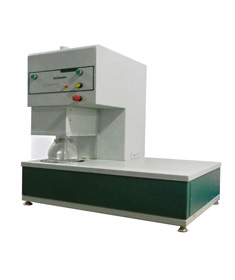
The digital automatic burst strength tester is used to test the burst strength and height of textiles: woven, knitted, non-woven fabrics, paper, cardboard, packaging materials, films, or sheets, etc. It uses a hydraulic burst method and is a device for testing the burst strength of test paper, corrugated cardboard, and textiles. It precisely controls the burst time through intelligent control algorithms and has both manual and automatic control modes. Equipped with PC control software, it is easy to operate, can analyze and print test results, supports all standard requirements for test area, and meets the requirements of different standards.
Working Principle and Technical Advantages
The digital automatic bursting strength tester operates based on specific mechanical principles. It typically uses hydraulic or pneumatic methods to clamp the test sample onto an extendable diaphragm. Pressure is applied downwards to the diaphragm, causing it and the sample to expand until the sample ruptures. During testing, the instrument accurately measures the maximum pressure the sample withstands upon rupture and the burst height. Its technical advantages are significant: high-precision pressure and displacement sensors ensure the accuracy of test data, and automated operation greatly improves testing efficiency and reduces human error. Furthermore, the tester offers multiple testing modes, such as automatic bursting, fixed-rate testing, fixed-displacement testing, and target pressure cyclic tensile testing, to meet the needs of different materials and testing requirements.
Operating Method
Before using the bursting strength tester, a comprehensive and detailed inspection must be conducted to ensure the instrument is in normal working order. Specific checks include: checking for oil leaks in the hydraulic system; verifying the proper functioning of the instrument's sensors; and confirming that all parameters on the control panel have been calibrated. Instrument calibration is crucial for ensuring the accuracy of measurement data; therefore, regular calibration and maintenance must be performed according to the manufacturer's instructions. When installing test samples, select samples that are uniform in texture and undamaged. Choose appropriate clamps and diaphragm supports based on the instrument model and material characteristics to ensure uniform force distribution and prevent pre-stress.
The operation of the bursting strength tester mainly includes four steps: sample installation, parameter setting, loading test, and data recording. When installing the sample, the material must be fixed flat on the test clamp to prevent wrinkles and misalignment. In the parameter setting stage, parameters such as test speed, maximum pressure, and data acquisition frequency must be set correctly. These parameters directly affect the smoothness of the test curve and the accuracy of the data. During the loading test, the operator must monitor the instrument's operation throughout, observing the pressure change curve on the instrument's display screen to ensure a smooth test process without any abnormalities. When the sample bursts or reaches the set pressure value, the instrument will automatically stop loading. At this point, key data such as bursting pressure, bursting time, and bursting location should be recorded immediately.
Data analysis is a crucial aspect of using the bursting strength tester. By comparing bursting pressure and sample thickness, the bursting strength of the material can be calculated, thereby assessing its mechanical properties and quality stability. To ensure data reliability, it is recommended to perform multiple repeated tests for each sample and then calculate the average value and standard deviation. Horizontal comparison of data from different batches or different materials provides a scientific and reasonable basis for optimizing production processes, selecting appropriate materials, and improving products.
Wide Range of Applications
In the textile industry, the digital automatic bursting strength tester is an important tool for evaluating the bursting properties of woven, knitted, and non-woven textiles. By testing the bursting strength of textiles, we can understand their strength and expansion under external forces, providing data support for textile design and production. For example, in garment manufacturing, understanding the bursting properties of fabrics helps designers select suitable fabrics and ensure the durability of garments during wear. In the leather industry, this tester is used to test the bursting strength of leather materials, assess their durability and quality, and provide a basis for the production and processing of leather products. The paper and board industry also widely uses this tester to test the bursting properties of materials such as paper, cardboard, and plastic sheets, ensuring that materials meet relevant standards and application requirements. Furthermore, in research and quality inspection institutions, the digital automatic bursting strength tester serves as an important tool for testing the mechanical properties of materials, evaluating their bursting properties and expansion, and providing data support for material research and development.
Maintenance and Repair
A bursting strength tester generally consists of a hydraulic system, loading mechanism, sensing unit, data acquisition and display module, and necessary safety protection devices. During routine inspections, attention should be paid to oil circuit leaks, oil cleanliness, seal wear, pipe joint tightness, limit device flexibility, and sensor and electrical connections. Records should be kept for each shift, including oil temperature, oil level, pressure trends, and any abnormalities, to ensure subsequent calibration conditions are not affected.
Common faults include insufficient or unstable pressure, sensor drift leading to inaccurate readings, oil circuit leaks, stuck valves, limit device failure, and abnormal display or data interface operation. Different fault symptoms correspond to different troubleshooting directions; first, confirm the integrity of the hydraulic power source and sensing system.
Fault diagnosis should be conducted step-by-step: First, ensure safety, then check the main power supply, emergency stop, and protection devices; take hydraulic oil samples for testing, checking viscosity, contamination level, and oil temperature, and replace filters if necessary; calibrate the zero point and sensitivity of the sensors, and consider replacement if readings continue to drift; check for wear and looseness in oil circuit seals, pipes, and joints, clean valve bodies, and remove blockages; check communication interfaces, firmware versions, and alarm logic from a software perspective, and upgrade if necessary; after handling, record the cause of the fault, the handling process, and the final state to create a traceable maintenance record.
To prevent faults, a regular maintenance plan should be developed, specifying the time intervals for cleaning, lubrication, calibration, and seal replacement, and a standardized fault report template should be established. Maintain a clean and stable working environment, use specified grade lubricating oil and filters, and keep sufficient stock of critical parts to reduce spare parts waiting time. Improve the efficiency of on-site fault diagnosis through training and drills to ensure accurate measurement and stable operation of the bursting strength meter. In short, proper maintenance and system fault diagnosis are key to ensuring the stable and reliable operation of the bursting strength meter.
Industry Development
The development of digital automatic burst strength testers has had a positive impact on related industries. On the one hand, it has improved the accuracy and reliability of product quality testing, prompting companies to pay more attention to product quality and adopt more advanced production processes and materials, thereby driving technological progress across the industry. On the other hand, the application of this tester has promoted the formulation and improvement of industry standards. By analyzing and summarizing test data from a large number of materials, it has provided a scientific basis for standard development, making the standards more in line with actual production and usage needs. Simultaneously, with the continuous upgrading and innovation of digital automatic burst strength tester technology, it has also driven the development of related supporting industries, such as sensor technology and automation control technology, forming a healthy industrial ecosystem.
Looking to the future, digital automatic burst strength testers will continue to advance on the path of technological innovation. With the deep integration of cutting-edge technologies such as artificial intelligence and big data, their intelligence level will be significantly improved. This will not only enable more accurate and faster testing, but also allow for in-depth mining and analysis of massive amounts of test data, providing enterprises with more forward-looking quality improvement suggestions. At the same time, their application areas will be further expanded, not only consolidating their position in traditional industries, but also playing a key role in emerging fields such as new energy materials and aerospace materials. In the journey of promoting high-quality development in various industries, digital automatic burst strength testers will serve as an important quality inspection tool, helping various industries continuously improve product quality, enhance international competitiveness, and jointly write a glorious chapter of industrial upgrading and innovation.